What Is Valerian Essential Oil? A Plain Guide
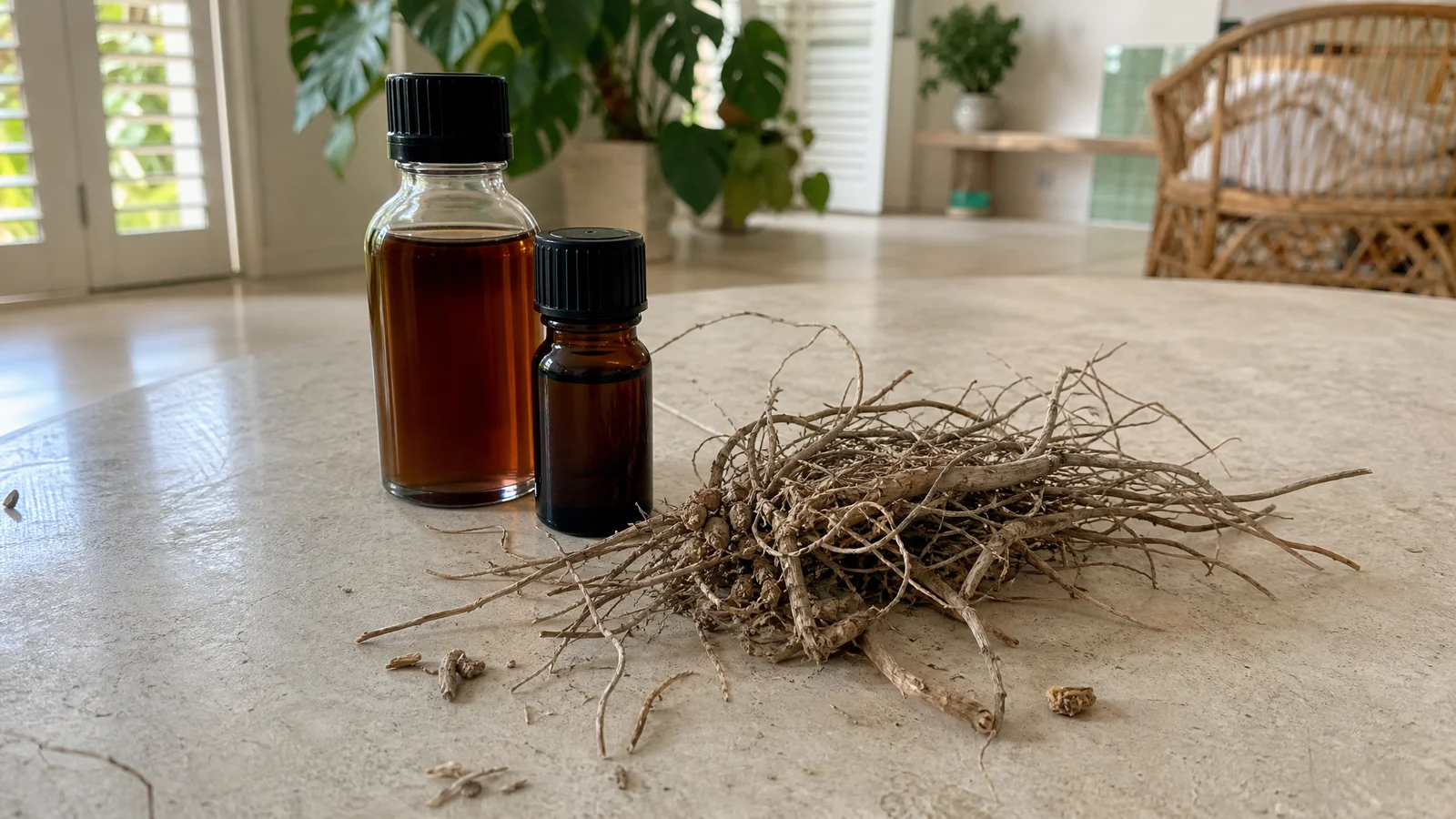
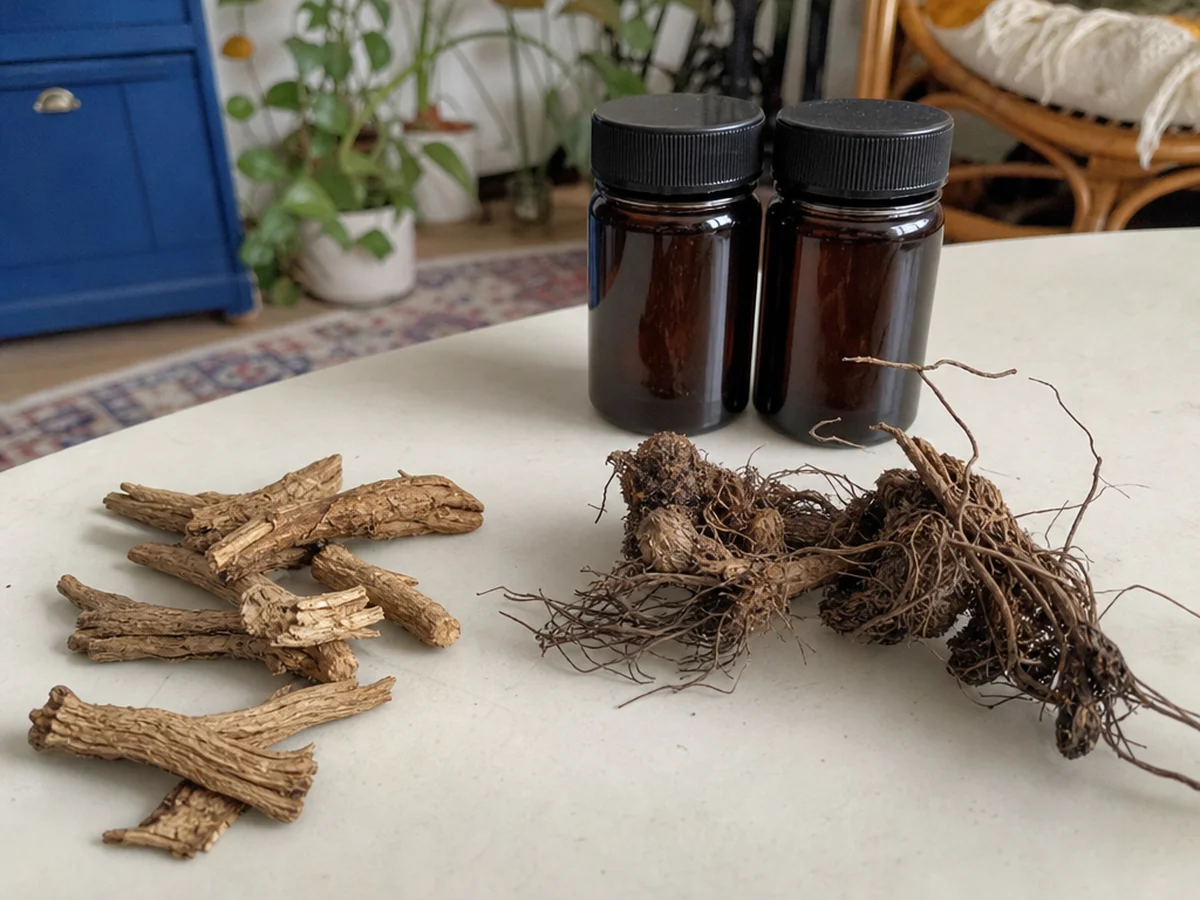
Valerian essential oil is what you get when the dried roots and rhizomes of Valeriana officinalis are steam-distilled: a small amount of intensely aromatic oil from a lot of root. It is a base note in the perfumer's sense, deep and lingering, and it is a different material from the tea, tincture and capsules that most "valerian" articles are about.
Valerian Root Essential Oil
Our own Valerian Root Essential Oil, in sizes from 0.5 oz to bulk.
From $31.99
Shop Now →Oil, not supplement
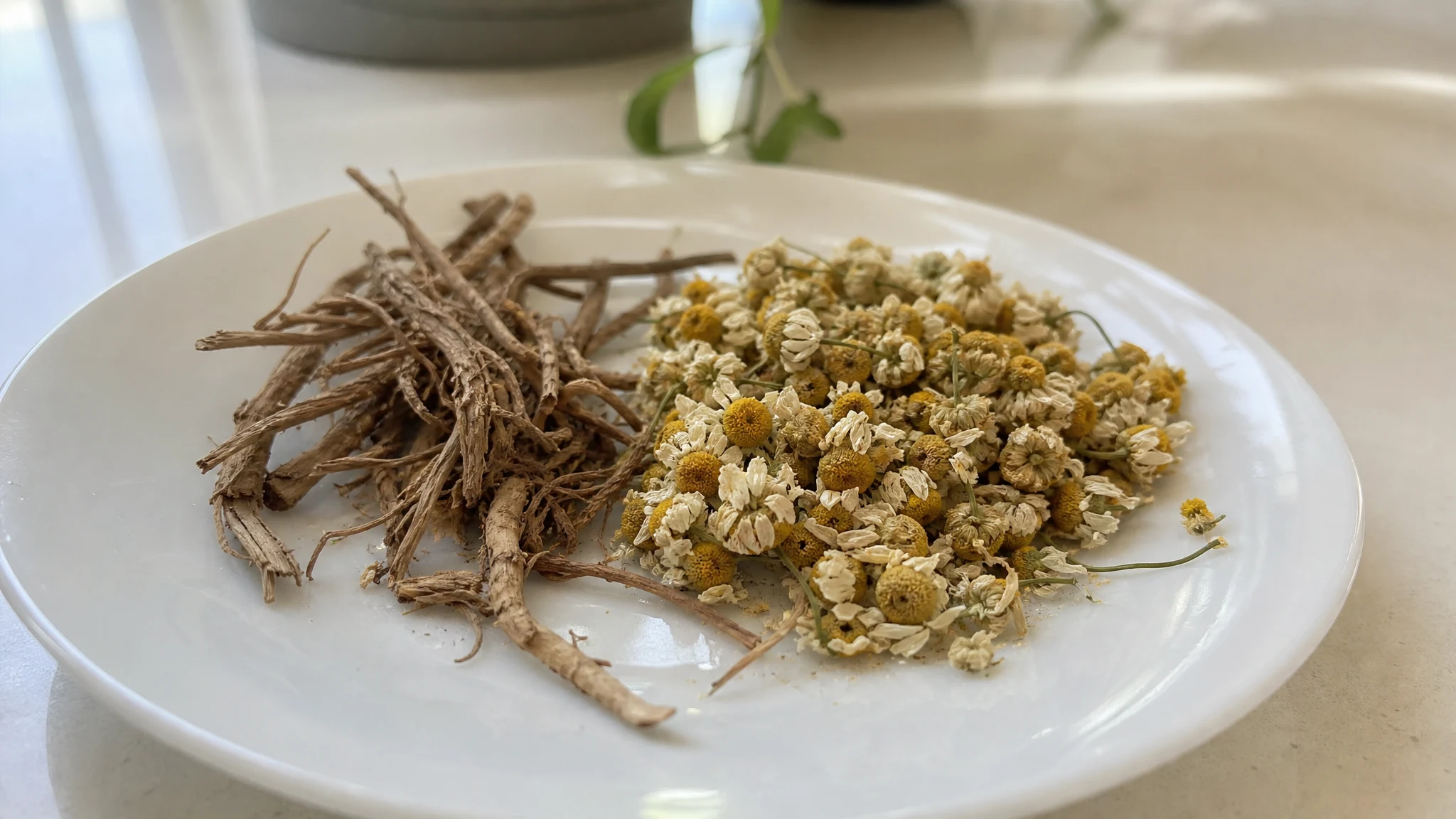
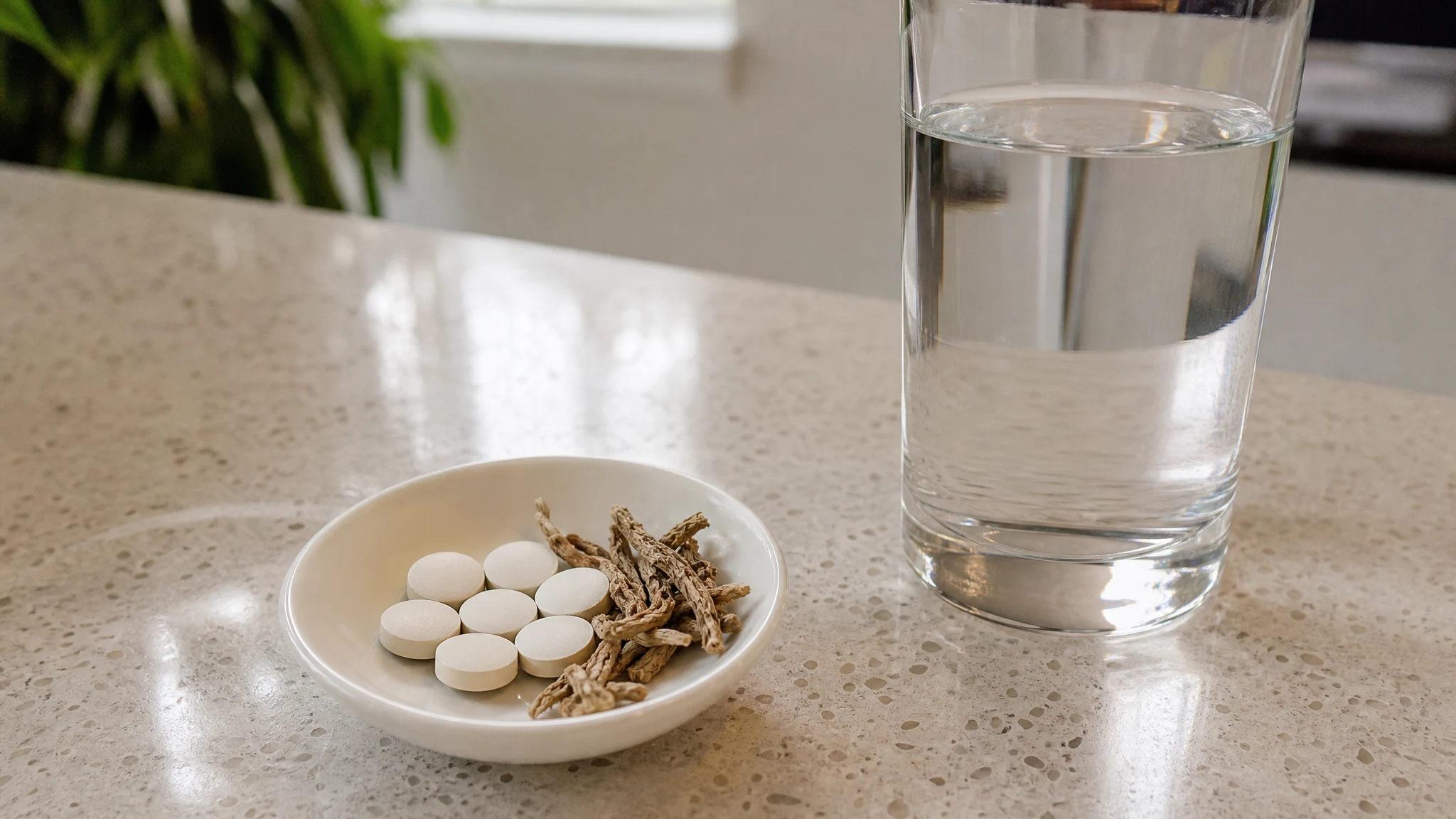
Search for valerian and nearly everything you find concerns swallowed root preparations. NCCIH, the US government's center for complementary health, notes that the roots and rhizomes are what is used, that studies of supplements have used doses of 300 to 600 milligrams daily, and that the evidence for any health use is limited or inconsistent. None of that is about essential oil. The oil we bottle is for aromatic and cosmetic use only and is never meant to be swallowed. If you are curious about the supplement side, our posts on oil vs capsules and root oil vs essential oil sort out the differences.
What is in the bottle
Valerian oil is not one fixed recipe, and that is part of what makes it interesting. In a study of oils distilled from five valerian root samples grown in Estonia, researchers identified 84 compounds. The main ones included bornyl acetate (8.8% to 33.7% of the oil), valerianol, valerenal and valeranone, and the oil yield from the cut root ranged from 0.28% to 1.16%. By our arithmetic, that works out to roughly 3 to 12 grams of oil from each kilogram of root.
The practical reading is that a book value or a sample result describes the sample, not every bottle. Different roots give different oils, and that variety is why valerian smells a little different from one distillation to the next.
A bottle you will recognise
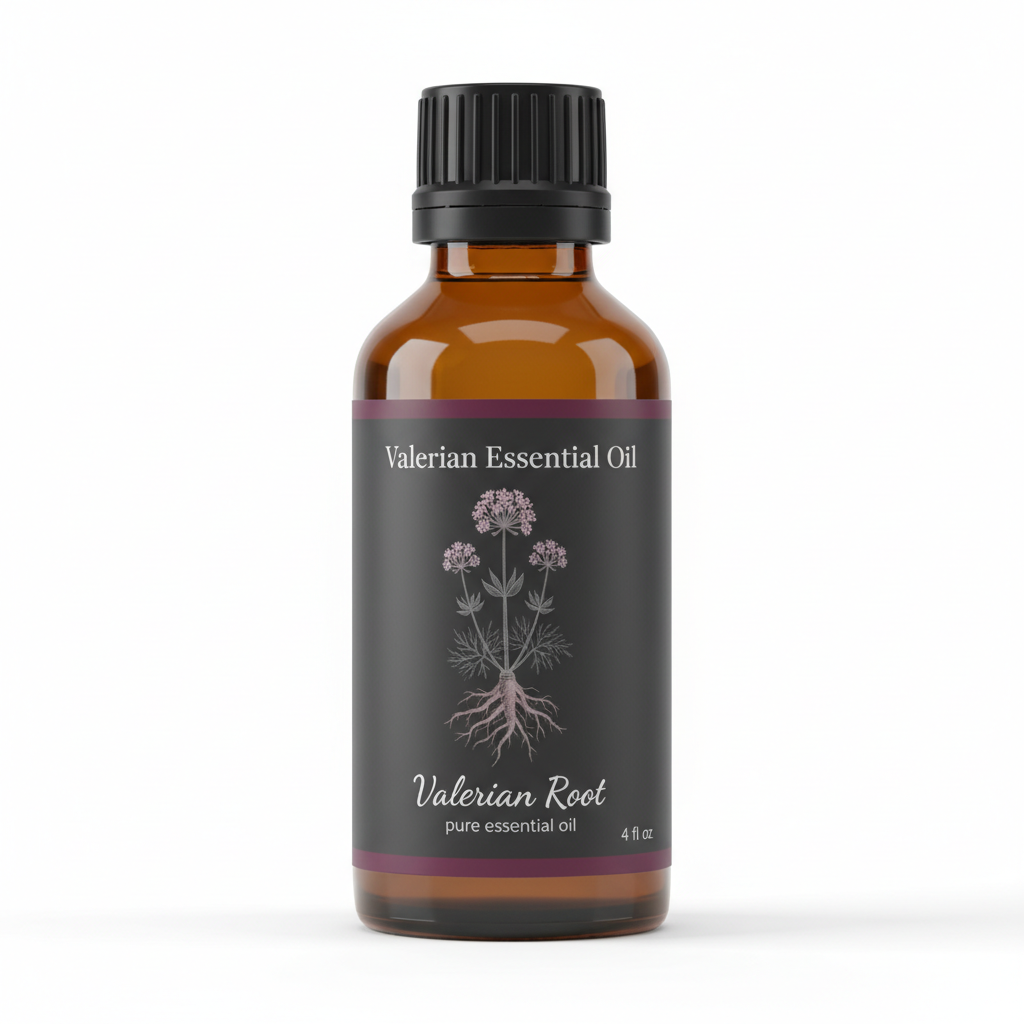
Our bottle is amber glass with a black cap and a black label that reads Valerian Essential Oil, Valerian Root and the botanical name, with a small plant-and-root drawing and the size in fluid ounces. It is a plain, serious-looking bottle, which suits an oil with a serious smell. Amber glass keeps light off what is inside, and a tight cap does the rest.
The aroma
We describe our oil as earthy, musky and woodland-damp with a balsamic sweet finish. Perfumery writer Steffen Arctander, in 1960, put the steam-distilled oil down as a warm, woody, balsamic root-like odor with an animal undertone of great tenacity, and noted that it combines well with patchouli, oakmoss and cedarwood derivatives. For more, see what valerian oil smells like. Our own list of blending partners is patchouli, vetiver, cedarwood, lavender, oakmoss and clary sage, and we suggest using valerian in traces, because it tends to dominate whatever it sits beside. A whisper in a perfume accord or a diffuser blend with lavender or cedarwood is the idea, not a heavy hand.
What we sell
We sell one valerian oil, Valerian Root Essential Oil, steam-distilled from the dried root and rhizome of Valeriana officinalis, in nine sizes from 0.5 oz up to 400 lb, all drawn from the same standard batch. There is no separate bulk grade.
The Certificate of Analysis we publish is for one batch. It reports a relative density of 0.947, a refractive index of 1.473 and an optical rotation of -19.80 degrees, all measured at 20 C, each inside the range printed beside it. It does not list constituents, origin or a laboratory name. If you need GC-MS, species confirmation, an IFRA certificate or a safety data sheet, ask us in writing through the contact page and get the answer in writing before you rely on it. Our guide to reading the certificate explains what those three numbers mean.
Your first hour with it
If this is your first time, give yourself an unhurried hour. Open the bottle, take one breath from a little distance and put it down. Put a drop on a blotter strip, set the strip on a saucer and walk away. Come back in ten minutes, then again in an hour. You will notice the loud opening, the earthy middle and the faintly sweet finish. It is a good way to decide whether the oil belongs in your collection before you plan anything bigger.
Using it with care
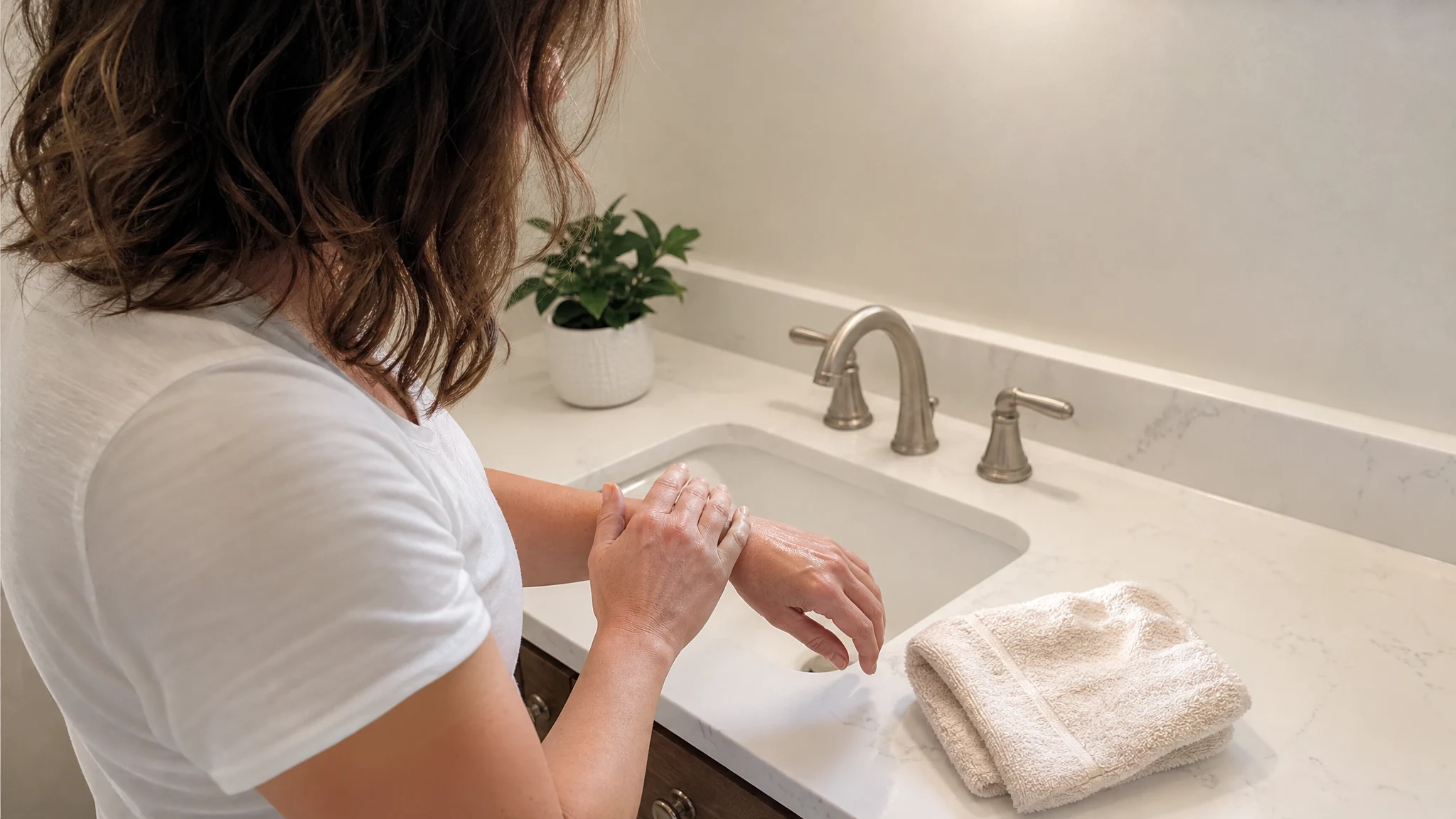
- On skin: dilute to 0.5% to 2% in a carrier oil and patch test first. We have not found a published dermal limit specific to valerian oil, so we would begin at the low end, and our post on diluting valerian oil shows the arithmetic.
- Eyes, children and pets: keep it away from all three. Cats are famously drawn to the scent, so store the bottle sealed and out of reach.
- Pregnancy and medicines: we say to avoid it in pregnancy as a precaution and not to combine it with sedative medication. If either applies, or you have a medical condition, ask your doctor or pharmacist first. See what is known about safety.
- Storage: keep it tightly capped in a cool, dark cabinet.
Who it is for
And if you do like it, the same slow approach pays off in every project: small amounts, careful notes and plenty of time for the scent to settle.
It suits people who love bold base notes: perfumers, soap and candle makers who want an unusual earthy accent, and anyone who enjoys a dark, musky aroma in very small amounts. It is not a bottle for everyone, which is why the smallest size is the sensible place to begin.
Valerian Root Essential Oil
Valerian Root Essential Oil from our own shop, in sizes from 0.5 oz to bulk.
From $31.99
Shop Now →Sources & Further Reading
- NCCIH, Valerian: Usefulness and Safety (last updated May 2025)
- Raal et al., Variation in the composition of the essential oil of Valeriana officinalis L. roots from Estonia (Proceedings of the Estonian Academy of Sciences, Chemistry, 2007)
- Arctander, Perfume and Flavor Materials of Natural Origin (1960), monograph on Valerian Oil