Valerian and Restless Legs: Two Small Trials Explained
Restless legs syndrome is a medical condition with a proper workup, and the valerian research that touches it amounts to two small trials of oral supplements. Neither used an essential oil. We sell our valerian oil as an aromatic base note and make no claim about legs, sleep or comfort, so this piece is simply an honest look at what was studied and who to see first.
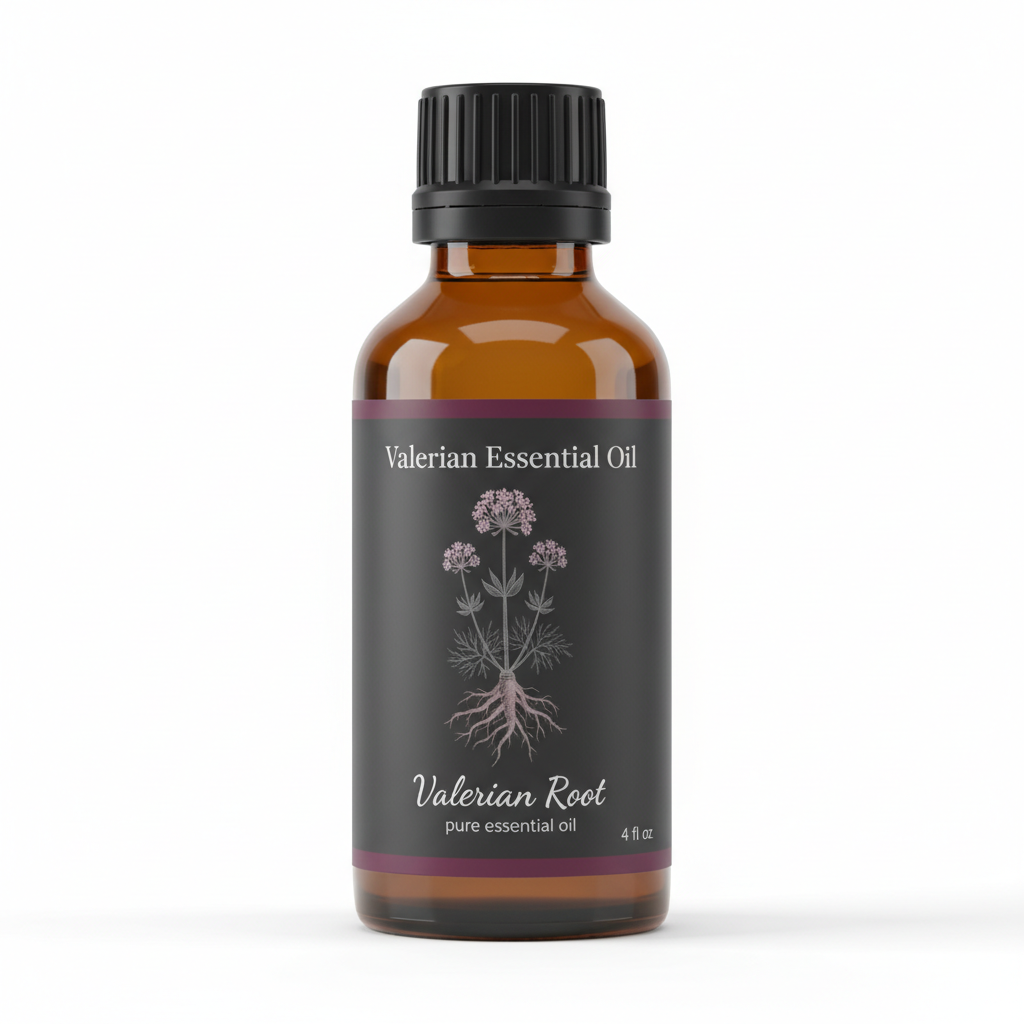
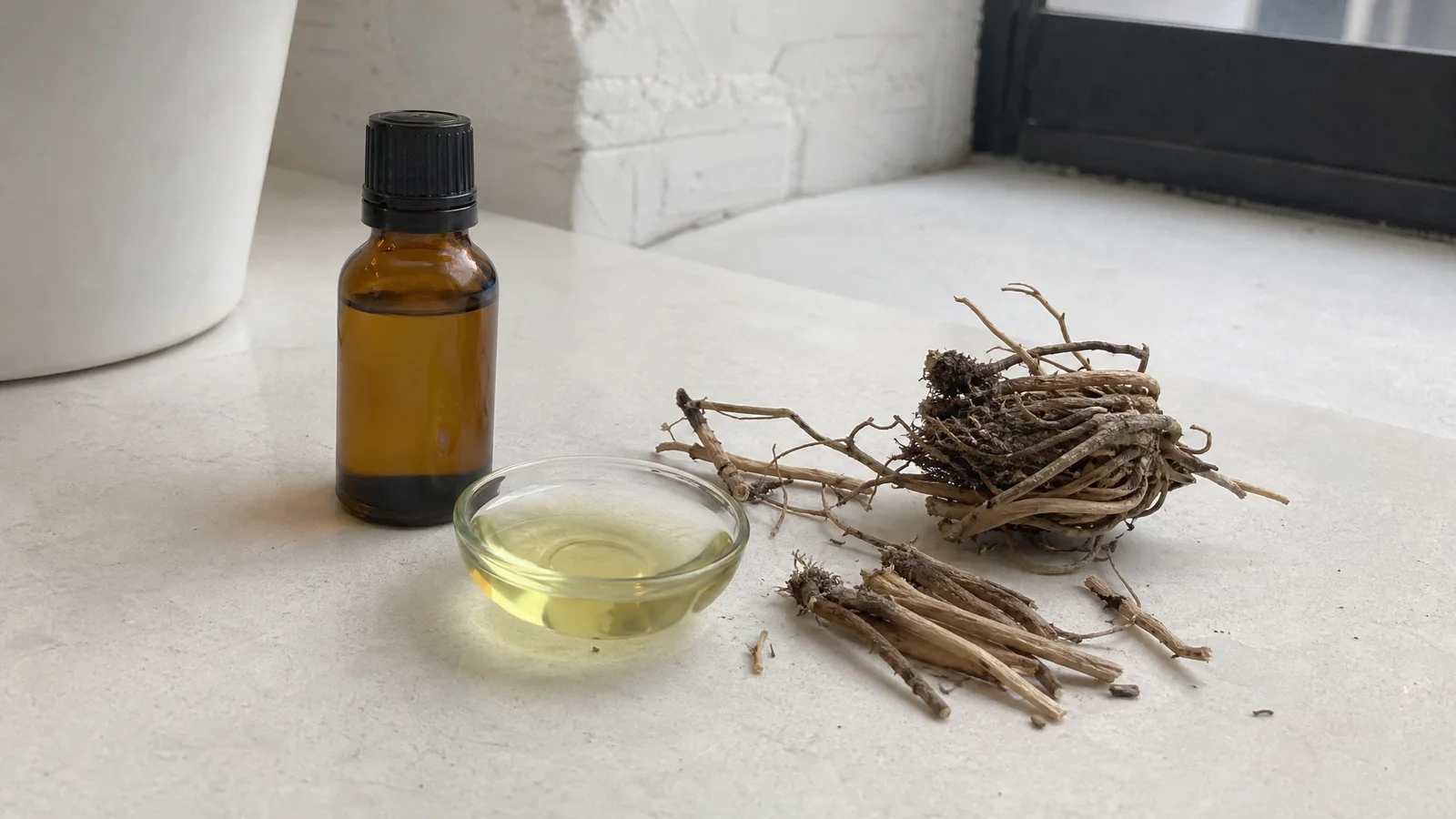
Valerian Root Essential Oil
Our own Valerian Root Essential Oil, in sizes from 0.5 oz to bulk.
From $31.99
Shop Now →Start with what the condition is
The NHS describes restless legs syndrome as a strong urge to move your legs, usually when resting at night, often with tingling, throbbing or itching, and says treatment depends on what is causing it. It is thought to be linked to levels of iron and the brain chemical dopamine, and it can accompany pregnancy, iron deficiency anaemia, kidney disease and some medicines. If another condition is behind it, treating that comes first; low iron, for example, may mean iron supplements. The NHS also lists everyday habits worth trying: daytime exercise, a regular bedtime and wake time, a warm bath or heat pads on the legs before bed, no caffeine after midday and no alcohol in the two hours before bed. It advises seeing a GP if symptoms stop you sleeping, affect your mood or have not improved with self-help (Restless legs syndrome, last reviewed 22 September 2025). The page does not mention valerian or herbal products.
That order of events matters. A cause can only be found by someone who can examine you and order the right test, which is why no scent or supplement belongs at the front of the queue.
The two valerian trials
A 2024 systematic review in Nutrients gathered 10 randomised trials of dietary supplements for restless legs, and two of them used valerian (Effects of Dietary Supplementation in Patients with Restless Legs Syndrome: A Systematic Review). Both gave valerian by mouth.
- Cuellar and Ratcliffe, 2009. 48 adults took 800 mg of valerian a day or a placebo for eight weeks. Both groups reported better sleep and less severe symptoms, and the difference between them was not statistically significant. Eleven people were lost to follow-up.
- Hajizadeh and colleagues, 2023. 40 people took 530 mg of valerian a day or 100 mg of gabapentin for 12 weeks. Both groups improved on the symptom scale, the gabapentin group improved more, and sleep quality scores were similar.
As the review reports them, the headline is that valerian improved symptoms and sleep but without a statistically significant improvement, and that half of the studies it covered carried a high risk of bias.
Reading small numbers sensibly
In a trial of 48 people where 11 drop out, a real difference would have to be large to show up, and failing to see one is not proof that none exists. Equally, when everyone improves, placebo group included, the improvement says little about the capsule itself, because symptoms like these naturally rise and fall. Both are reasons the authors call for larger, better-designed studies, and neither tells us anything about an aromatic oil.
Where our oil fits
No trial in that review used an essential oil, inhaled or applied, and the NCCIH summary of valerian is likewise about oral products. It says the evidence is inconsistent, that long-term safety is unknown and that valerian should not be combined with alcohol or sedatives (Valerian: Usefulness and Safety). If you take sedating medicines, a pharmacist can check them against any herbal product; our post on valerian and medications explains what the major sources say.
The FDA's guidance explains why we keep our wording where it is. Whether a fragrance product is a cosmetic or a drug turns on its intended use, and labels that promise things like easing muscle aches or helping people sleep make it a drug (Fragrances in Cosmetics). Our oil is an external cosmetic and aromatic oil with a rich, earthy character, used in traces, and when we say anything about skin it is only that we suggest diluting to 0.5% to 2% in a carrier and patch testing first, starting at the low end. For a closer look at the scent itself, what valerian oil smells like is the place to start, and our post on cramps covers another topic where the studies were also oral.
How to read a small trial
When you read about a trial, it helps to picture the room. Forty-eight people is a classroom, not a city. If a handful leave partway through, the picture changes noticeably. That is not a reason to dismiss small studies, only to hold their results loosely, and to look for the next, larger one before changing how you think about anything. A good habit is to write down the number of people, how long it ran and what they swallowed, then see how short the list is.
What to bring to a GP
If you came for the scent
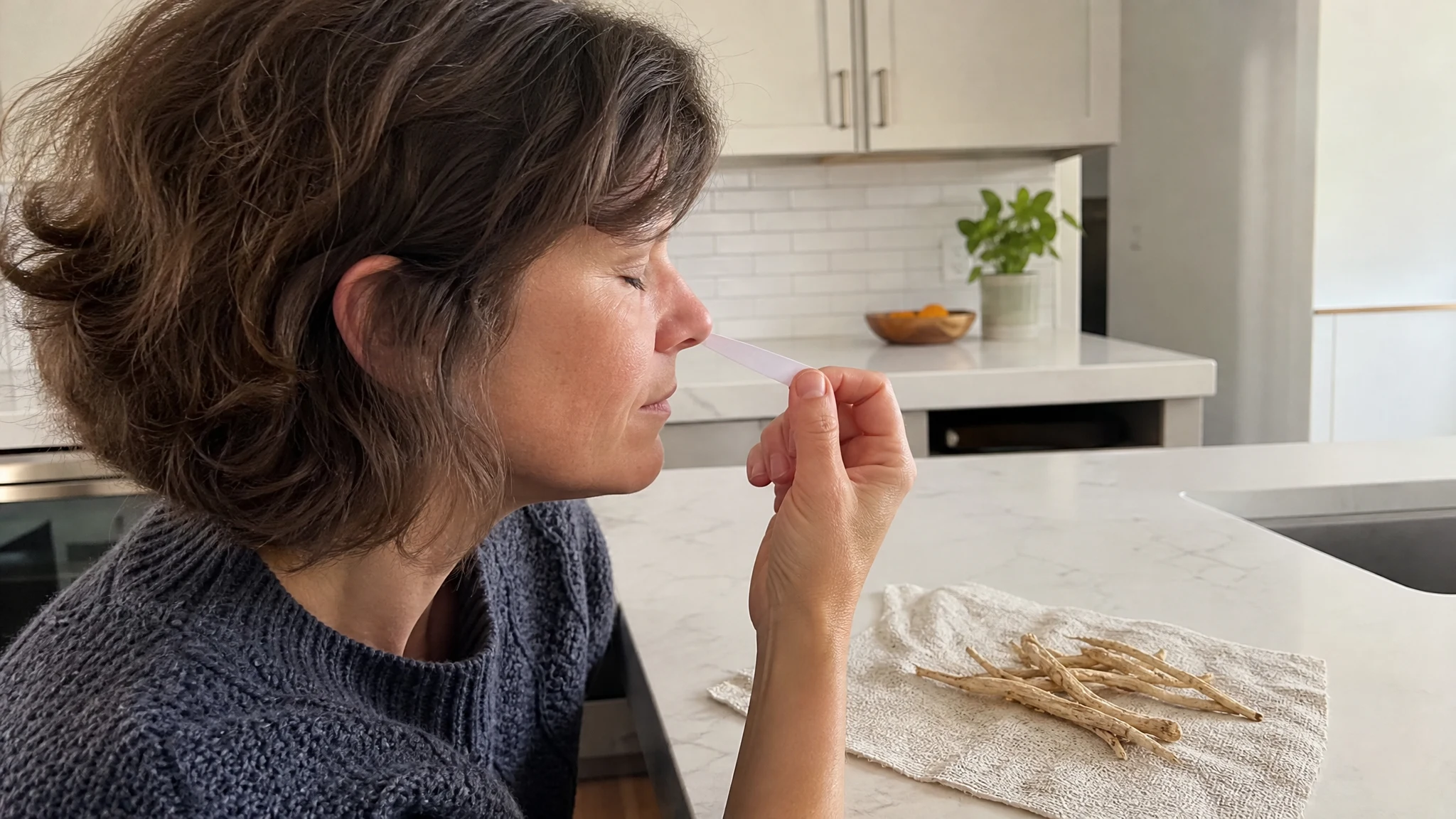
Some readers land on a page like this by accident while searching for the oil itself. If that is you, welcome. The oil is earthy, musky and woodland-damp, with a balsamic sweetness at the end, and it is happiest in tiny amounts. A small bottle, a blotter strip and an hour of patience will tell you more than any article can. Keep the bottle capped and out of a cat's reach, and enjoy it for what it is, a strong and interesting aroma.
A short note makes the appointment productive: when the urge starts and how long it lasts, your caffeine and alcohol habits, any medicines or supplements you take (valerian included, with doses), and whether iron has been checked. Those are the questions the NHS page itself raises, and the answers are far more useful to a clinician than any bottle.
Valerian Root Essential Oil
Valerian Root Essential Oil from our own shop, in sizes from 0.5 oz to bulk.
From $31.99
Shop Now →Sources & Further Reading
- NHS, Restless legs syndrome.
- González-Parejo P et al. Effects of Dietary Supplementation in Patients with Restless Legs Syndrome: A Systematic Review. Nutrients 2024.
- National Center for Complementary and Integrative Health, Valerian: Usefulness and Safety.
- U.S. Food and Drug Administration, Fragrances in Cosmetics.