Valerian vs Melatonin: Same Aisle, Different Things
Walk down a supplement aisle and valerian and melatonin end up within arm's reach of each other, so it is easy to assume they are two versions of the same thing. They are not. One is a plant root, the other is a hormone, and the oil we bottle is a third thing again.
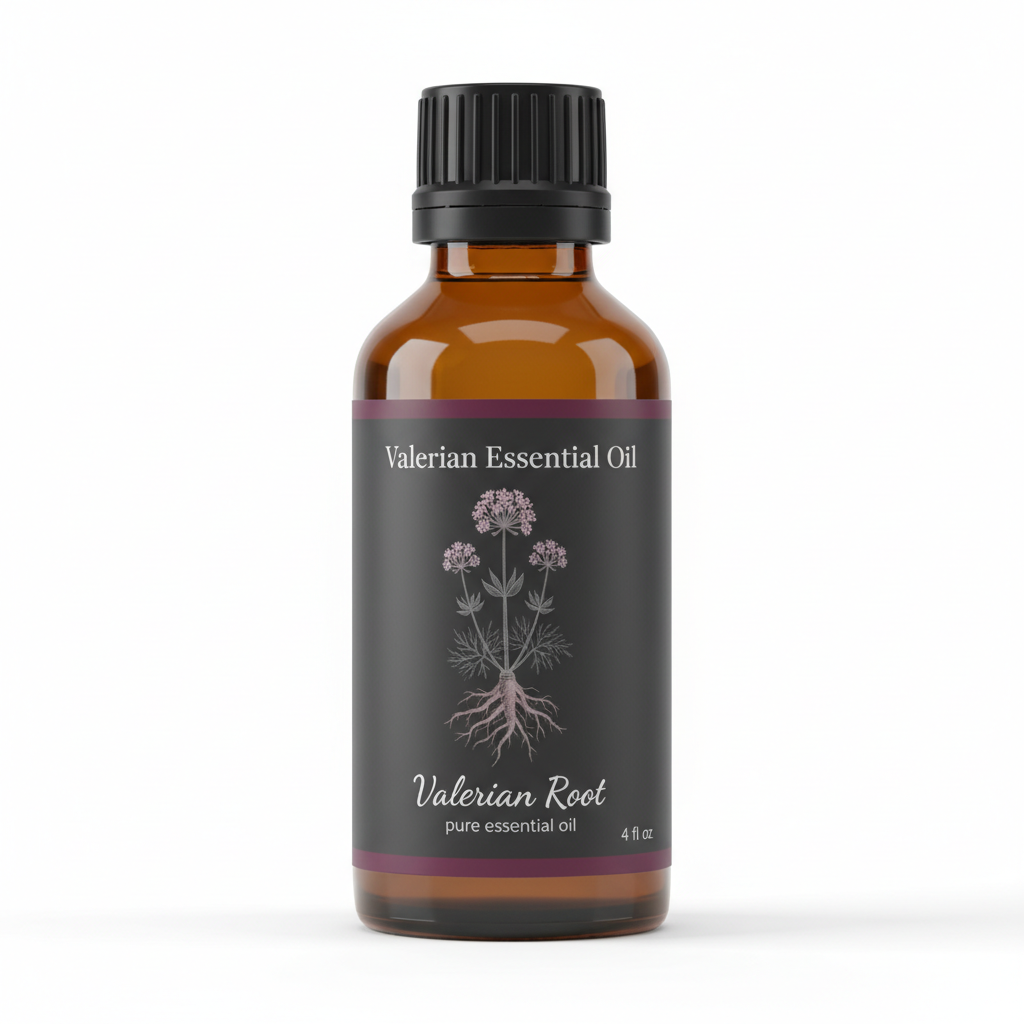
Valerian Root Essential Oil
Our own Valerian Root Essential Oil, in sizes from 0.5 oz to bulk.
From $31.99
Shop Now →Three materials that share a shelf
Melatonin is something your own brain makes. The National Center for Complementary and Integrative Health describes it as a hormone the brain produces in response to darkness, one that helps set the timing of your internal clock. The supplements are mostly made synthetically and sold as tablets, gummies and liquids.
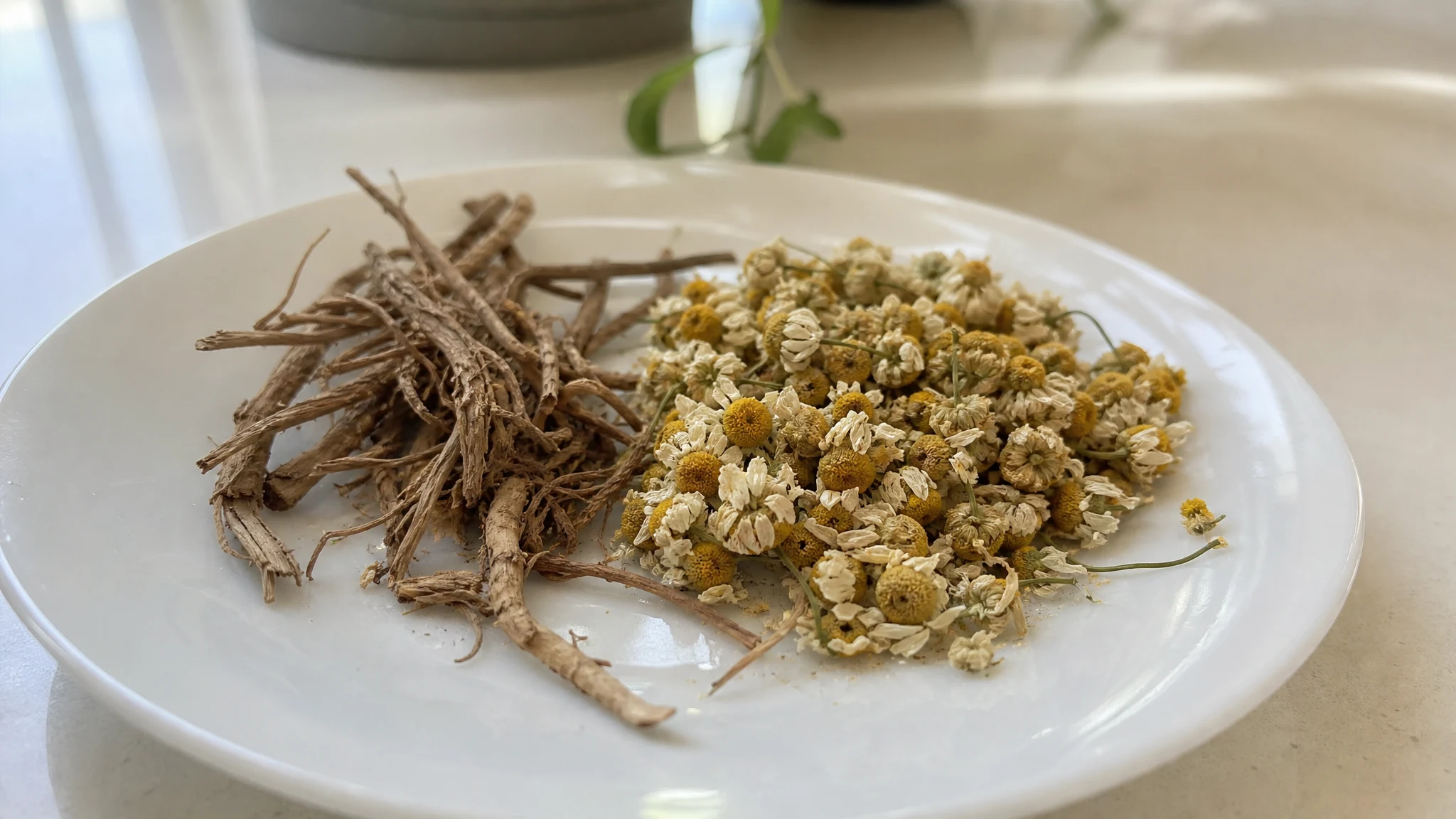
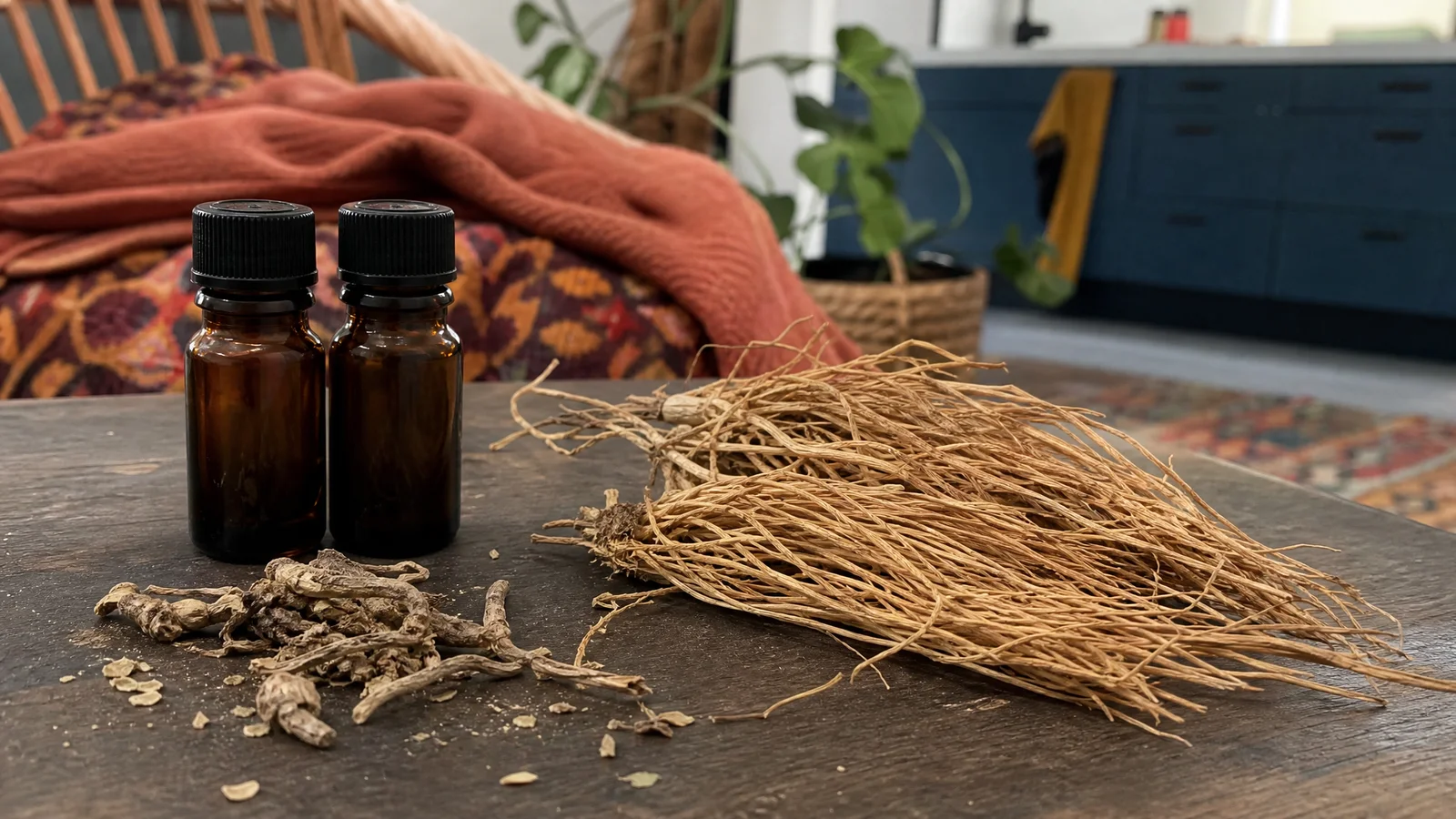
Valerian (Valeriana officinalis) is a flowering plant, and what ends up in capsules, teas and tinctures is its roots and rhizomes. When people say "valerian" in a health context, they almost always mean one of those swallowed root preparations.
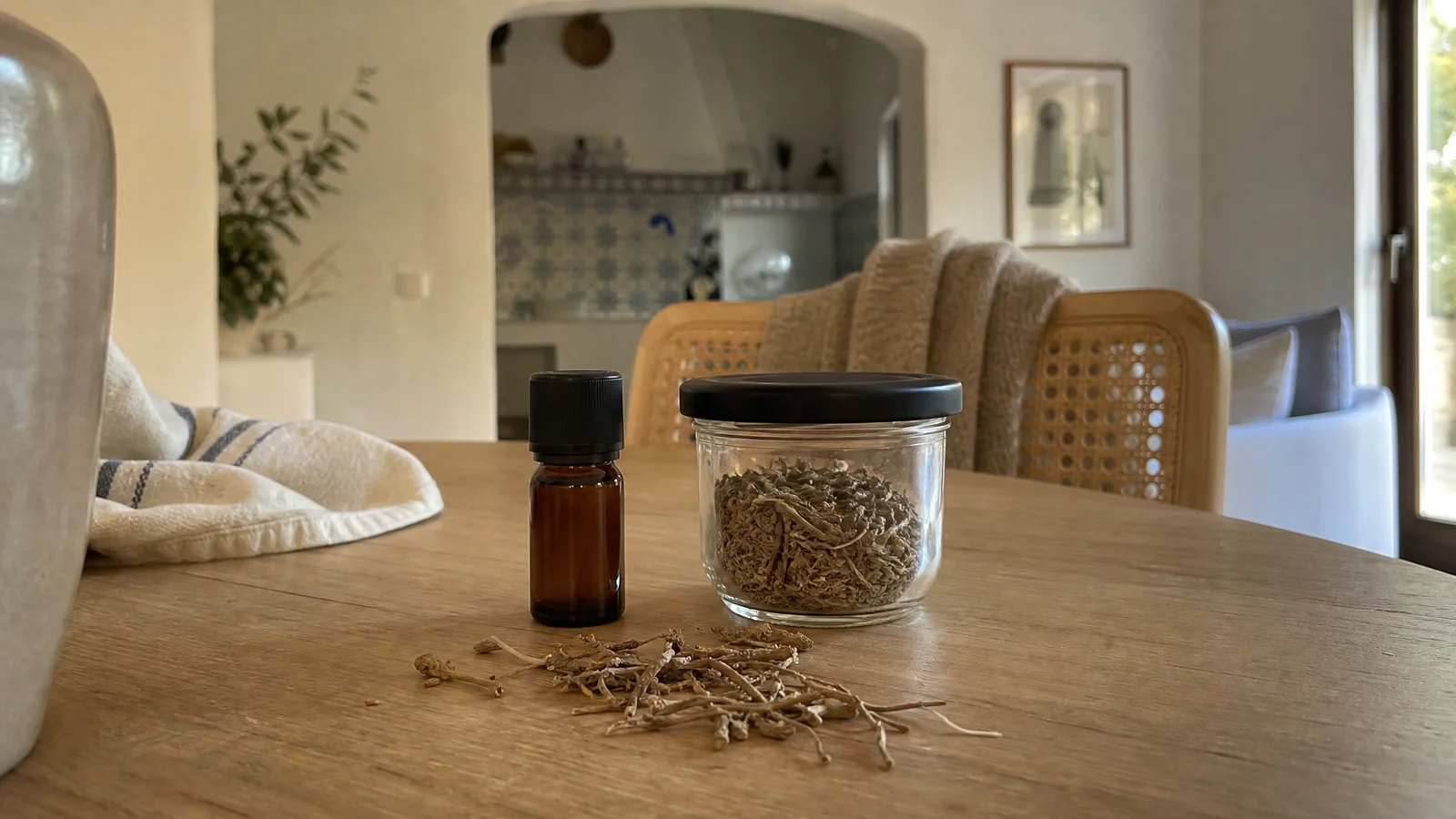
Our valerian root oil is the third material. It is steam-distilled from the root and rhizome, sold neat, and made for aromatic and cosmetic use. It is never meant to be swallowed, and we sell it as a perfumery-style base note with an earthy, musky, woodland-damp character. We do not sell valerian capsules or melatonin, so nothing here is a recommendation to buy either. This is a guide to telling them apart.
What the health agencies say
For swallowed valerian, NCCIH says the evidence on sleep problems is inconsistent, and that there is not enough evidence to decide whether it helps with any health condition. It also notes that the American Academy of Sleep Medicine's 2017 guidelines recommended against valerian for chronic insomnia in adults.
Melatonin has a more nuanced record. NCCIH says supplements may help with certain things such as jet lag, and describes studies of travelers flying east where melatonin looked better than placebo for overall jet lag symptoms. For chronic insomnia, though, the same page says the sleep medicine and physician guidelines did not find enough strong evidence to recommend it. Even the agencies do not fully agree: the UK's NHS says melatonin tablets are not recommended on the NHS for jet lag because there is not enough evidence they work.
The useful takeaway is that neither one is a settled answer, and the people best placed to weigh them for you are a physician or pharmacist who knows your situation.
Why the confusion is understandable
Shelves are arranged by shopper habit, not by what a thing is. Products that people tend to look at together end up side by side, even when one is a hormone, one is a root and one is a perfumery oil. That is no one's fault, but it does mean the label deserves a slower read than the shelf encourages. Check what the material is, what form it takes and how it is meant to be used, and let the answer to the last question settle which cupboard it goes in.
Why labels matter more than you would think
One detail from the melatonin side is worth remembering whichever supplement you look at. NCCIH reports a 2023 study that found 22 of 25 over-the-counter melatonin gummies were inaccurately labeled, with amounts running from 74 to 347 percent of what the label said. Supplements are regulated less strictly than drugs in the United States, so what is on the bottle and what is in the bottle can differ.
That is part of why we are careful with our own paperwork. The Certificate of Analysis we publish covers one batch and lists three physical measurements: density, refractive index and optical rotation. It does not list constituents, and if you need a GC-MS report or other documents for your own work, you can ask us in writing through the contact page before ordering and get the answer in writing.
Medicines, pregnancy and our own guidance
NCCIH advises that valerian should not be taken with alcohol or sedatives, and says little is known about its use in pregnancy or breastfeeding. For melatonin, it points to a lack of pregnancy research and says people with epilepsy or on certain medicines should check with their provider first. Our own guidance for the oil follows the same careful spirit: we say to avoid it in pregnancy as a precaution, not to combine it with sedative medication, and to keep it away from children and pets, cats especially. Our disclaimer also asks anyone who is pregnant, nursing or living with a medical condition to talk to their physician first. Our post on valerian and medicines goes deeper on that side.
A simple way to keep them straight
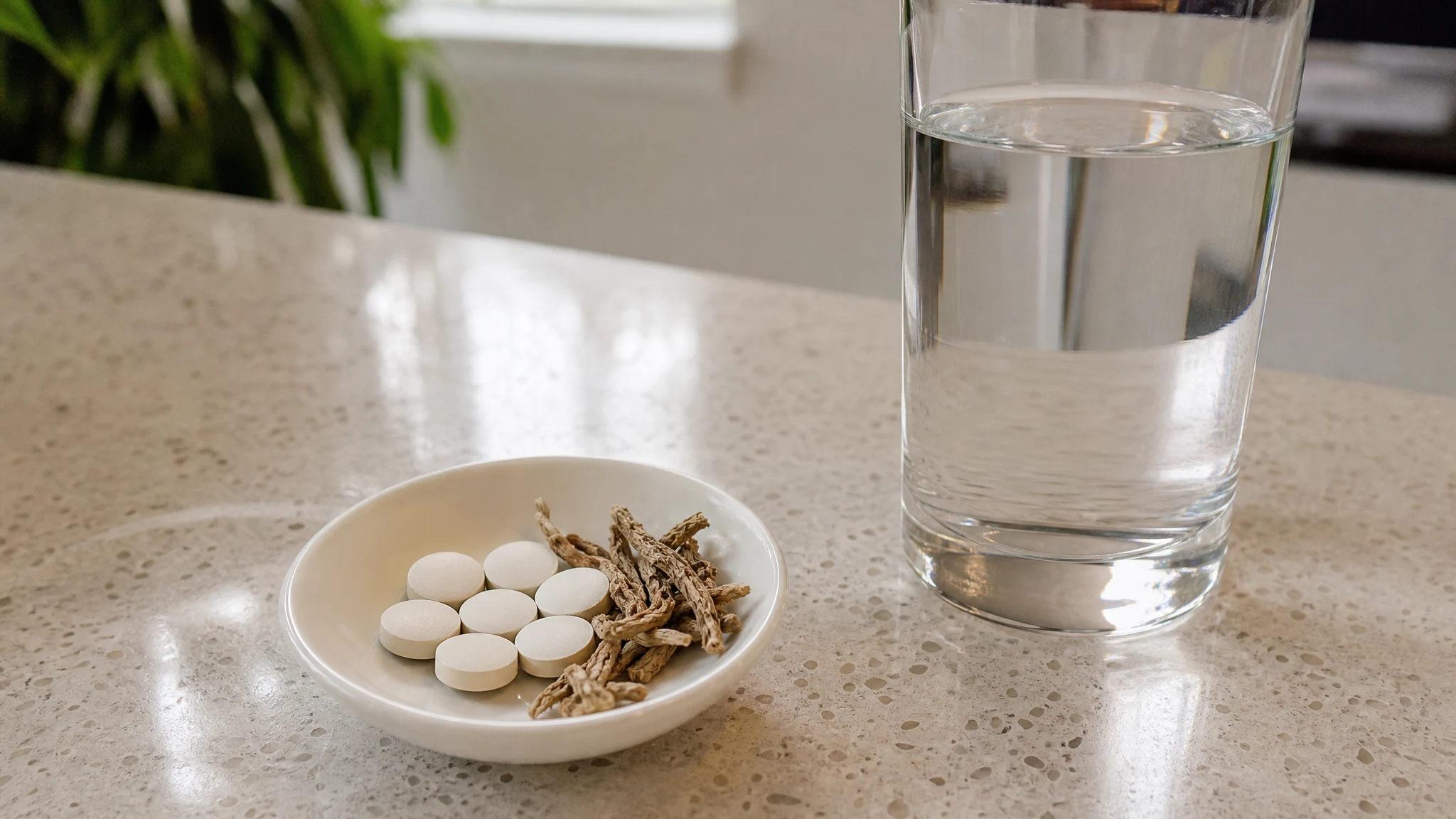
Think of three shelves in three different shops. A supplement shelf holds capsules, gummies and tablets. A grocery or pharmacy shelf holds teas. A perfumery or craft shelf holds essential oils. Valerian can show up on all three, and melatonin only on the first, and the rules for each shelf are different. A short note on the label, such as "swallowed," "brewed" or "aroma only," keeps anything you bring home in the right cupboard.
If you are here for the oil
Then the comparison you probably want is not melatonin at all. It is the difference between the root as a supplement and the root as a distilled oil, which we untangle in valerian oil vs valerian capsules and root oil vs essential oil. Our oil is for people who love an unusual, deep aroma and want to use it in tiny amounts.
If your real question is how to sleep better or manage jet lag, that is a conversation to have with a doctor or pharmacist, ideally before you buy anything.
If you are curious about our oil, the gentlest introduction is a drop on a blotter strip. Smell it fresh, then an hour later. Many people describe the first impression as damp earth and root, with a balsamic sweetness arriving last, and it is often a conversation starter at the kitchen table.
Valerian Root Essential Oil
Valerian Root Essential Oil from our own shop, in sizes from 0.5 oz to bulk.
From $31.99
Shop Now →