How to Dilute Valerian Oil: Drops, Percentages, Stock
Most dilution advice is about protecting your skin. With valerian, your nose usually has a say first. This is an oil with so much presence that a trace goes a long way, which makes dilution as much a matter of taste as of safety. Here is how we think about it, with the arithmetic laid out so you can check it yourself.
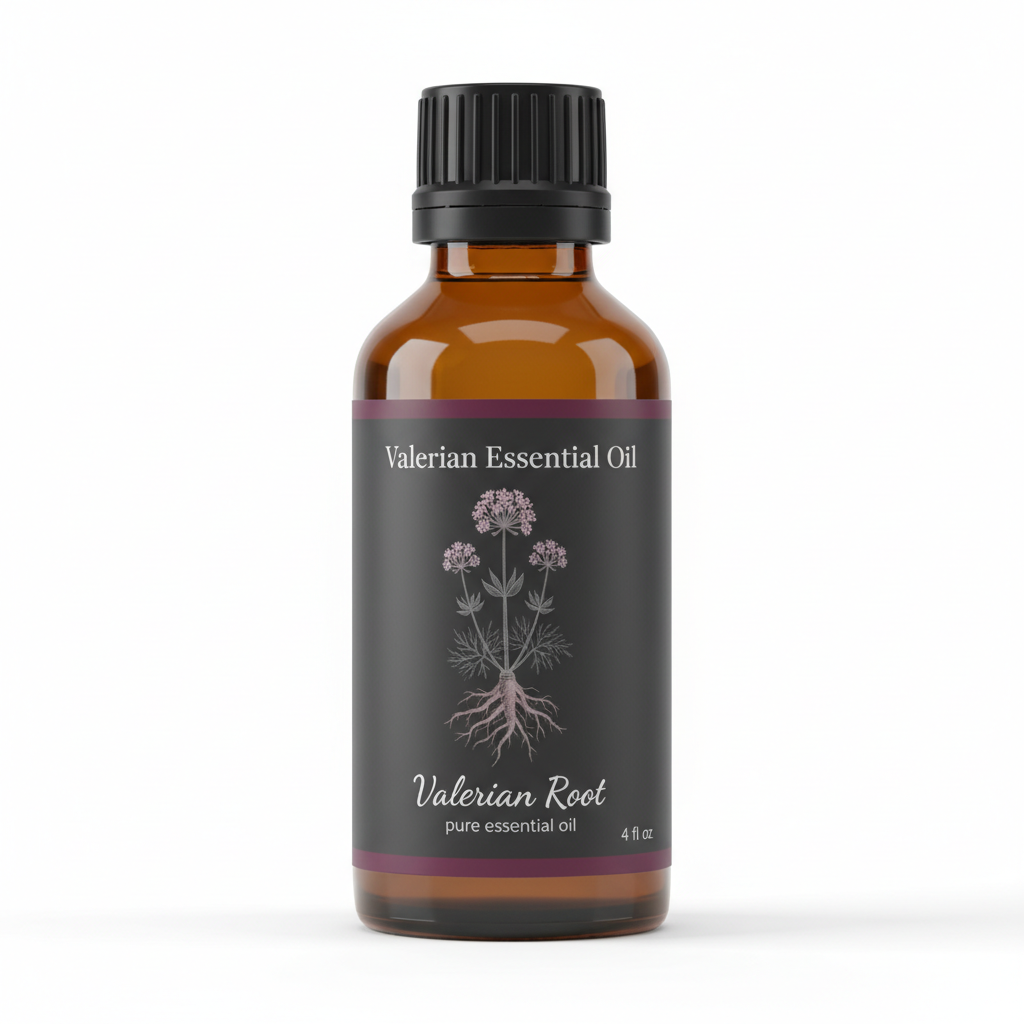
Valerian Root Essential Oil
Our own Valerian Root Essential Oil, in sizes from 0.5 oz to bulk.
From $31.99
Shop Now →Two ceilings, and which one you hit first
We sell valerian oil neat, so the dilution maths is yours. Our dilution guidance for skin is 0.5% to 2% in a carrier oil, with a patch test first. That range is general guidance, and we looked for a published dermal maximum specific to valerian oil to refine it. We could not verify one, so we do not claim a ceiling beyond our own guidance, and we suggest checking the current IFRA standards for your formulation if you are making something for others.
Given that, we start at the low end: 0.5%, and often less. Our reasoning is simple. The scent is tenacious and will dominate anything it is put beside, and the oil varies from lot to lot. In a laboratory study of five Estonian root samples, bornyl acetate alone ranged from 8.8% to 33.7% of the oil. Our certificate gives physical constants for one batch and no constituent figures, so we cannot tell you how strong a given lot will smell. Starting low is the cheap way to find out.
The arithmetic
These figures assume about 20 drops per ml and the relative density of 0.947 g/ml measured on the one batch on our certificate. A thick oil makes larger, slower drops, so treat counts as estimates and measure by volume or weight when accuracy matters. In 1 oz (about 30 ml) of carrier:
| Strength | Oil needed | Roughly in drops |
|---|---|---|
| 0.25% | 0.075 ml | 1 to 2 |
| 0.5% | 0.15 ml | 3 |
| 1% | 0.30 ml | 6 |
| 2% | 0.60 ml | 12 |
For a 10 ml roller, halve and halve again: 0.5% is a single drop. One drop weighs about 47 mg at that density, and one drop in a 30 ml bottle already works out to roughly 0.17%, which sits below the first row of the table. Many people will find that is plenty.
When the drops are too small to count
Half a drop cannot be measured. The classic fix is a stock solution. Mix 1 ml of valerian oil into 9 ml of carrier for a 10% stock, then use that: 0.5 ml of stock in 9.5 ml of carrier gives a 0.5% blend, and 1 ml in 9 ml gives 1%. Label it with the date. If you have a gram scale reading to 0.01 g, weighing beats counting, because 1% of 100 g of carrier is 1 g of oil and a thick oil clings to a dropper. That is reasoning about a viscous liquid, not a measured comparison, but it costs nothing to do.
We do not sell carrier oils, droppers or bottles, so pick a carrier you already like on your skin at a grocery, pharmacy or supply shop, and check its best-by date. Our notes on storing valerian oil cover keeping the stock, and roller bottle sums put these figures in recipe form.
Mixing it in practice
Set up before you open the bottle. Have your carrier, a clean dry container, a label and a pen on the table. Pour the carrier in first, add the valerian last, close the lid, and roll the container gently between your palms for a few seconds rather than shaking it hard. Then smell the cap and decide whether it needs anything more. Almost always, the honest answer is less.
Wipe the neck of the valerian bottle with a tissue before you cap it. A thick oil leaves a sticky ring on the thread, and a clean thread keeps the seal tight and the bottle pleasant to handle.
Patch test, then pause
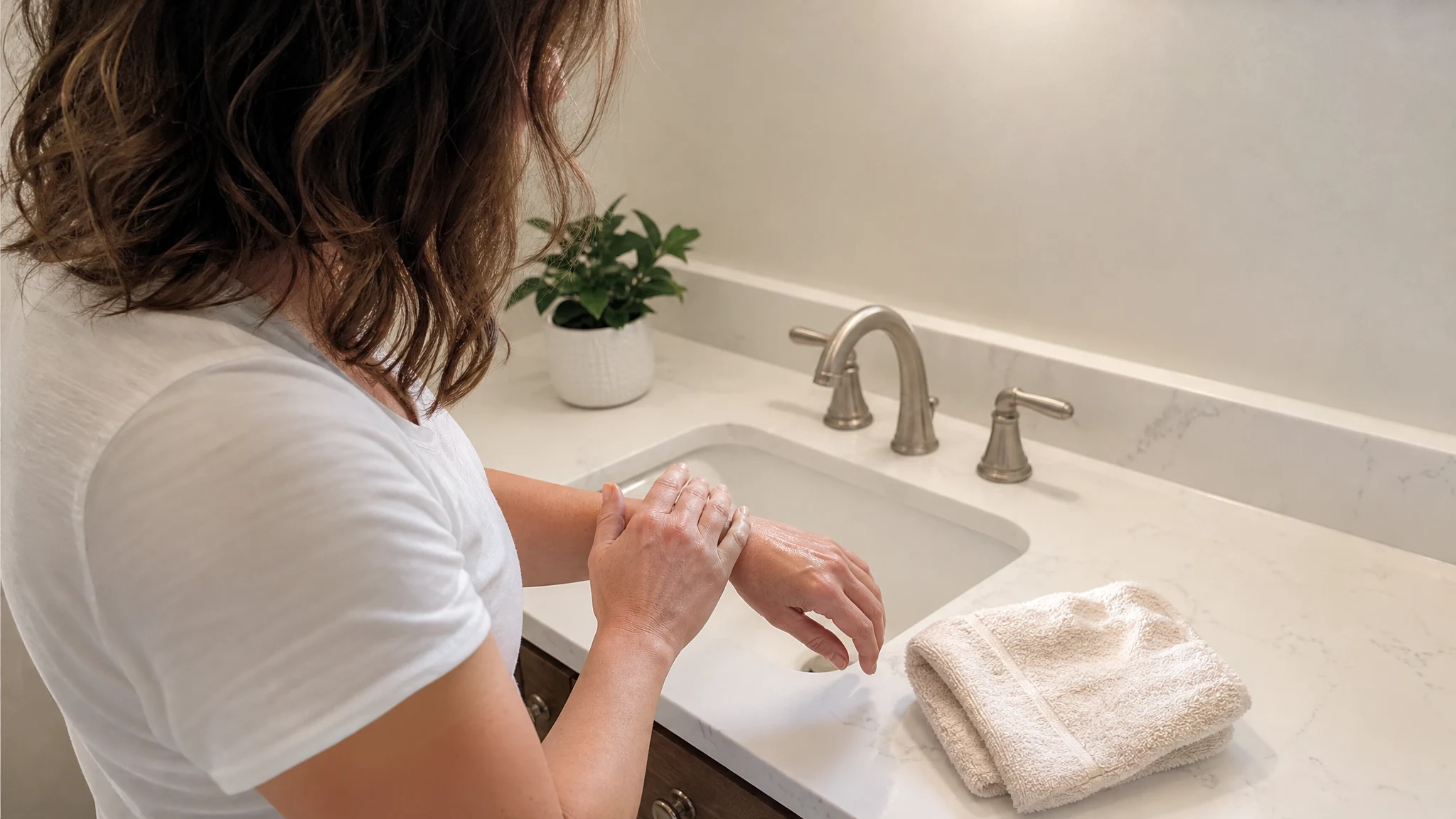
Poison Control describes diluting an essential oil in a carrier oil as the best way to avoid a bad reaction from direct skin contact, and advises against using oils on damaged skin. Dilution lowers the odds of a reaction rather than removing them, so put a small amount of your finished blend on the inner forearm first and stop if you notice itching or redness. If you have eczema, a history of fragrance allergy or sensitive skin, a pharmacist or dermatologist can steer you.
Smell the blend before you wear it
Before the blend goes anywhere near your skin, smell it on its own the next day. The first minute tells you about the loudest part of the oil; a day later you can tell whether you actually want to carry that scent around. If you can smell the blend clearly from across a table, it is probably stronger than you want for everyday wear, and a lighter version is the next thing to mix.
Who should skip home dilution
We advise avoiding the oil in pregnancy as a precaution and not combining it with sedative medication, and our disclaimer asks anyone pregnant, nursing or managing a medical condition to talk to a physician first. Keep the bottle and any blend away from eyes, children and pets. Cats in particular are strongly drawn to the scent, which is the subject of our post on valerian oil and cats.
The simple version: begin at 0.5% or below, measure rather than guess, patch test, and let how the blend smells tell you when you have reached enough. Valerian rewards a light hand.
Valerian Root Essential Oil
Valerian Root Essential Oil from our own shop, in sizes from 0.5 oz to bulk.
From $31.99
Shop Now →Sources & Further Reading
- Poison Control. Essential oils: Poisonous when misused.
- Raal A, et al., 2007. Variation in the composition of the essential oil of Valeriana officinalis L. roots from Estonia. Proc Estonian Acad Sci Chem.