Valerian Side Effects: Capsules vs the Oil
Search for valerian oil side effects and you will meet a lot of confident lists: headaches, upset stomach, vivid dreams. Look closely and nearly all of them belong to something else. They come from studies of capsules, extracts and tea, swallowed by people in trials. Our oil is an external, aromatic product, so it helps to pull the two apart.
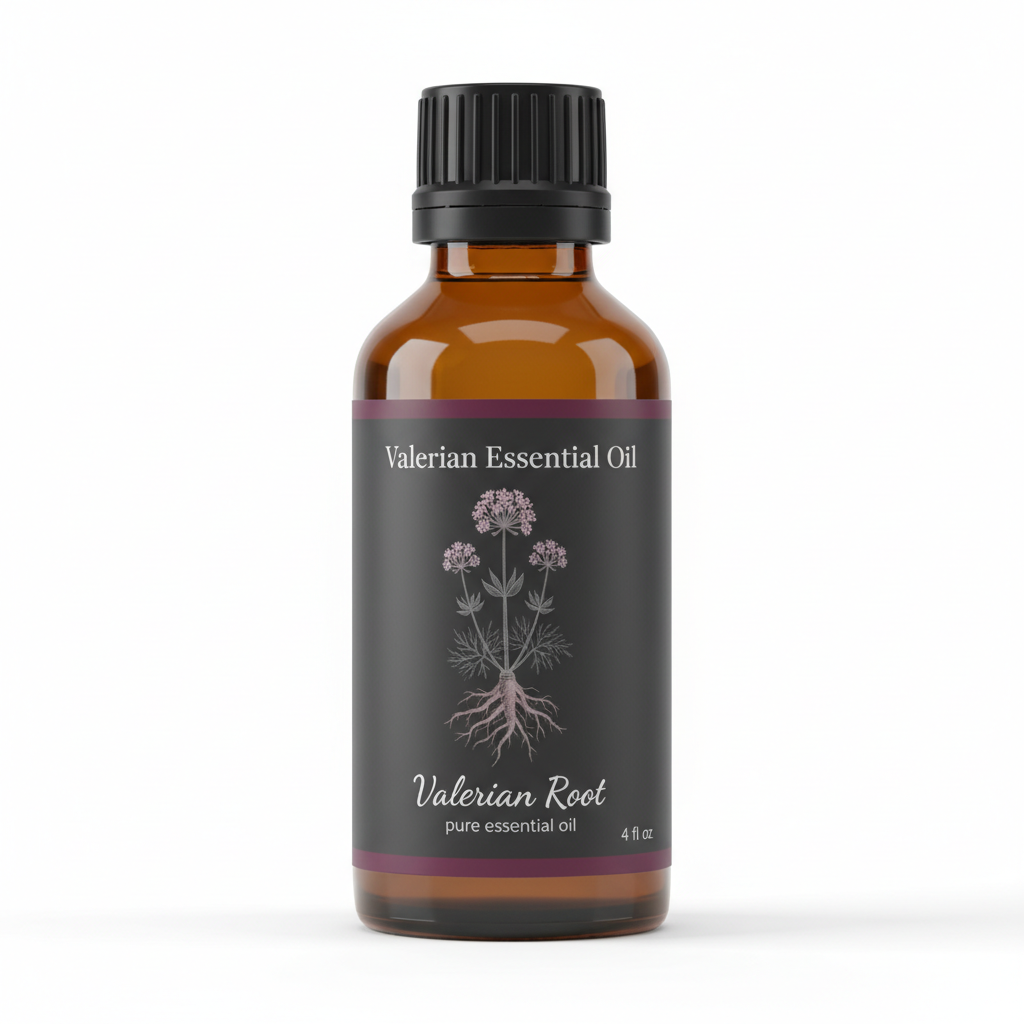
Valerian Root Essential Oil
Our own Valerian Root Essential Oil, in sizes from 0.5 oz to bulk.
From $31.99
Shop Now →Where the documented effects come from
NCCIH, writing about oral valerian supplements, lists headache, stomach upset, mental dullness, excitability, uneasiness and vivid dreams as side effects. It adds that some people who stop abruptly after chronic use may experience withdrawal symptoms, and that in very rare cases liver injury has been reported, most often when valerian was taken together with other herbal products. Every one of those statements concerns something taken by mouth. We sell our oil for aromatic and cosmetic use only, never internal, so oral effects do not describe correct use of what we offer. They matter mainly because they are the source of nearly every list online, and they get copied onto oil pages without a label.
The European Medicines Agency’s draft monograph for valerian essential oil, which covers oral liquids and bath additives sold as traditional medicines, lists no known undesirable effects for the bath-additive use. That is best read as an absence of reports rather than a clean bill of health.
Liver reports, in proportion
The liver is the headline worry with valerian, so here is some scale. The Berlin Case-Control Surveillance Study looked at hospital cases of liver injury from 2002 to 2011. Of 198 cases of hepatotoxicity, ten had a possible or probable herbal cause, and in five of those the herb was valerian, each rated only as possible. No case of acute liver failure or death was seen, and the authors point out that possible causality does not prove clinical significance. The study concerns oral products, many of them mixtures. We know of nothing that links the essential oil, as an aroma or on skin, to liver injury, and nothing that rules it out either. If you have liver disease or take medicines processed by the liver, ask a pharmacist or physician before adding any new botanical product.
What a reaction to the oil would look like
For a concentrated aromatic, the realistic concern is the skin. We are not aware of published incidence data for valerian oil, so what follows describes concentrated essential oils in general, not valerian statistics.
- Irritation shows up as redness, stinging or warmth soon after application, and it is more likely with stronger dilutions, on the face or on skin that is already damaged.
- Allergic contact dermatitis, according to the NHS, makes skin itchy, blistered, dry and cracked, with lighter skin turning red and darker skin turning dark brown, purple or grey. It usually appears within a few hours or days of exposure, most often on the hands and face. Poison Control notes that a rash is the most common allergic reaction to essential oils.
- Scent sensitivity is personal. We describe the aroma as earthy, musky and very tenacious, and we recommend using it in traces. If a smell gives you a headache, step away and ventilate.
Keeping the odds in your favor
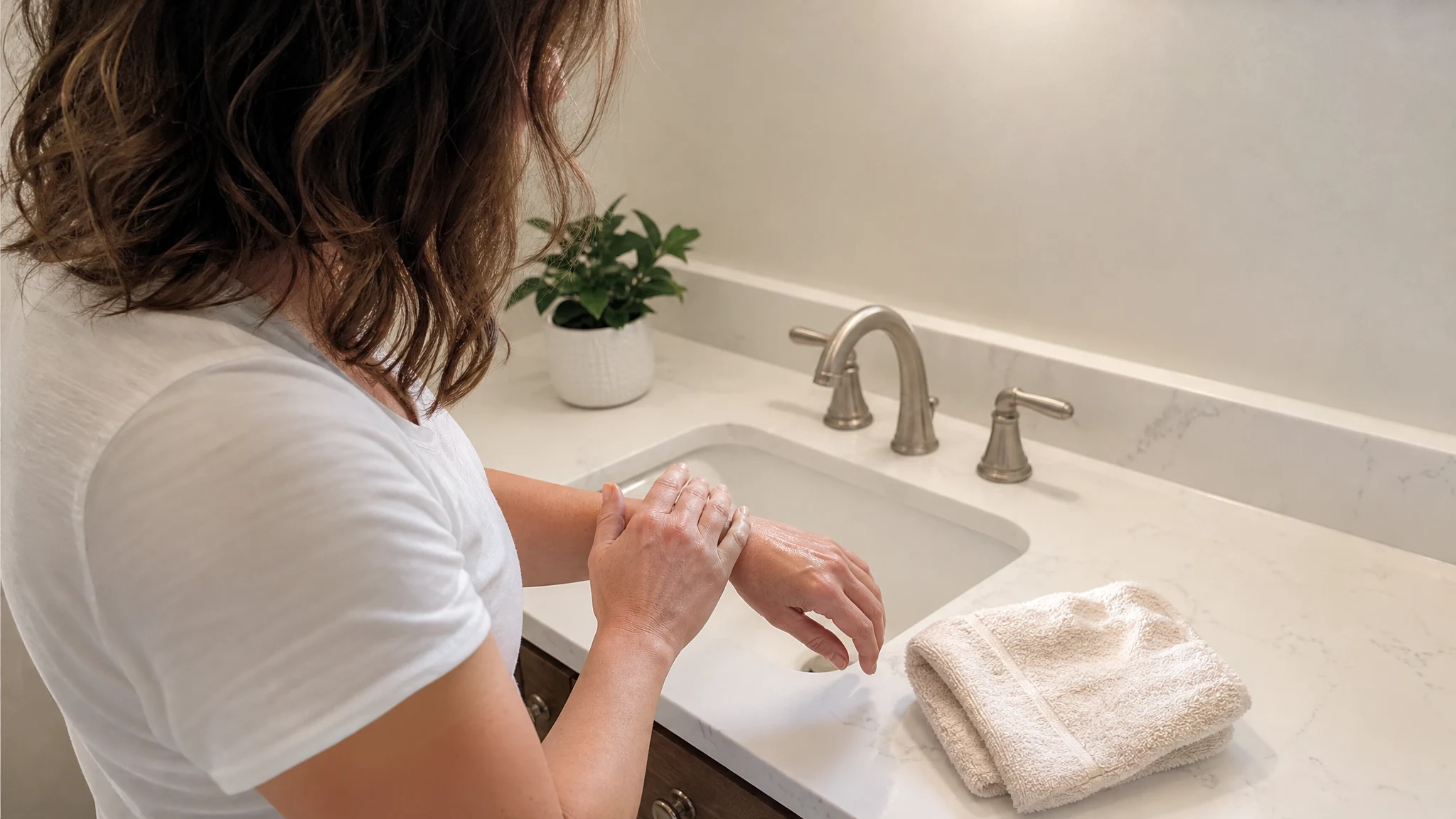
Our dilution guidance is 0.5% to 2% in a carrier oil, with a patch test first, and we suggest starting at the low end. Because we cannot point you to a published dermal limit for valerian oil, please also check current IFRA standards if you are formulating something of your own. As arithmetic, using the common convention of about 20 drops to the milliliter (a thick oil drops slowly, so weigh if you can), one ounce of carrier needs about 3 drops for 0.5%, 6 for 1% and 12 for 2%. Patch test on the inner forearm for a day before wider use, and never test on broken skin. Our post on diluting valerian oil walks through mixing, and where to apply it covers the rest.
Keep a simple note
If you try a new dilution, jot down the date, the percentage, the carrier and where you applied it. Should a reaction appear, you can tell your pharmacist exactly what went on the skin, and the carrier may turn out to be the cause as much as the valerian. Change one thing at a time, so that you can tell which change mattered.
One last point: noticing a strong smell is not a side effect. An earthy, musky oil registers at once. What matters is whether you find it pleasant, and if you would not choose it, you do not have to use it.
If something happens
Poison Control says to stop using an essential oil immediately if a rash or other skin reaction occurs, and to gently wash it off. The NHS suggests speaking to a pharmacist if contact dermatitis is troubling you and seeing a GP if symptoms are persistent, recurrent or severe. If the oil is swallowed or gets in the eyes, call a poison center; in the United States that is 1-800-222-1222. Difficulty breathing is an emergency.
If you feel drowsy or dizzy after any valerian product, do not drive, and tell a pharmacist or prescriber about any sedating medicine you take. We recommend never combining our oil with sedative medication, and our note on medications goes further. The short version: the documented side effects belong to the capsule, the reactions worth expecting from the oil are the ordinary ones for a strong aromatic on skin, and a low dilution with a patch test keeps them unlikely.
Valerian Root Essential Oil
Valerian Root Essential Oil from our own shop, in sizes from 0.5 oz to bulk.
From $31.99
Shop Now →Sources & Further Reading
- NCCIH: Valerian: Usefulness and Safety
- European Medicines Agency: European Union herbal monograph on Valeriana officinalis L., aetheroleum (draft, 2015)
- Douros A et al. Herb-Induced Liver Injury in the Berlin Case-Control Surveillance Study (Int J Mol Sci, 2016)
- NHS: Contact dermatitis
- Poison Control: Essential oils: Poisonous when misused