Valerian Root Oil or Essential Oil? Decoding the Label
"Valerian root oil" turns up on product listings, in recipes and in search bars, and it sounds like one thing. It is closer to a family of things, and which one you are holding changes how strong it is, how you dilute it and what its paperwork can tell you. Here is a short key.
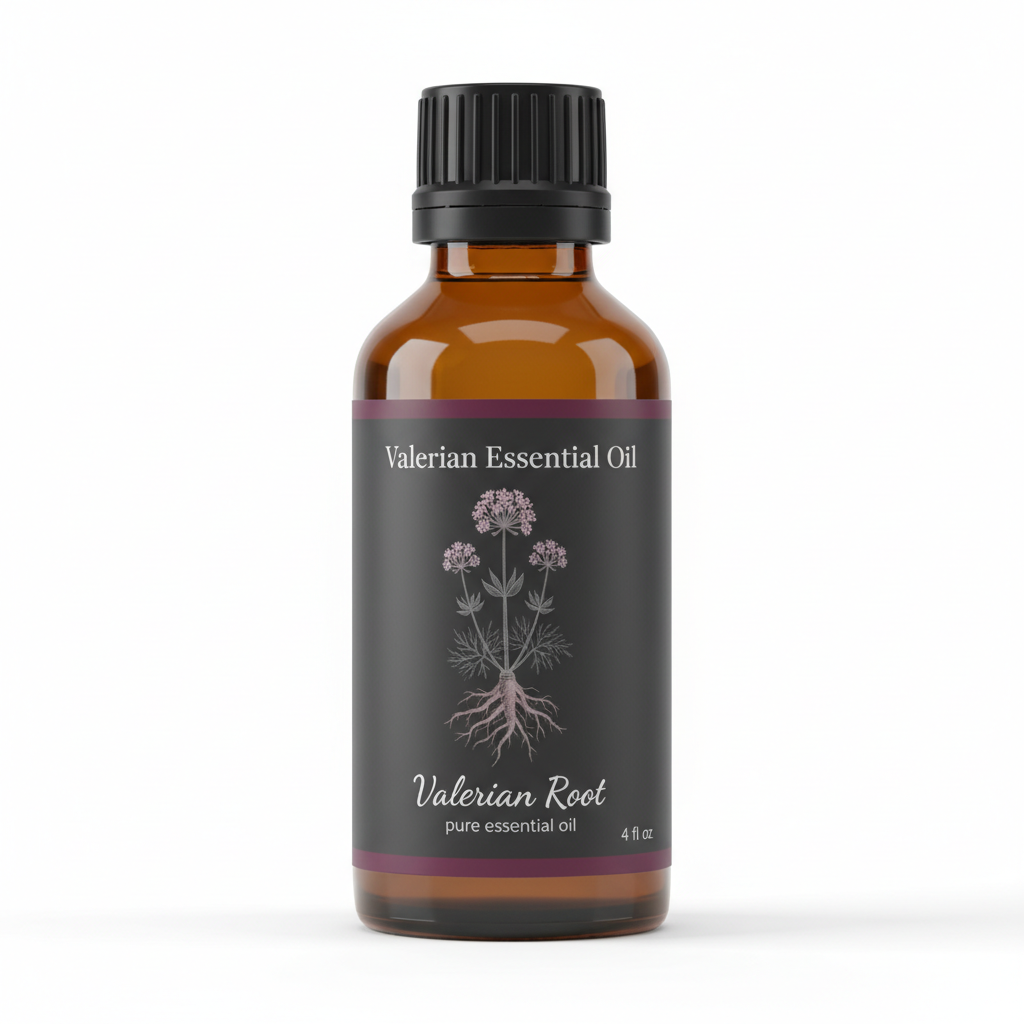
Valerian Root Essential Oil
Our own Valerian Root Essential Oil, in sizes from 0.5 oz to bulk.
From $31.99
Shop Now →Four things the phrase can mean
No standard defines a retail product called "valerian root oil", so the name has to be decoded from the rest of the listing. In practice it points to one of four materials.
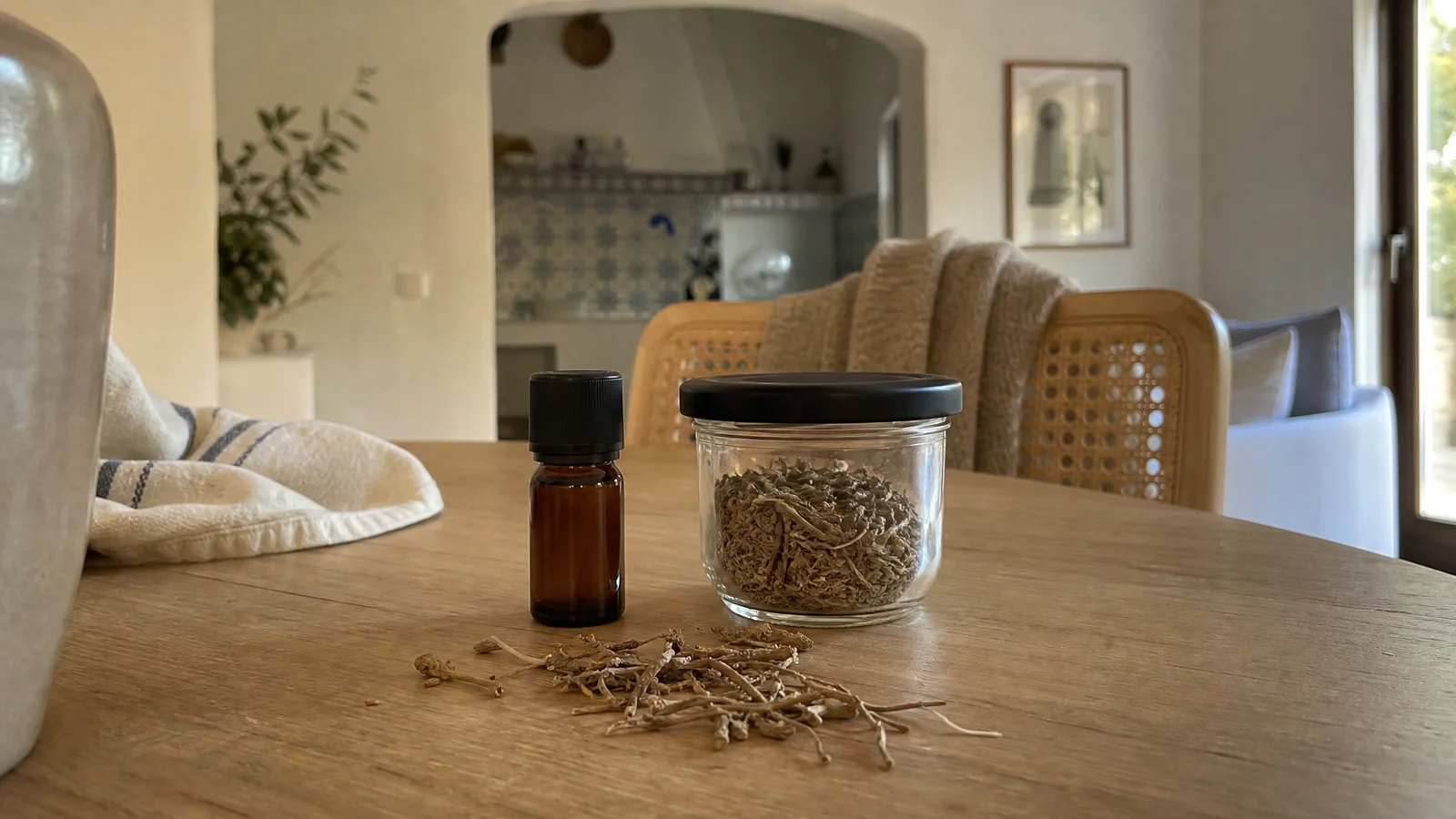
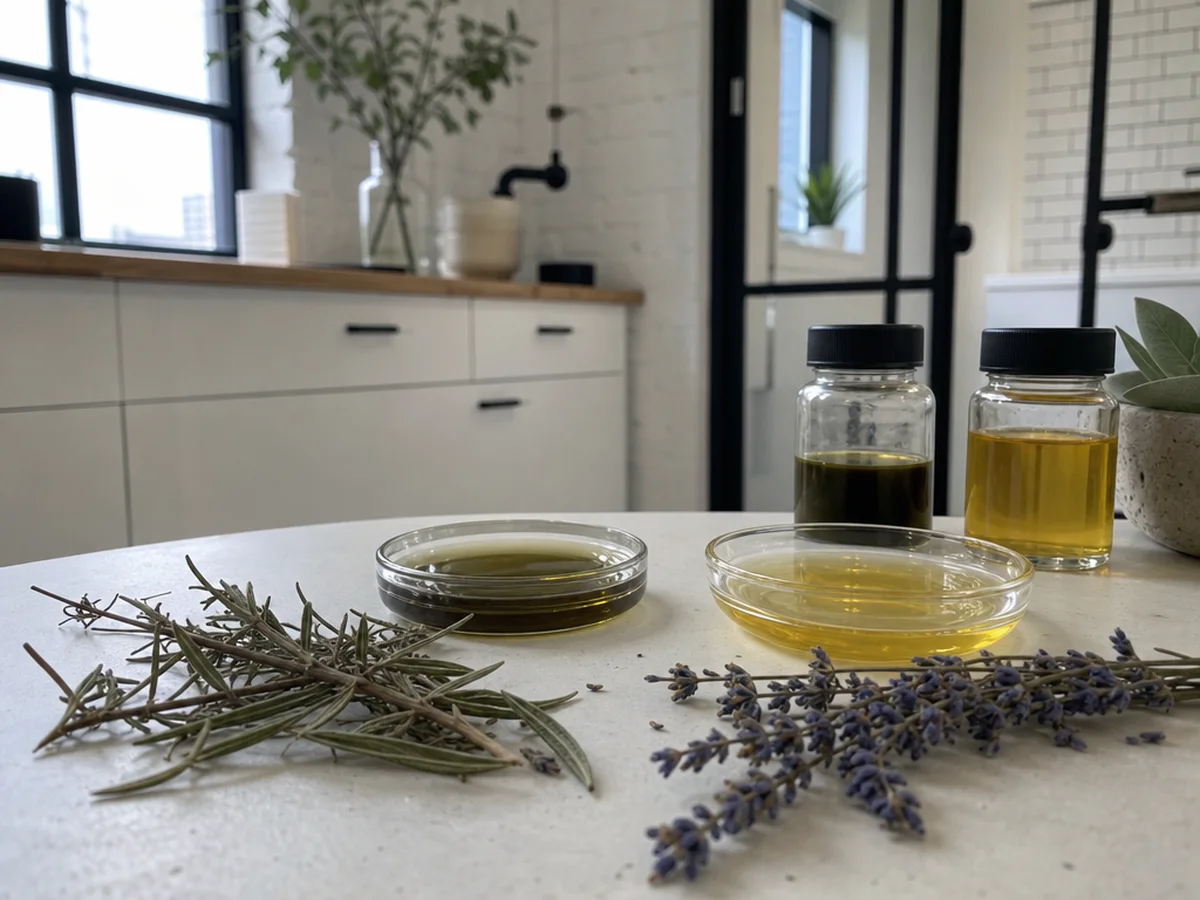
- A steam-distilled essential oil of the root. This is the one pharmacopoeias describe. The German pharmacopoeia definition quoted by the European Medicines Agency calls it the essential oil obtained from the roots of Valeriana officinalis (dried, cut) by steam distillation, a clear, yellowish to brown liquid with bornyl acetate and camphene as major constituents (Assessment report on Valeriana officinalis L., radix and Valeriana officinalis L., aetheroleum). It is also what we sell: one valerian root oil, steam-distilled from dried root and rhizome and sold neat.
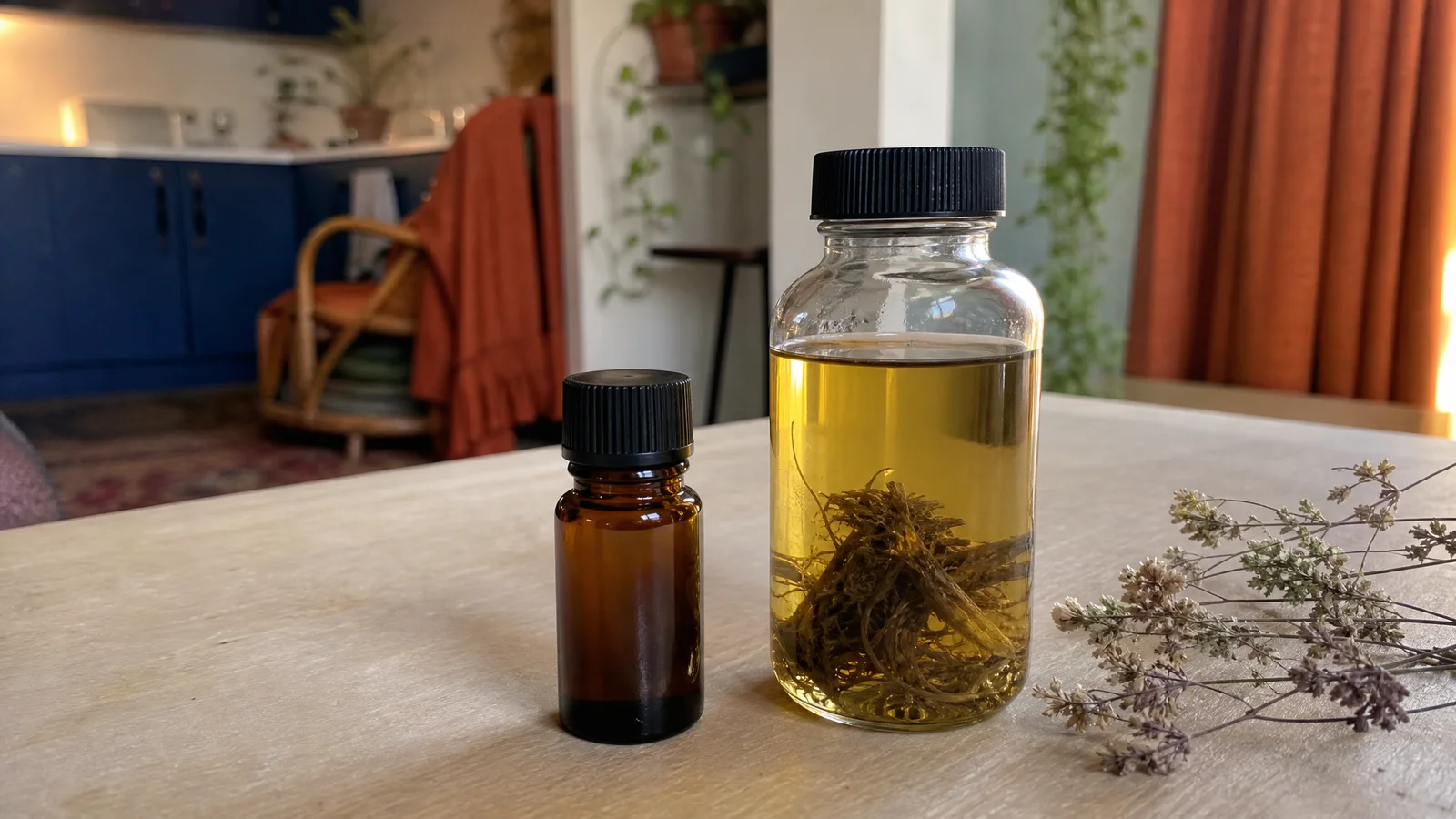
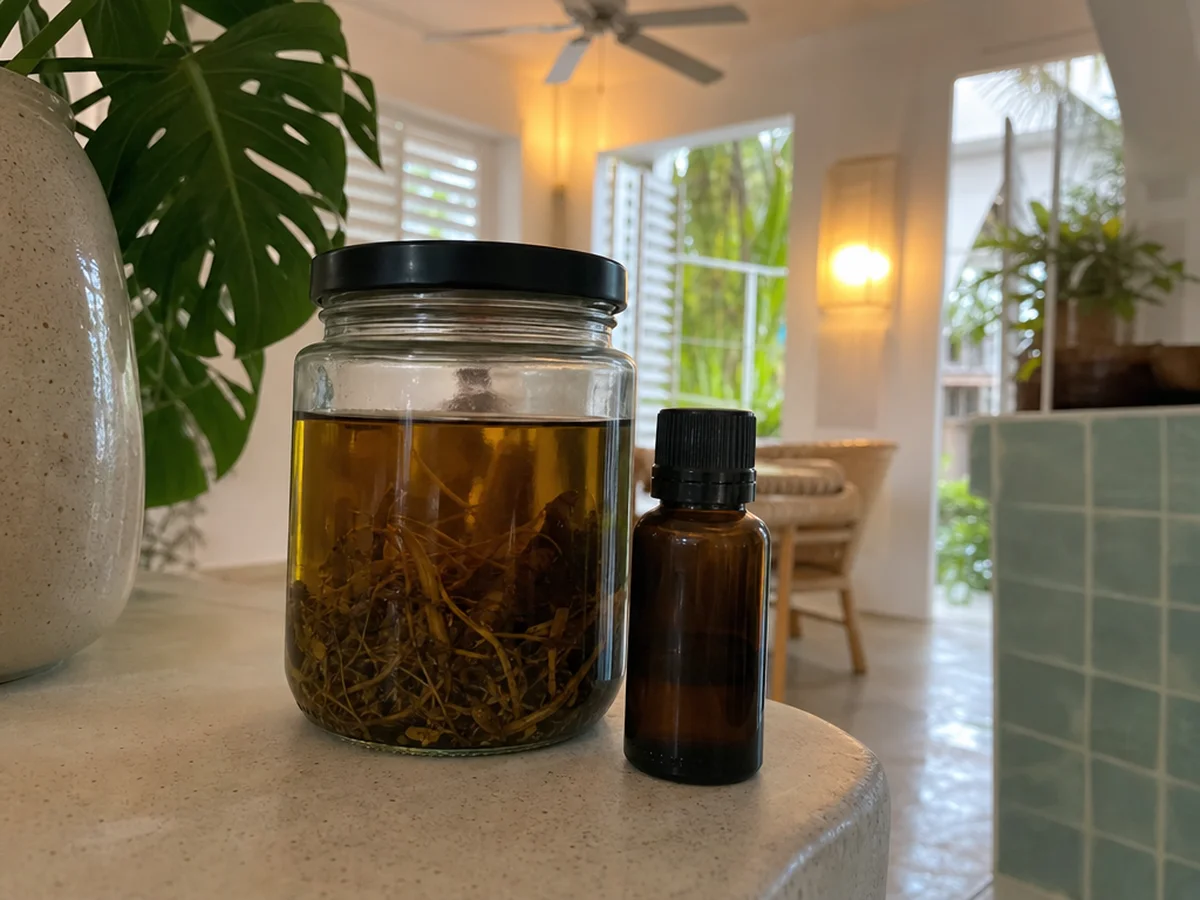
- An infused (macerated) oil. Dried root steeped in a carrier such as sunflower or olive oil. Nothing is distilled, the volatile content is whatever the carrier picks up, and by volume it is mostly carrier.
- A solvent or CO2 extract. A different process pulls a different mix of molecules from the root, so it is a cousin rather than a twin of the distillate, and its scent and thickness can differ.
- A ready-diluted oil. A distilled oil already mixed into a carrier. The label should give the percentage, because otherwise you cannot do your own dilution arithmetic.
The practical consequence is the same in every case: before you compare prices or smells, find out which of the four is in the bottle. A modest bottle of the third or fourth kind is not a bargain version of the first.
Read the ingredient line first
The ingredient line is the most dependable part of any listing. A distillate lists one ingredient, in the way the Certificate of Analysis we publish names ours: Valeriana officinalis (Valerian) Root Oil. A diluted product lists two, with the carrier named. A "valerian" with no Latin name leaves the species open, and species matters because different plants carry different chemistry. Valeriana officinalis is the accepted name for common valerian, and it sits in the honeysuckle family, Caprifoliaceae, in the GBIF taxonomy. Our guide to types of valerian oil explains the names, and valerian versus spikenard untangles a pair of roots that are often confused.
What the distillate itself is like
A distilled root oil is a range rather than a recipe. When researchers in Estonia hydrodistilled five V. officinalis root samples, they found oil yields of 0.28% to 1.16% of the cut root and bornyl acetate from 8.8% to 33.7%, with valerenal from a trace to 14.7% (Variation in the composition of the essential oil of Valeriana officinalis L. roots from Estonia). A wider review of earlier work reports bornyl acetate making up 20% to 60% of the oil in earlier studies (Chemical Components and Cardiovascular Activities of Valeriana spp.). Those spreads are the plant being a plant. They also mean that one constituent number cannot tell you whether an oil is "right".
The Certificate of Analysis we publish for one batch lists three measured values at 20 C: relative density 0.947, refractive index 1.473 and optical rotation of -19.80 degrees. It does not list constituent percentages. If a buyer wants GC-MS, species or origin confirmation for the lot they will receive, they can ask us in writing through the contact page and rely on what we send in writing. Our walk-through of the certificate covers each line.
A quick key for any listing
| If the listing says | It probably means | Ask |
|---|---|---|
| "Valerian essential oil", Latin name, root, steam distilled | A distillate like ours | Which batch, and what paperwork? |
| "Valerian root oil", no method | Any of the four | What method, and what is on the ingredient line? |
| "CO2 extract" or "solvent extract" | An extraction rather than a distillation | Is it comparable to a distillate for my use? |
| "In jojoba" or "in sunflower" | Already diluted | What percentage? |
A two-minute label routine
You do not need a laboratory to shop sensibly. Read the front of the bottle, then turn it over and read the ingredient line, then look for the Latin name and the plant part. Three quick reads, and most of the guesswork disappears. If the label and the listing disagree, send the seller a message and keep their answer. A seller who is happy to answer a short question in writing is usually a seller worth buying from.
Why it changes how you use it
A neat distillate is the most concentrated of the four, and the dilution guidance we give assumes one: we suggest 0.5% to 2% in a carrier with a patch test first, and for anything left on skin we would start at the lower end. Apply that figure to a product that is already diluted and you would be diluting twice; apply it to an extract and you would be assuming a composition nobody has described. Safety lines are specific to our oil, which is for aroma and cosmetic use only, never for swallowing. It is best kept away from eyes, children and pets, cats especially, and we suggest avoiding it in pregnancy as a precaution and not combining it with sedative medication.
If you are new to all this, the friendliest way in is a small bottle of whichever material you have decided on. Smell it on a strip, write down what you notice, and let the oil teach you what the words on the label were trying to say.
None of this makes a distillate better than an infusion or an extract. It makes them different tools, and the name on the front rarely says which one you have.
Valerian Root Essential Oil
Valerian Root Essential Oil from our own shop, in sizes from 0.5 oz to bulk.
From $31.99
Shop Now →Sources & Further Reading
- European Medicines Agency, Assessment report on Valeriana officinalis L., radix and Valeriana officinalis L., aetheroleum (EMA/HMPC/150846/2015).
- Raal A, Orav A, Arak E, Kailas T, Müürisepp M. Variation in the composition of the essential oil of Valeriana officinalis L. roots from Estonia. Proc Estonian Acad Sci Chem 2007.
- Chen HW, Wei BJ, He XH, Liu Y, Wang J. Chemical Components and Cardiovascular Activities of Valeriana spp. Evid Based Complement Alternat Med 2015.