Is Valerian Essential Oil Safe? What to Know
"Is it safe?" is a fair question about any essential oil, and with valerian the honest answer has a few layers. Almost everything written about valerian safety concerns oral root extracts, not a distilled oil used as a scent. Here is how we think about it, what the authorities say, and the sensible habits that go with a strong aromatic.
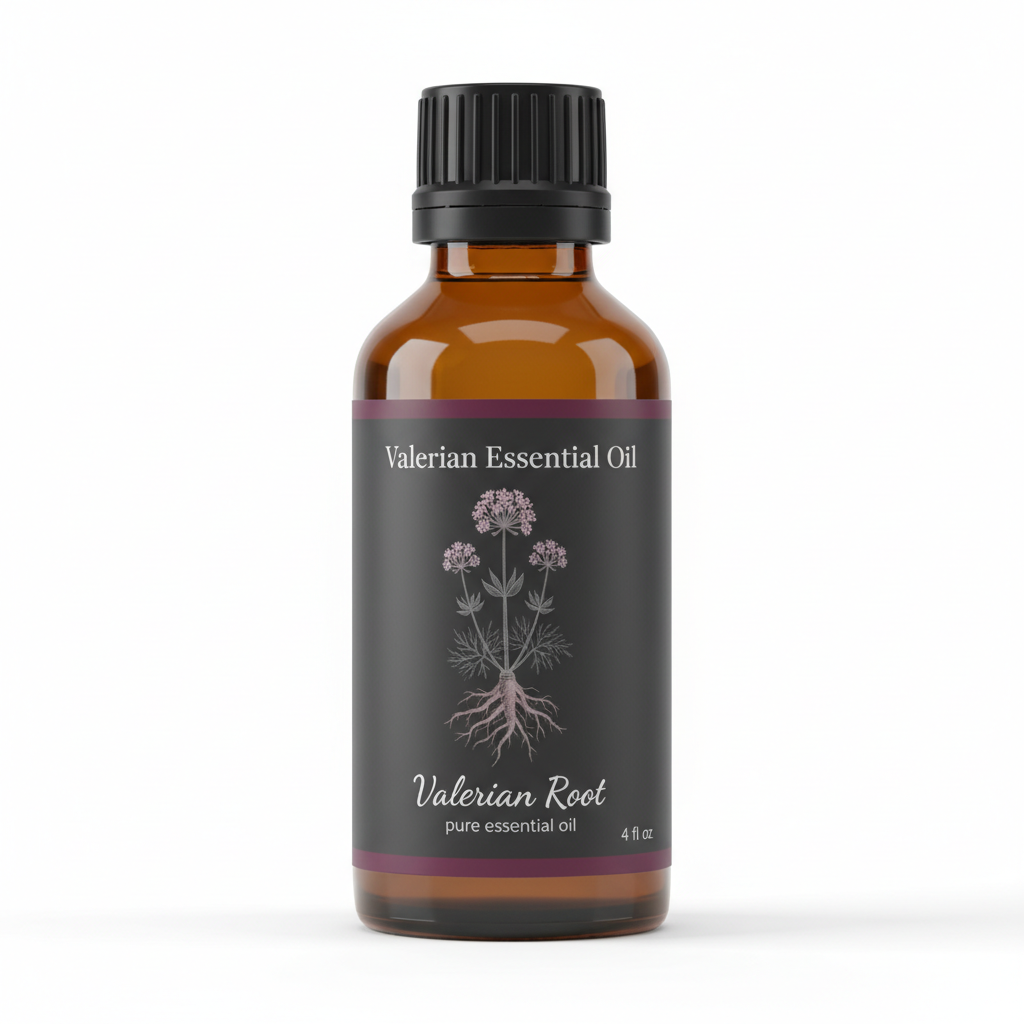
Valerian Root Essential Oil
Our own Valerian Root Essential Oil, in sizes from 0.5 oz to bulk.
From $31.99
Shop Now →What our oil is, and is not
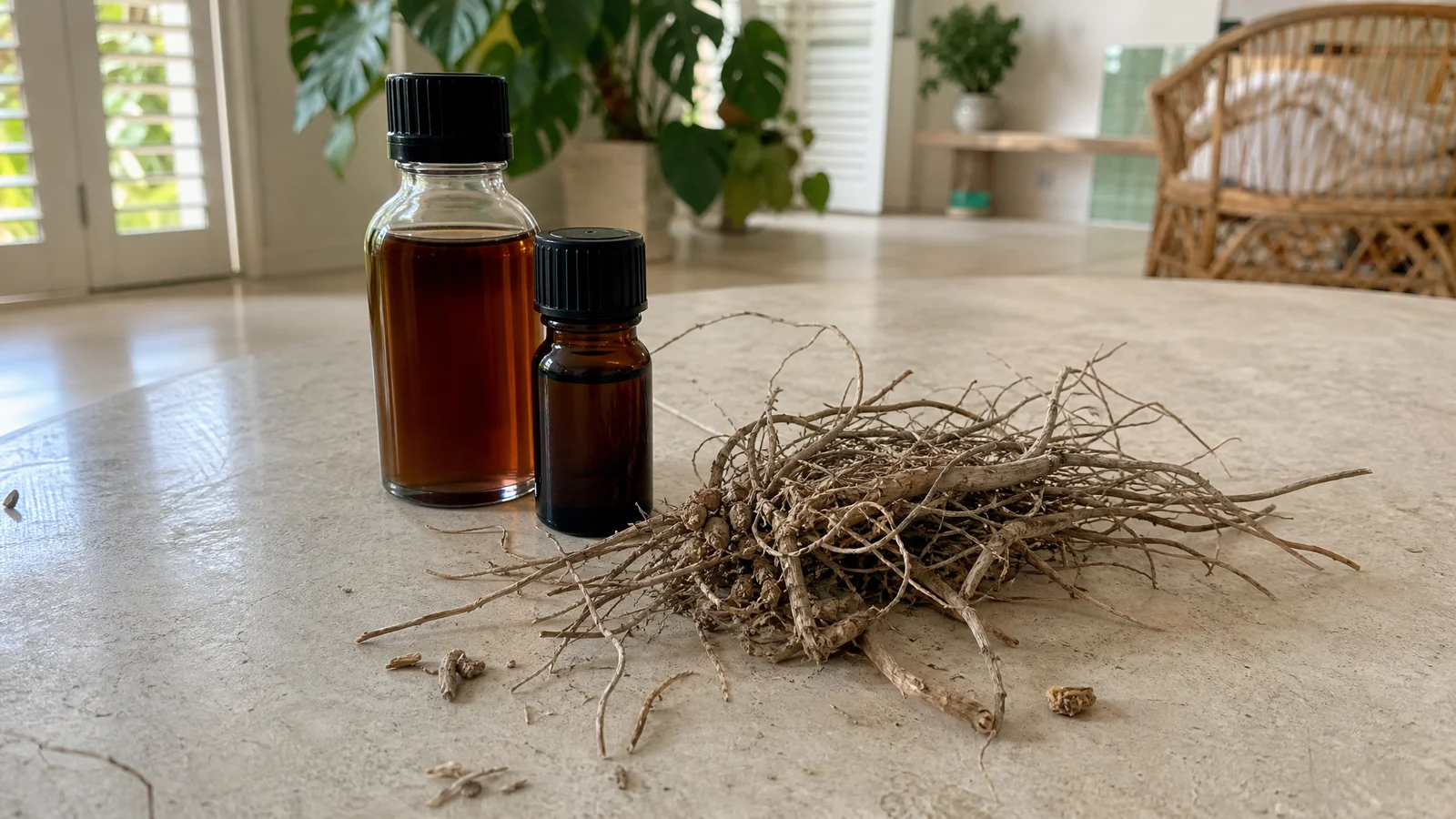
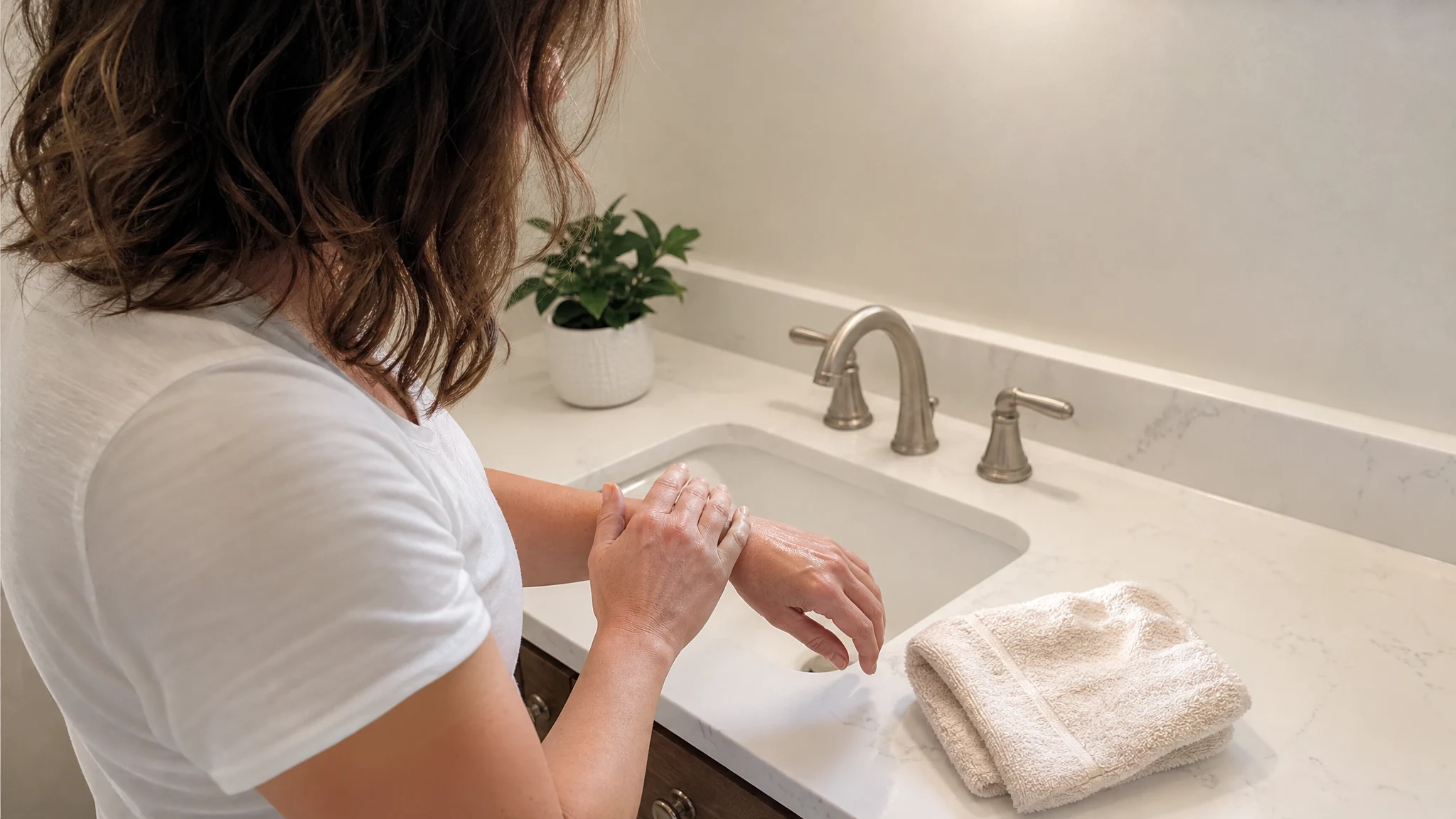
We sell one valerian oil, Valeriana officinalis root, as a perfumery-style base note for aromatic and cosmetic use only, never for internal consumption. It is sold neat. For skin we recommend diluting to 0.5% to 2% in a carrier oil and patch testing first, keeping it away from eyes, children and pets, and discontinuing if irritation appears. We make no health claim for it, and nothing here is medical advice.
On skin, we looked for a published dermal maximum for valerian oil and could not verify one. In that case we start at the low end: 0.5%, and often less. The scent usually limits how much you want anyway. If you are formulating for others, check the current IFRA standards for your own product. Our post on diluting valerian oil has the arithmetic.
What the authorities say
For oral valerian, the National Center for Complementary and Integrative Health says it has been used with apparent safety at 300 to 600 milligrams daily for up to six weeks, that long-term safety is unknown, and that little is known about use in pregnancy and breastfeeding. It lists side effects such as headache, stomach upset and vivid dreams, notes rare liver injury mostly alongside other herbs, and advises against combining valerian with alcohol or sedatives.
The European Medicines Agency has looked at the oil separately. In its assessment of valerian root and oil, the committee supported a traditional-use list entry for root preparations except for the essential oil, because it considered the data used to extend conclusions from the root to the oil insufficient to prove the oil's safety. A draft EU monograph for the oil exists, but it covers oral liquid and bath additive forms, says use in children under 12 is not established, and says use in pregnancy and lactation is not recommended for lack of data. It does not cover diffusing. Put simply, the regulators treat the oil carefully, and so do we.
Who should check first
- Pregnancy and nursing. We advise avoiding the oil in pregnancy as a precaution, and our disclaimer asks you to consult a physician. A doctor or midwife is the right person. See valerian oil in pregnancy and breastfeeding.
- Anyone taking sedating medication. We advise not combining the oil with sedative medication. A pharmacist can tell you what applies to your prescriptions. See valerian and medications.
- Households with children. Poison Control notes that children's thin skin and immature livers may make them more vulnerable than adults, and advises keeping oils locked up and out of reach. A sealed bottle in a closed cabinet is the habit that matters most.
- Cat owners. Valerian draws cats. In a six-cat study, valerian was one of five plants that could provoke the catnip-style response, with individual cats differing. We keep the bottle sealed and out of reach, and our post on valerian oil and cats goes further.
- Sensitive or broken skin. Poison Control advises against using essential oils on damaged skin, and describes dilution in a carrier as the best way to avoid a bad reaction from direct contact. If you have eczema or a history of fragrance allergy, ask a pharmacist or dermatologist, and patch test a small area of the finished dilution first.
Reading safety pages, ours included
When you read any safety page online, ask what each statement is about. Is it about a swallowed capsule, a diluted oil on skin, or an aroma in a room? Is it a published limit, or someone's rule of thumb? We try to label which is which, and where we could not find a published figure we say so. A page that sounds sure about everything deserves a second look, and so does ours if we ever lose that habit.
If you are buying to formulate
Our Certificate of Analysis covers one batch and gives density, refractive index and optical rotation, so it is not a safety file. If you need a safety data sheet, an allergen declaration or an IFRA certificate, ask us in writing through the contact page for the lot you will receive, and rely on the written answer. Our guide to reading the certificate explains what it does show.
Everyday handling habits
- Cap the bottle straight after each use and store it upright in a cool, dark cabinet.
- Label anything you dilute with the percentage and the date.
- Wipe drips with a paper towel and bin it, and wash your hands afterwards.
- Never decant it into a bottle that once held a drink or food.
- Tell the rest of the household where it lives and why it stays there.
None of that is complicated, and all of it is cheap. Most trouble with strong aromatics starts with a bottle left open on a counter, not with the oil itself.
The practical summary
Valerian oil is a strong-smelling aromatic with a thin safety literature, so we treat it with respect: dilute, use traces, patch test, keep it capped and out of reach, and let a professional decide the cases that are not ours to decide. Used that way, it is a wonderfully distinctive ingredient to explore.
Valerian Root Essential Oil
Valerian Root Essential Oil from our own shop, in sizes from 0.5 oz to bulk.
From $31.99
Shop Now →Sources & Further Reading
- National Center for Complementary and Integrative Health. Valerian.
- EMA/HMPC, 2016. Assessment report on Valeriana officinalis L., radix and Valeriana officinalis L., aetheroleum (EMA/HMPC/150846/2015).
- EMA/HMPC, 2015. European Union herbal monograph on Valeriana officinalis L., aetheroleum (draft, EMA/HMPC/278053/2015).
- Poison Control. Essential oils: Poisonous when misused.
- Bol S, et al., 2022. Behavioral differences among domestic cats in the response to cat-attracting plants and their volatile compounds reveal a potential distinct mechanism of action for actinidine. BMC Biol.