Valerian and Stress: What the Studies Actually Tested
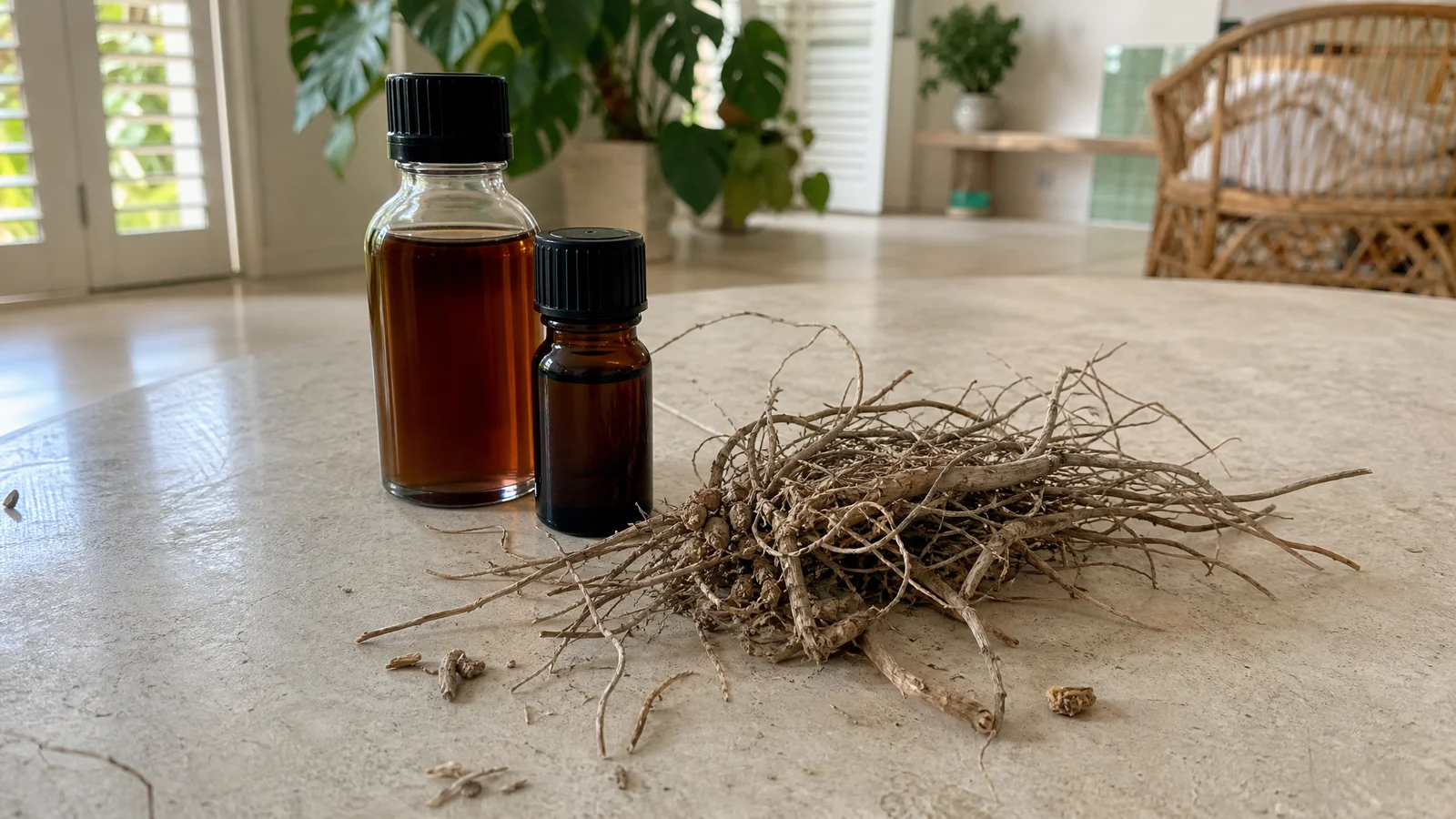
"Valerian reduced anxiety" is a headline that hides a surprising amount. Was the valerian swallowed, or smelled? Was it a root extract, a distilled water or an essential oil? Who took part, and compared with what? Once you sort the studies by what was actually used, the picture gets clearer, and a good deal more modest, than the headline suggests.
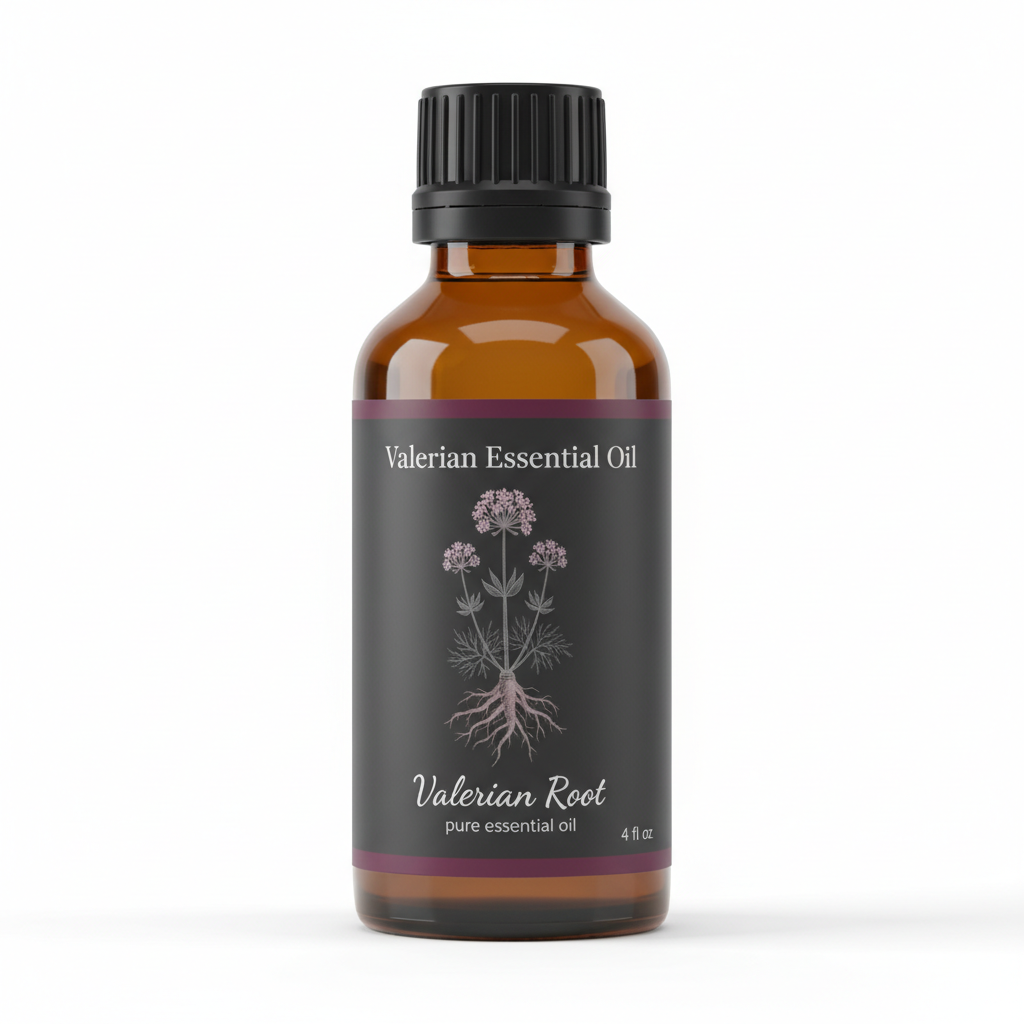
Valerian Root Essential Oil
Our own Valerian Root Essential Oil, in sizes from 0.5 oz to bulk.
From $31.99
Shop Now →Four materials wearing one name
Take the handful of anxiety studies that mention valerian and lay them side by side.
The oldest is a Cochrane review of valerian for anxiety disorders. It found a single small trial, 36 people with generalised anxiety disorder taking oral valerian, a drug comparator or a placebo for four weeks, and the authors concluded there was not enough evidence to say anything either way (Cochrane). A 2017 Iranian trial of 48 menopausal women reported lower anxiety scores in the valerian group after two months, though the published abstract gives no dose or formulation (Kazemian et al.).
Then there is the one trial that did use valerian essential oil, and it is worth being clear about how: 120 hospitalised heart patients swallowed 400 mg of the oil, or lavender oil, or a sedative drug, or a placebo, an hour before bed for three nights, and anxiety scores fell in every group (Rafiee et al., 2018). We mention it because it exists, not because we would suggest it. An essential oil is a concentrated material for external and aromatic use, and ours is never for swallowing.
Finally, a 2026 trial of 92 open-heart surgery patients held gauze scented with valerian distillate, a herbal water rather than an essential oil, near the face for ten minutes at a time. Three days after surgery their anxiety scores averaged 39.3, against 38.8 for a lemon balm group and 44.5 for a distilled-water control (Valian et al., 2026).
What the numbers add up to
Look at that last result again, because it teaches something. Both herbs beat plain water, and the two herbs were nearly level with each other. That is what you would expect if a pleasant, interesting smell and a few minutes of attention did some of the work, and it gives no reason to credit valerian in particular. That is our reading of the numbers, not the authors' claim, and it applies to a hospital ward, not to an evening at home.
The national summary is the plainest. The US National Center for Complementary and Integrative Health says there is not enough evidence to draw any conclusions about whether valerian helps with anxiety (NCCIH). Notably, the same page gives a more positive nod to lavender essential oil used in massage, which is a statement about lavender and tells you nothing about valerian.
Why a strong smell gets noticed
Whatever you make of the studies, one thing is easy to agree on: a bold aroma is hard to ignore. Valerian is a good example. Plenty of oils are pleasant background; this one is a presence, and it asks you to stop and work out what you are smelling. That is a perfectly good reason to enjoy it, and it is a different matter from any claim about what it does for a person.
Where that leaves a bottle of oil
Here is how we see it. Valerian oil is a fascinating material with a big personality: earthy, musky and woodland-damp, with a balsamic sweetness underneath. We sell it for that, as an aromatic with a perfumery-style base note, and not for any effect on mood. We keep to scent and cosmetic use, and leave the stress question to people who can actually answer it.
If you like the smell, there are plenty of good ways to enjoy it. A whisper in a diffuser blend works, and so does a trace beside patchouli or vetiver in a perfume accord (we sell only the valerian, so you would find those at a craft or supply shop). Our guide to daytime use covers the practical side, and valerian against lavender explains why the two smell so different.
Keep the practical rules in mind. We recommend diluting 0.5% to 2% in a carrier before skin contact, patch testing first, and keeping the oil from eyes, children and pets. We suggest avoiding it in pregnancy as a precaution and not combining it with sedative medication, and our side-effects article has the fuller picture.
When stress is more than a scent can answer
Stress that sticks around, or anxiety that starts getting in the way of work, sleep or relationships, is worth taking to a doctor or a mental health professional, who can do far more than any bottle. The National Institute of Mental Health's stress fact sheet is a calm, practical place to begin, and it lists the 988 Suicide and Crisis Lifeline for anyone in immediate distress (NIMH).
Getting to know it as a scent
If the smell sounds intriguing, start small and keep it simple. Put a single drop on a blotter strip, wave it gently, and smell it from a little distance. Come back to the strip later in the day and notice how the first rush of earth settles into something woodier and sweeter. Keep the strip, and the bottle, somewhere a cat cannot reach, since cats are famously drawn to this scent.
When you have a feel for it, try it beside something familiar from your own shelf at a craft or supply shop, such as patchouli or cedarwood, and see which one leads. Treating it like a perfumer's sketch, with no expectations attached, keeps the whole thing light.
For the rest of us, the real pleasure of a strong aromatic is simple: it is interesting to smell, and it makes you pay attention for a moment.
Valerian Root Essential Oil
Valerian Root Essential Oil from our own shop, in sizes from 0.5 oz to bulk.
From $31.99
Shop Now →Sources & Further Reading
- Cochrane. "Valerian for anxiety disorders." cochrane.org
- Kazemian et al. "The Effect of Valerian on the Anxiety and Depression Symptoms of the Menopause in Women Referred to Shahrekord Medical Centers." Journal of Medicinal Plants, 2017 (abstract page). jmp.ir
- Rafiee et al. "The Effects of Lavender, Valerian, and Oxazepam on Anxiety Among Hospitalized Patients with Coronary Artery Disease." Modern Care Journal, 2018 (abstract page). brieflands.com
- Valian et al. "Comparison of the effects of valerian and lemon balm aromatherapy on anxiety in patients undergoing open-heart surgery." Medical Journal of Tabriz University of Medical Sciences, 2026 (abstract page). mj.tbzmed.ac.ir
- NCCIH. "Anxiety and Complementary Health Approaches." nccih.nih.gov
- National Institute of Mental Health. "I'm So Stressed Out! Fact Sheet." nimh.nih.gov