What Does Valerian Oil Smell Like? An Honest Nose Guide
Open a bottle of valerian root oil and the first impression is rarely "pretty". It is closer to a root cellar with a thread of musk running through it: dark, warm, a little sweet, and very much alive. Perfumers have been writing about that smell for a long time, and the descriptions agree more than you might expect.
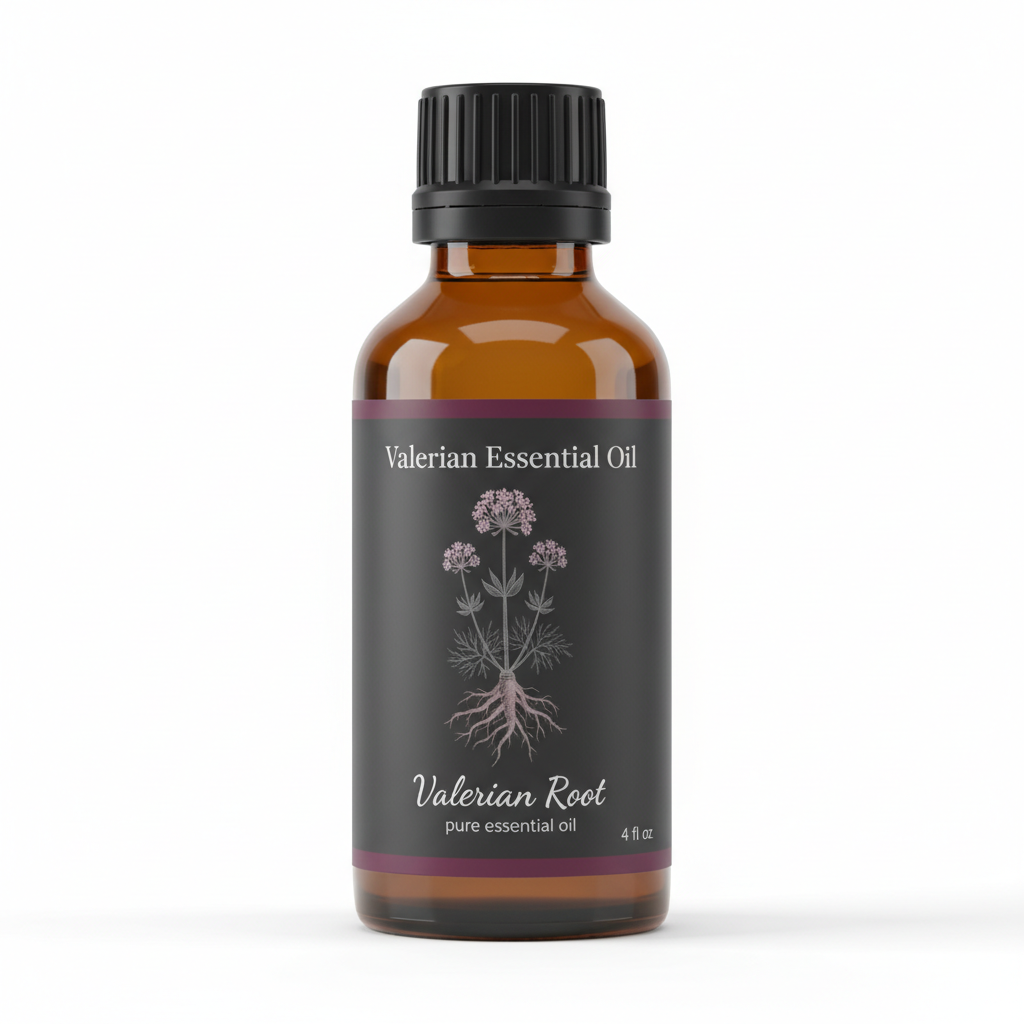
Valerian Root Essential Oil
Our own Valerian Root Essential Oil, in sizes from 0.5 oz to bulk.
From $31.99
Shop Now →Words from the perfumery shelf
In 1960 the perfumery author Steffen Arctander described steam-distilled valerian oil as a warm, woody, balsamic root-like odor with a distinct animal undertone and great tenacity. A good oil, he added, carries a fresh-green, slightly camphoraceous top note. The Good Scents Company, a perfume-materials database, lists the oil as warm, woody, balsamic and animalic, and its own entry for valerian rhizome oil adds herbal, fresh green and rooty to the list.
We describe ours as earthy, musky and woodland-damp, with a balsamic sweet finish. Put those side by side and the shared vocabulary is easy to see: wood, balsam, root, musk. If you like patchouli, oakmoss or aged woods, you are probably already in the right neighborhood.
Why two valerian oils can smell different
Valerian is not one fixed recipe. In a study of oils distilled from five Estonian valerian roots, bornyl acetate (a sweet, balsamic-smelling compound) ranged from 8.8% to 33.7% of the oil, and valerenal ran from a trace to 14.7%. We can't tell you which compound produces which part of the smell, because the sources we read don't assign aromas compound by compound. What the numbers do say is that two honest valerian oils can differ, so a description is a guide and a sample is the answer.

Arctander makes the same point across species and regions. He found the Japanese Kesso root oil drier and more woody-borneolic than European valerian oil, and described Indian valerian oil as balsamic-woody and slightly spicy, with musk-like and patchouli-like notes, and generally poorer than the European one. Our oil is Valeriana officinalis, the name on our certificate and label; for the naming traps, see our guide to the types of valerian oil.
The sharp edge, and what age does to it
Valerian has one famous off-note: isovaleric acid, a sharp-smelling compound. In that Estonian study it made up between 0 and 2.1% of the oils, so it is a minor part of the whole. Arctander wrote that with poor storage and age, valerian oil turns darker, grows more viscous and picks up an objectionable isovaleric acid odor. The practical lesson is a gentle one: keep the bottle tightly capped in a cool, dark cabinet, which is our storage guidance too. Our guide to storing valerian oil has the details.
Reading the smell in stages
Hold the open bottle a hand's width below your nose rather than pressing it right up to your face. The first breath is the loudest: damp earth, root, a hint of animal warmth. Give it a few seconds and a second layer steps forward, something woody and sweetly balsamic. Step away from the bottle between sniffs so your nose can rest; a strong smell stops being informative if you keep going back for more.
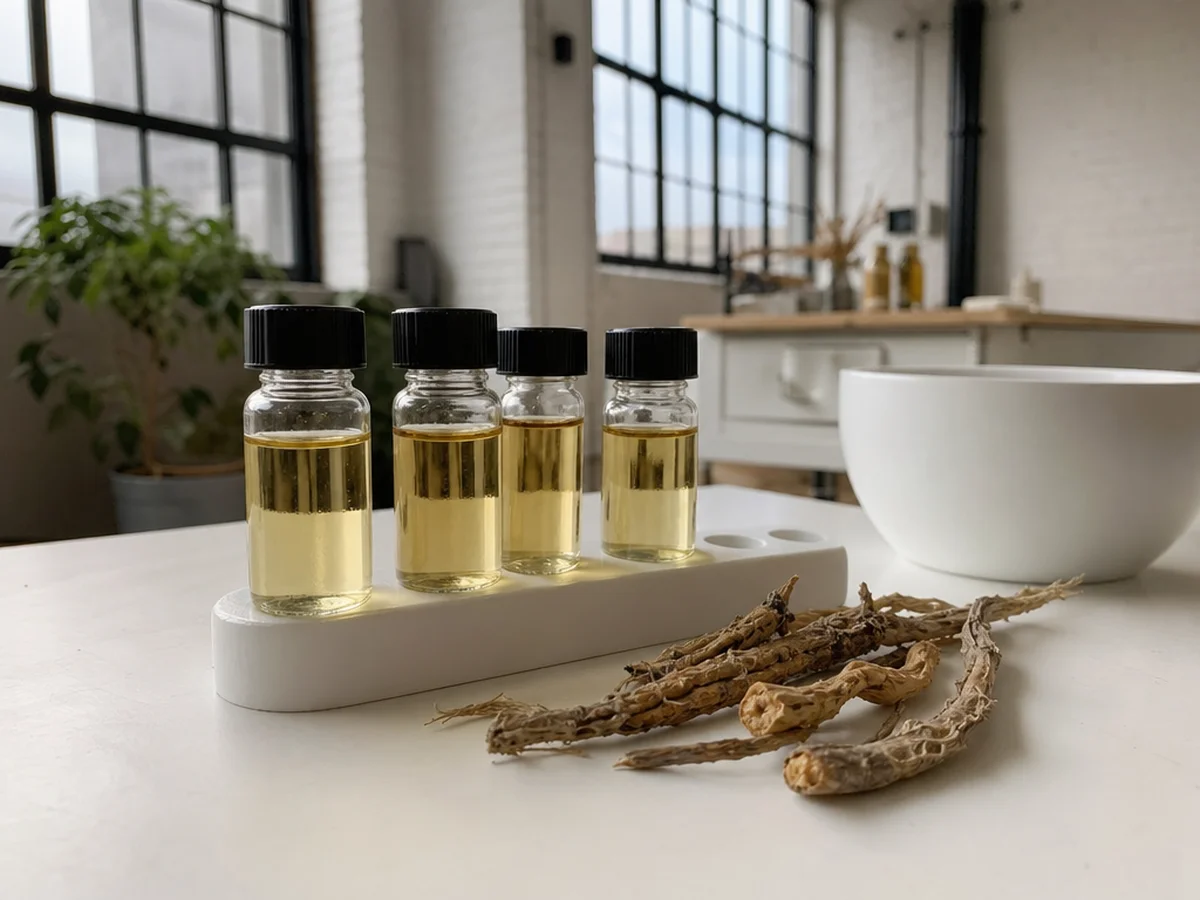
Most people find the oil easier to read from a blotter strip than from the bottle. On the strip the loud first impression fades and the quieter parts have room to speak.
How to get to know it
A little method helps with an aroma this big.
- Start small. The smell is distinctive enough that we suggest our smallest bottle first, so you can find out whether you love it before buying more.
- Use a blotter strip. Smell it fresh, then come back after an hour and the next day. Arctander's phrase "great tenacity" suggests it lingers, and the way it evolves is half the pleasure.
- Try it diluted. A small amount in a carrier oil often reads softer than the neat oil. Our dilution guidance for skin is 0.5% to 2% in a carrier with a patch test first.
- Mind the cat. Cats are famously drawn to this scent, and valerian root is one of a few plants researchers have shown can set off the catnip response, so keep strips and bottles out of reach. More in valerian oil and cats.
Keep a few notes
If you are curious about the oil, a scrap of paper helps. Write down the first three words that come to mind when you smell it fresh, then smell the same strip an hour later and again the next day, and jot down what changed. Words like earthy, musky, woodland-damp and balsamic are a good starting set, but your own words will be more useful to you than ours. If one of them turns out to be "too much", that is worth knowing before you plan a bigger project.
Notes like these also make it easier to talk about the oil with a friend who is deciding whether to try it. A scent this particular is easier to describe once you have spent a little time with it.
Who it suits
Valerian is not an everyday fragrance. If you love bright citrus or clean florals, it will probably feel like too much. If you enjoy deep, dark base notes, it is a rare treat in a drop-sized dose, particularly beneath patchouli and vetiver, and our piece on valerian in natural perfumery shows how perfumers use it. We sell it as a perfumery-style aromatic oil, and we leave health questions to doctors and pharmacists. If you are pregnant, our guidance is to avoid it as a precaution, and not to combine it with sedative medication.
It is an oil with strong opinions, and that is exactly why people love it.
Valerian Root Essential Oil
Valerian Root Essential Oil from our own shop, in sizes from 0.5 oz to bulk.
From $31.99
Shop Now →Sources & Further Reading
- Arctander, Perfume and Flavor Materials of Natural Origin (1960), monographs on Valerian Oil, Valerian Absolute and Valeriana Wallichii
- The Good Scents Company, valerian rhizome oil, 8008-88-6
- Raal et al., Variation in the composition of the essential oil of Valeriana officinalis L. roots from Estonia (Proceedings of the Estonian Academy of Sciences, Chemistry, 2007)
- Bol et al., Behavioral differences among domestic cats in the response to cat-attracting plants and their volatile compounds reveal a potential distinct mechanism of action for actinidine (BMC Biology, 2022)