Valerian vs Chamomile Oil: Root or Flower?
One of these oils comes from a root dug out of the ground and the other from a flower head, and that single fact explains most of what separates them. Valerian and chamomile are often mentioned in the same breath, usually in the context of tea, so it is natural to wonder how the oils compare. The honest answer is that they are very different materials with one thing in common: the research people quote about them concerns other forms of the plant.
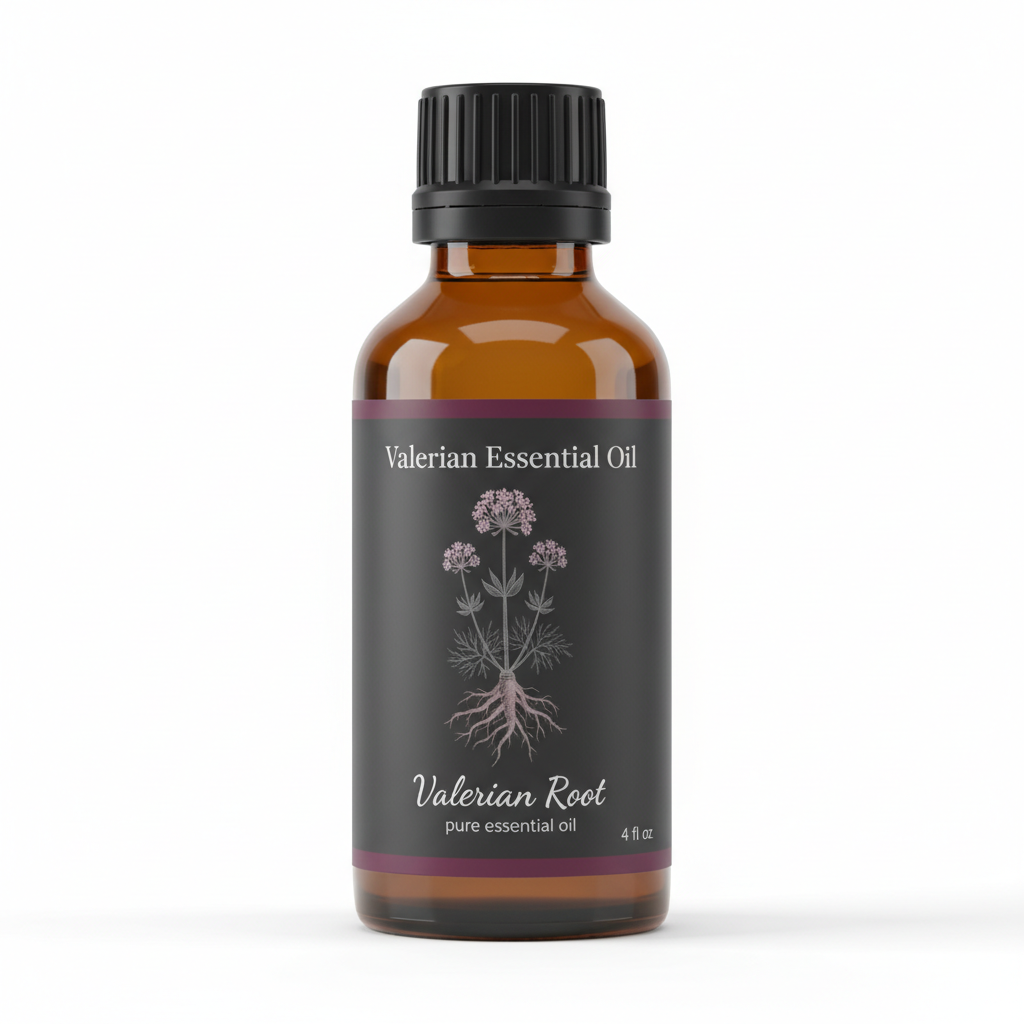
Valerian Root Essential Oil
Our own Valerian Root Essential Oil, in sizes from 0.5 oz to bulk.
From $31.99
Shop Now →A root and a flower
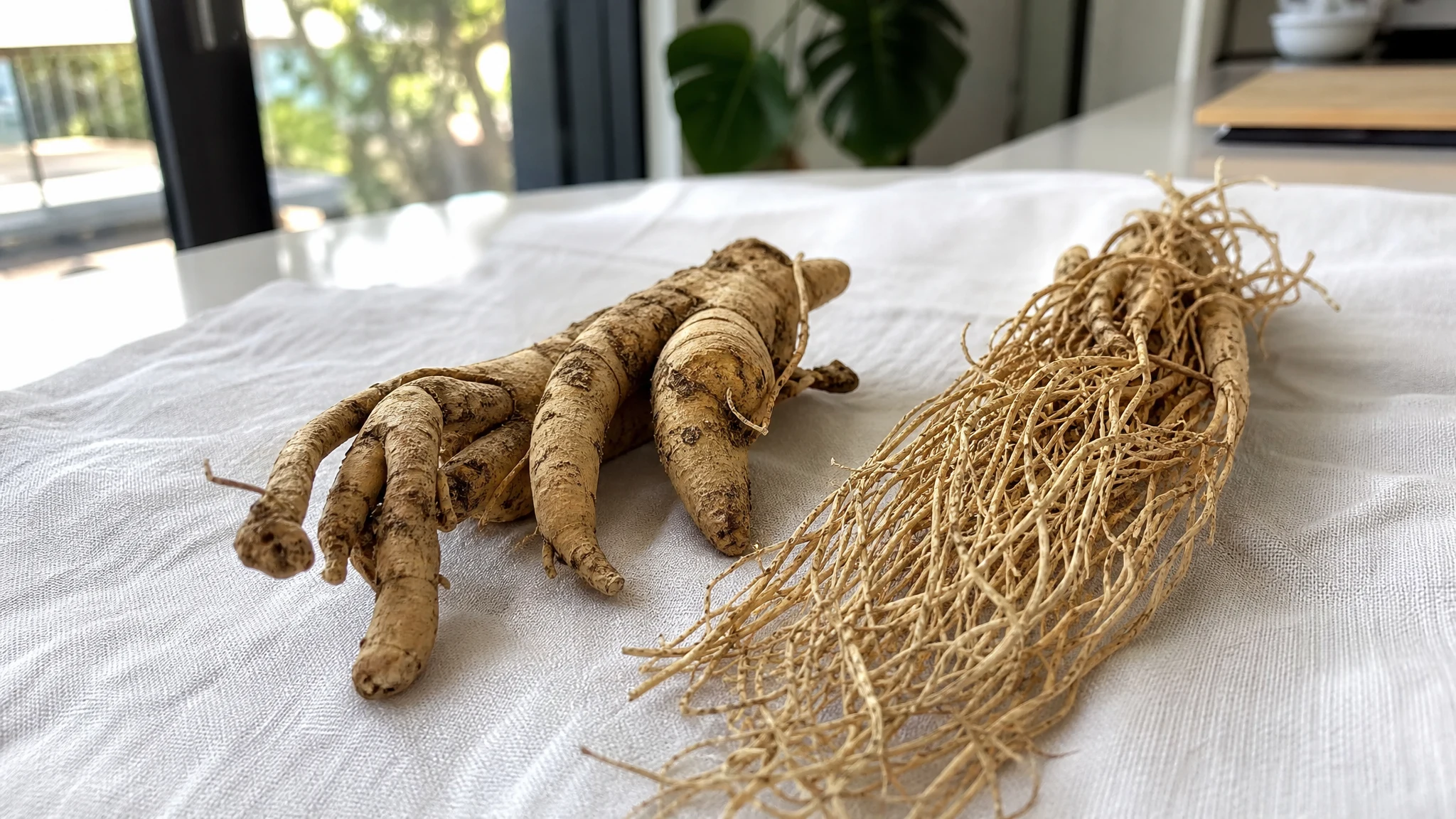
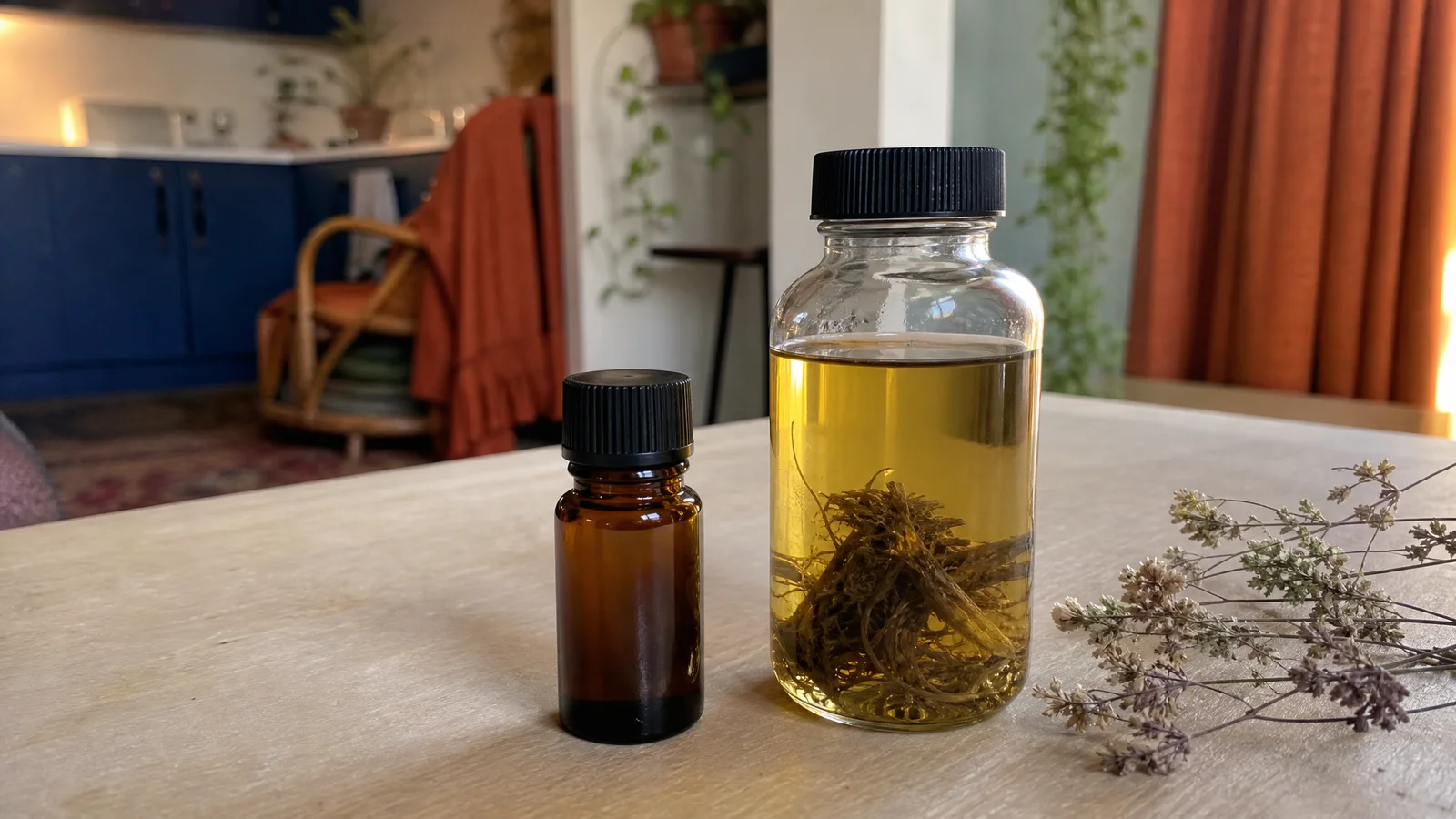
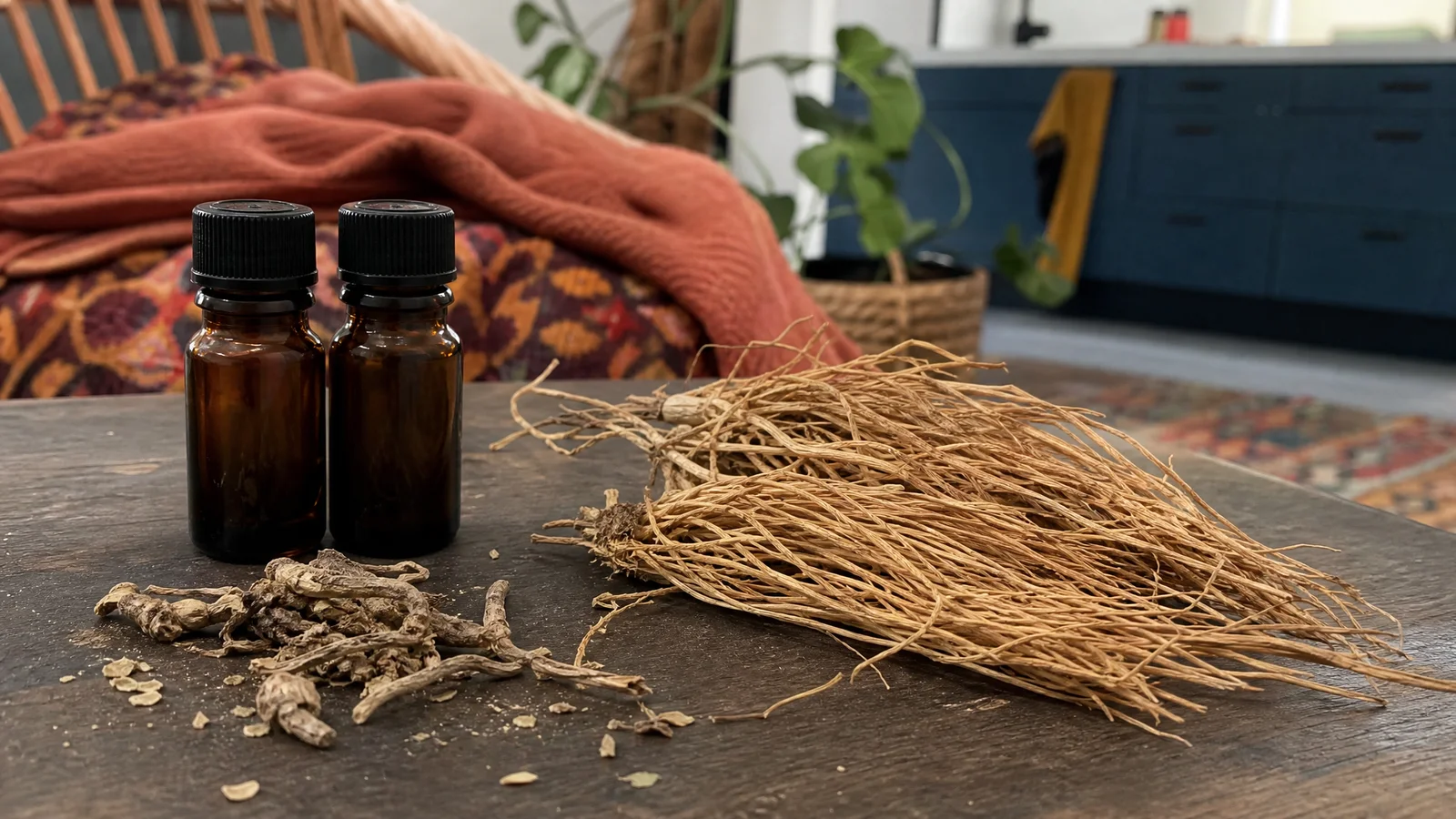
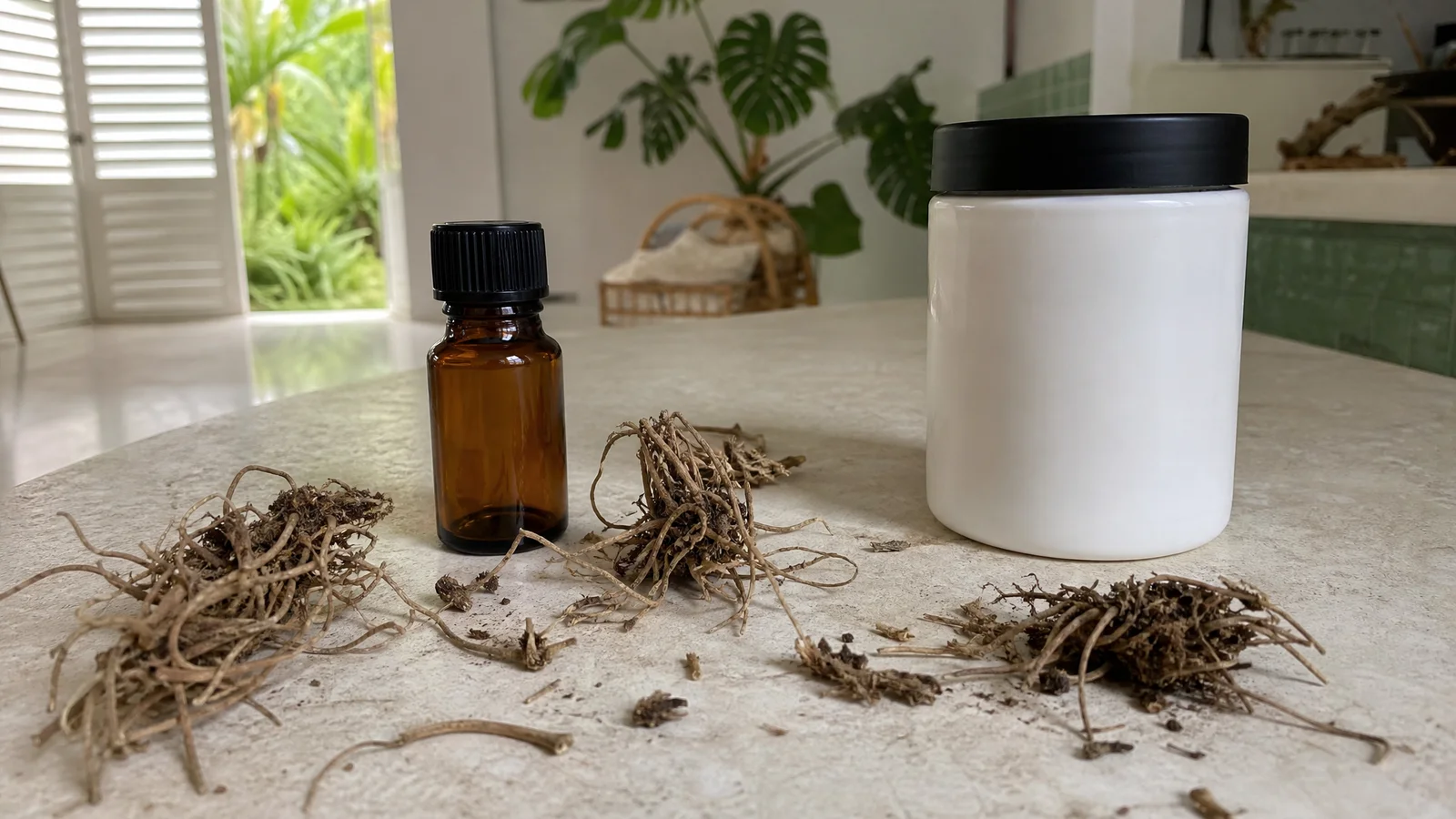
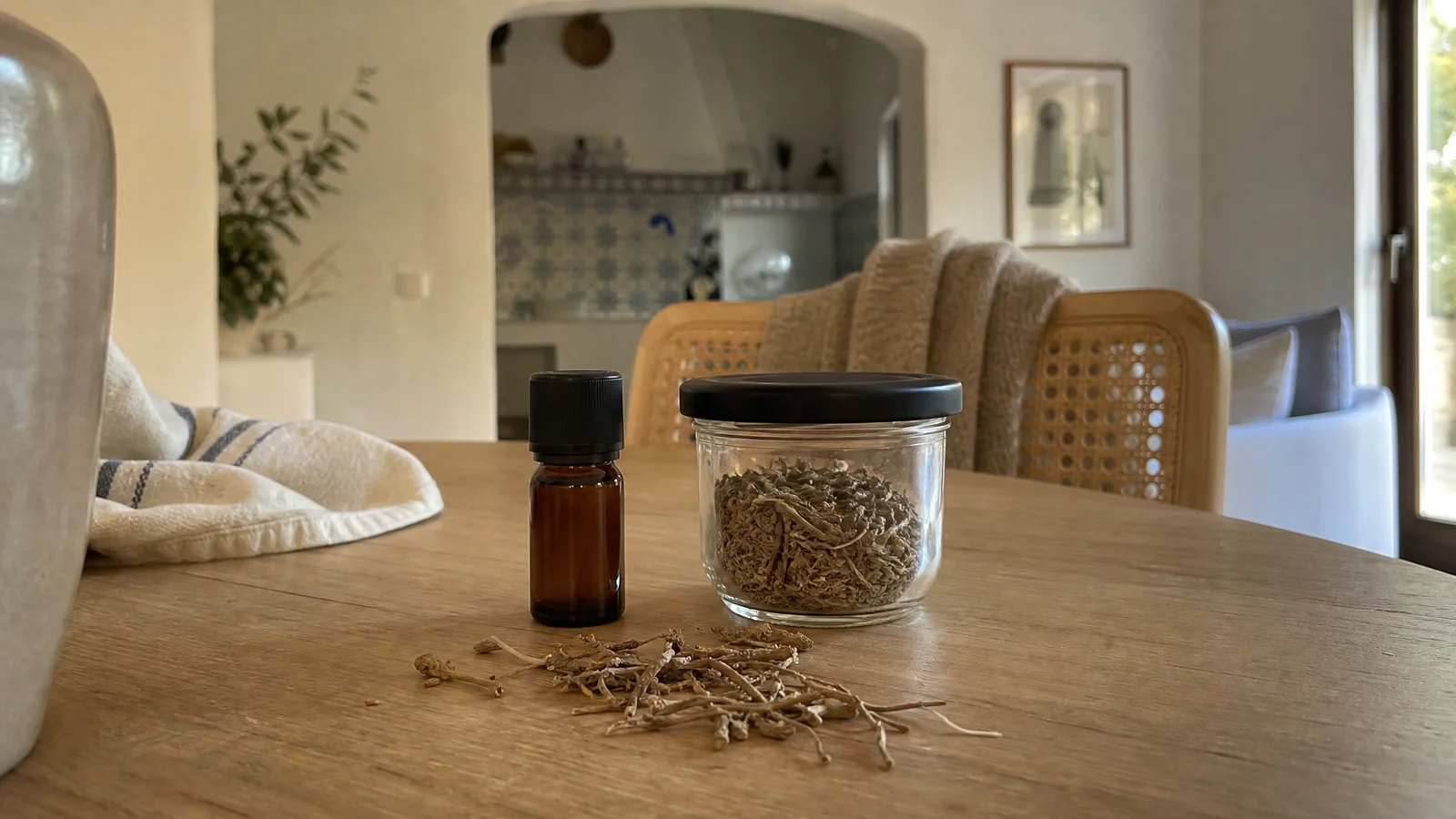
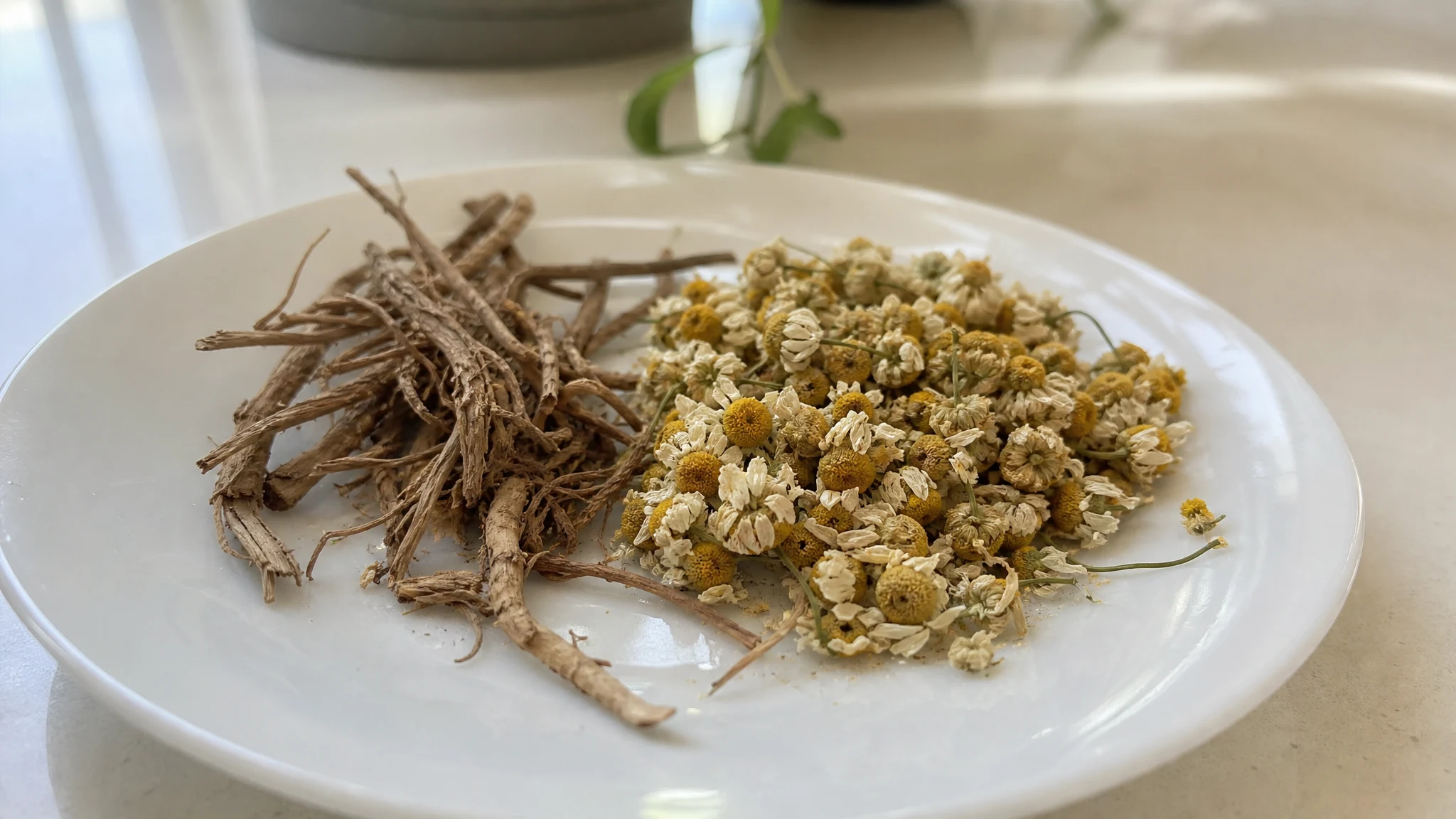
Valerian oil is steam-distilled from the root and rhizome of Valeriana officinalis. Ours is described as earthy, musky and woodland-damp with a balsamic sweetness, a dark base note that we suggest using in traces. Chamomile oil comes from flower heads, and "chamomile" covers two plants: German chamomile (Matricaria recutita) and Roman chamomile (Chamaemelum nobile). They belong to the daisy family, their flower oils differ, and German chamomile has the higher terpenoid content (Phytochemical and comparative transcriptome analyses reveal different regulatory mechanisms in the terpenoid biosynthesis pathways between Matricaria recutita L. and Chamaemelum nobile L.). So a chamomile label without a species is only half a label, in the same way a valerian listing without its Latin name leaves the plant open. Our guide to valerian types makes the same point for our own root.
Valerian oil also varies within the species. In an Estonian laboratory study, five root samples distilled by the pharmacopoeia method gave bornyl acetate from 8.8% to 33.7% and valerianol from 0.3% to 16.7% (Variation in the composition of the essential oil of Valeriana officinalis L. roots from Estonia). Roots, like flowers, express where and how they grew.
What the research actually studied
People reach for both plants as bedtime herbs, so it is useful to know what has been tested, and in what form.
- Valerian. A meta-analysis of 18 placebo-controlled trials of valerian preparations found that the yes-or-no question about improved sleep leaned toward valerian, while minutes to fall asleep and a sleep-quality scale did not change significantly. The authors judged that subjective improvement was possible but not shown by objective measures (Effectiveness of Valerian on insomnia: a meta-analysis of randomized placebo-controlled trials).
- Chamomile. A review of 12 trials found improved sleep quality after chamomile, while the single insomnia trial showed no significant change (Therapeutic efficacy and safety of chamomile for state anxiety, generalized anxiety disorder, insomnia, and sleep quality: A systematic review and meta-analysis of randomized trials and quasi-randomized trials).
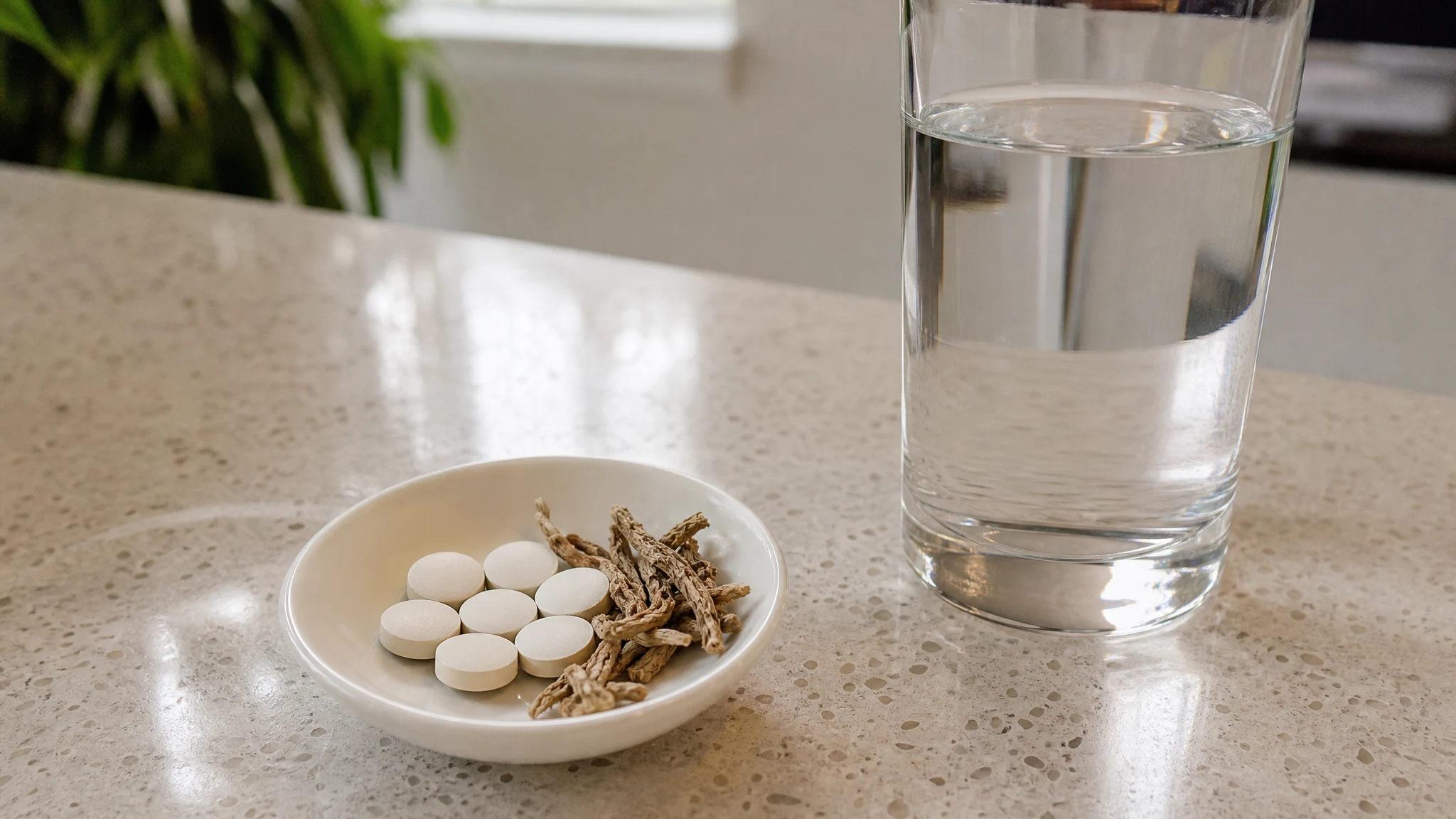
Both bodies of research are about oral products such as extracts and teas, and the NCCIH summaries say the same: for valerian the evidence on sleep is inconsistent, and for chamomile there is very little information on insomnia (Valerian: Usefulness and Safety; Chamomile: Usefulness and Safety). Neither says anything about a bottle of oil on a shelf. We sell an aromatic oil, not a sleep product, and if sleep is the reason you are comparing, a doctor or pharmacist is the best first call. For a closer look at the trials, see our post on the insomnia research.
Where they really differ: allergies
Chamomile belongs to the daisy family, and NCCIH notes that people are more likely to react to it if they are allergic to related plants such as ragweed, chrysanthemums, marigolds or daisies. It adds that chamomile used near the eyes might cause irritation, that interactions with some drugs, including warfarin, have been reported, and that little is known about use in pregnancy or breastfeeding. Those notes concern chamomile as tea, extract or other forms, so applying them to the oil on skin is our own sensible inference. It is a good reason to patch test and to ask an allergist if you have a known daisy-family allergy.
Valerian comes from a different family, and its oil has its own precautions. We suggest diluting to 0.5% to 2% in a carrier, starting at the low end, patch testing first and keeping it away from eyes, children and pets. We also suggest avoiding it in pregnancy as a precaution and not combining it with sedative medication; our post on valerian and medications explains what the main sources say.
Two different smells to meet
If you can, smell them on two strips side by side. Chamomile oils tend to read as flowery and herbal, and different species lean in different directions, so take the species name on the label seriously. Valerian goes the other way entirely: earthy, musky and woodland-damp with a balsamic sweetness at the end. Try them at the start, again after an hour and once more the next day, because the way each one changes is half the fun and often the deciding factor.
Choosing between them
Think in terms of character. Valerian is the bold one: damp, rooty, animalic around the edges, and a little goes a long way, which is why we suggest starting with our smallest bottle and reading our honest description of the smell first. If you want a softer floral oil, chamomile is a different tool, and a general supplier is where to find it, since we sell only valerian. If you want a deep base note in a perfume accord, our notes on natural perfumery show where valerian sits.
A small habit saves confusion later: keep each bottle upright, capped and labeled, and write the Latin name on any blend you make. Two oils with very different personalities are easy to mix up in a drawer, especially once the labels have been handled a few times.
One root, one flower, two very different jobs.
Valerian Root Essential Oil
Valerian Root Essential Oil from our own shop, in sizes from 0.5 oz to bulk.
From $31.99
Shop Now →Sources & Further Reading
- Tai Y et al. Phytochemical and comparative transcriptome analyses reveal different regulatory mechanisms in the terpenoid biosynthesis pathways between Matricaria recutita L. and Chamaemelum nobile L. BMC Genomics 2020.
- Raal A, Orav A, Arak E, Kailas T, Müürisepp M. Variation in the composition of the essential oil of Valeriana officinalis L. roots from Estonia. Proc Estonian Acad Sci Chem 2007.
- Fernández-San-Martín MI et al. Effectiveness of Valerian on insomnia: a meta-analysis of randomized placebo-controlled trials. Sleep Med 2010.
- Hieu TH et al. Therapeutic efficacy and safety of chamomile for state anxiety, generalized anxiety disorder, insomnia, and sleep quality: A systematic review and meta-analysis of randomized trials and quasi-randomized trials. Phytother Res 2019.
- National Center for Complementary and Integrative Health, Valerian: Usefulness and Safety.
- National Center for Complementary and Integrative Health, Chamomile: Usefulness and Safety.