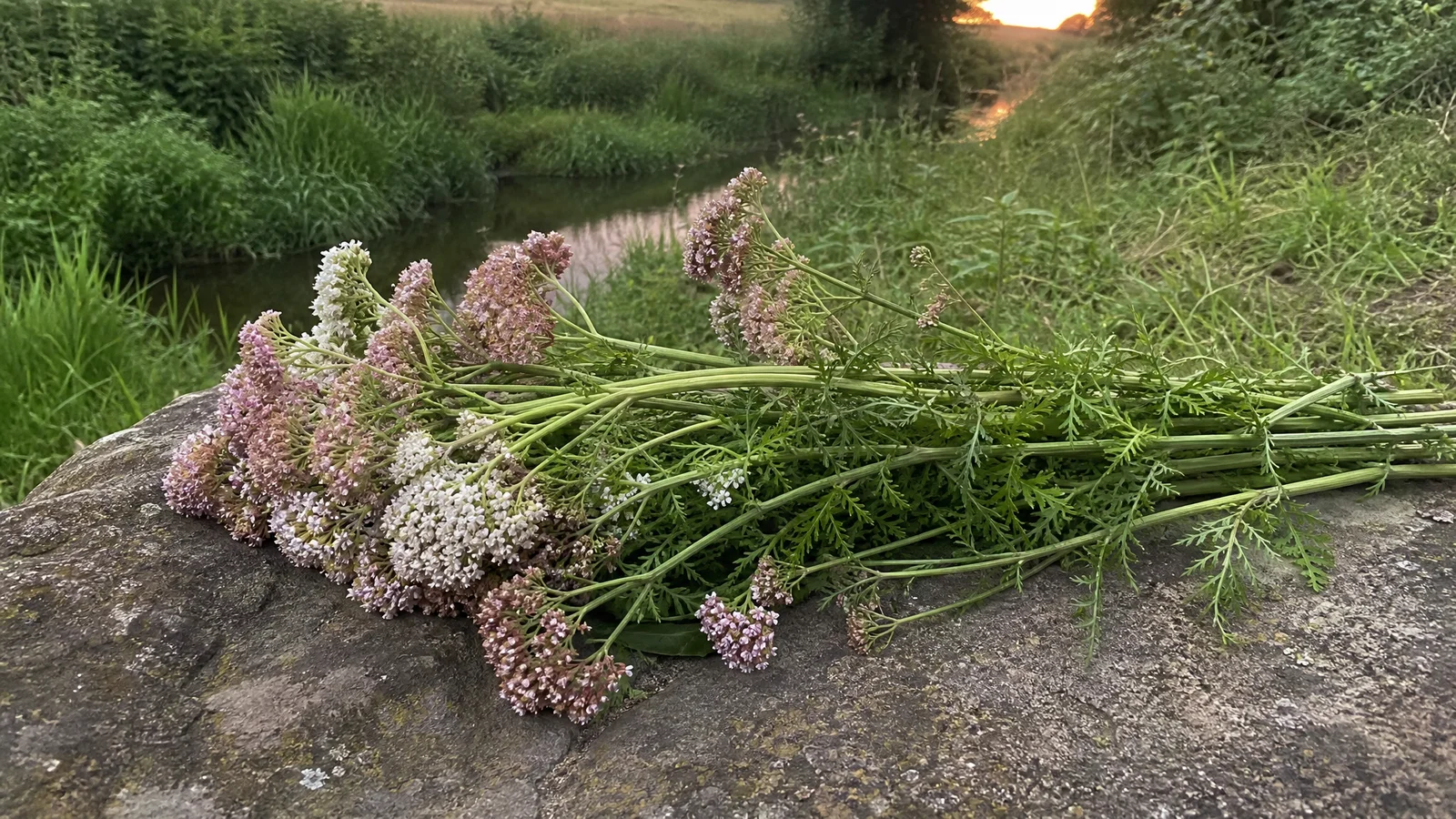
Valerian and Sleep: Where the Reputation Comes From
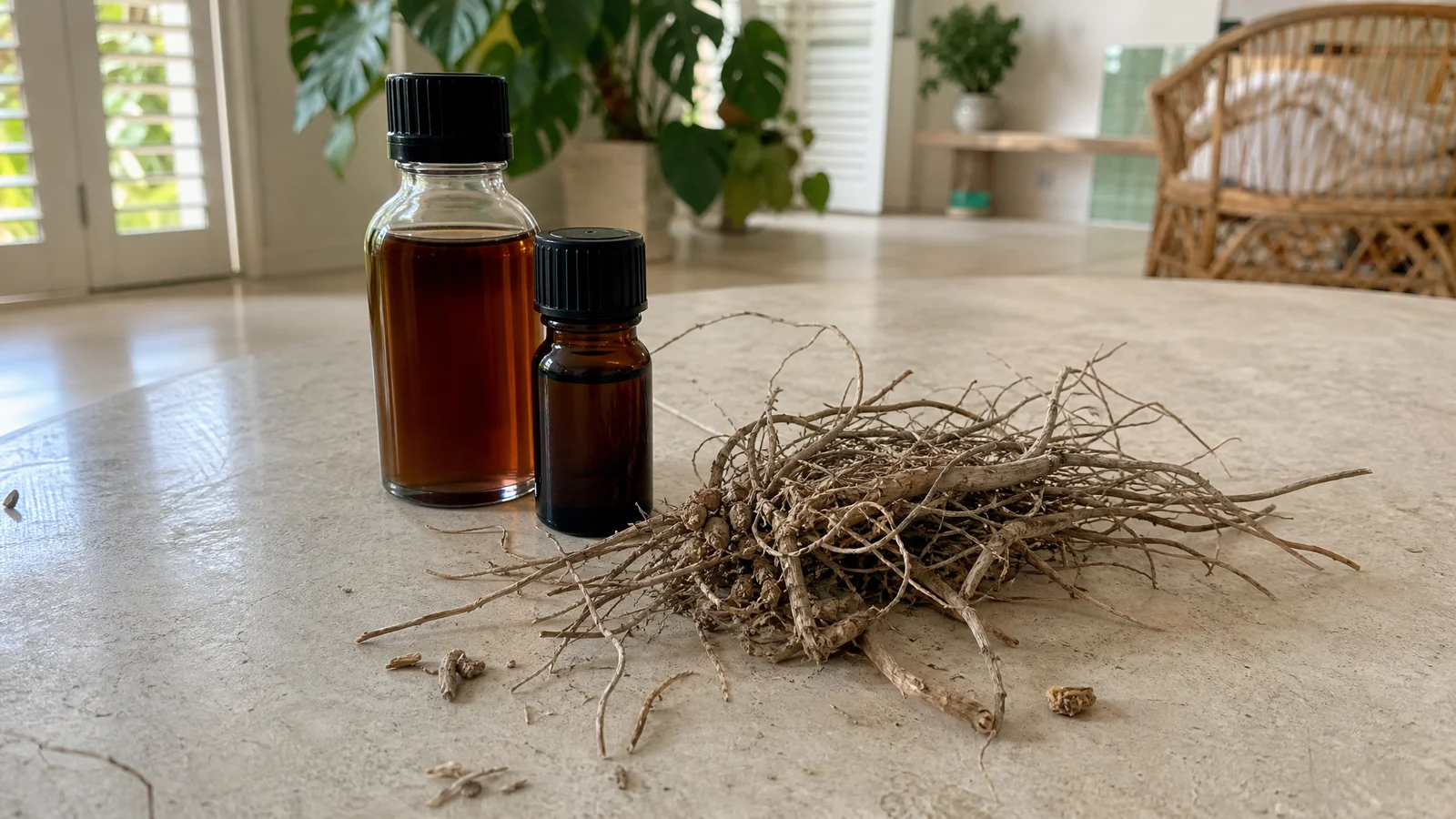
Ask around and you will hear that valerian belongs on the nightstand. The reputation is old, and it is real in the sense that people have been talking about it for a very long time. What is less well known is where the modern evidence comes from: almost all of it concerns the root swallowed as a capsule, tablet or tea, not an essential oil in a bottle. We sell a valerian root oil as an earthy aromatic and make no sleep claim for it, so here is the story as we understand it.
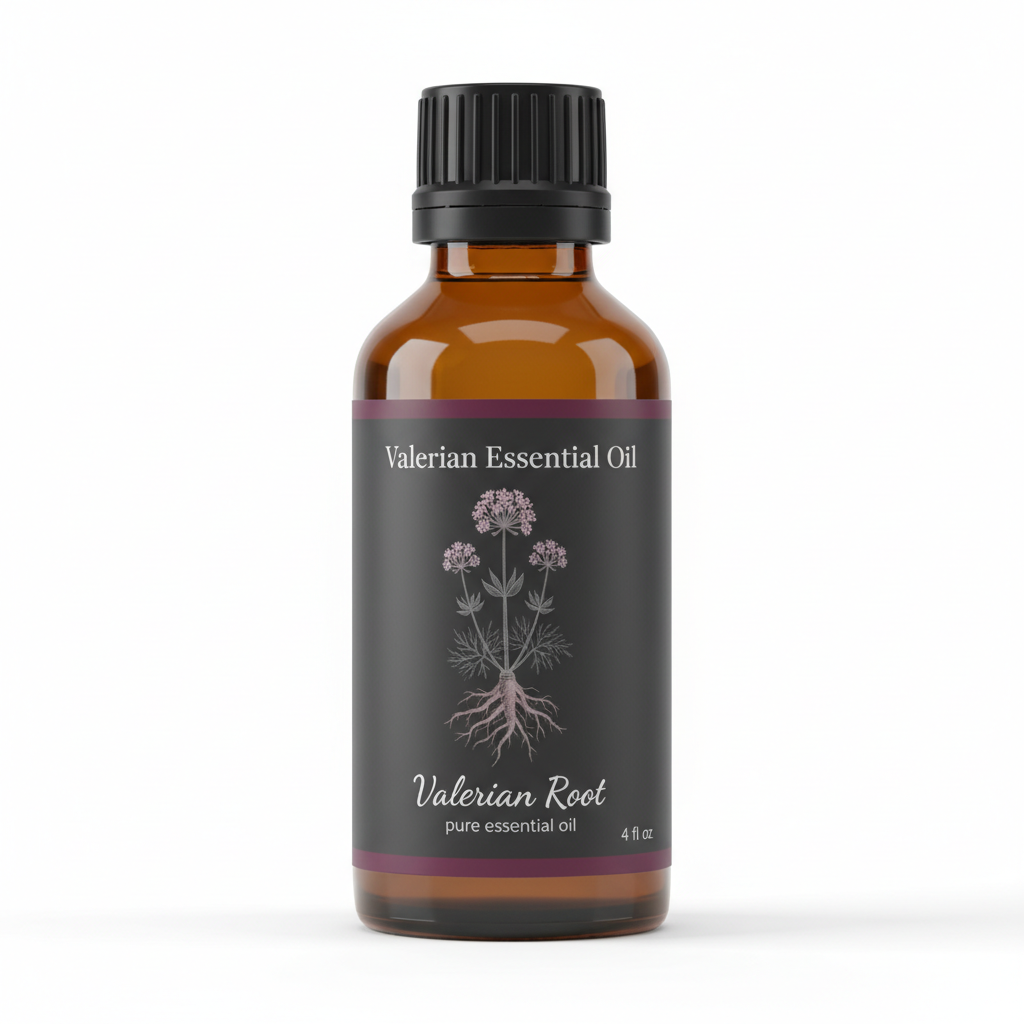
Valerian Root Essential Oil
Our own Valerian Root Essential Oil, in sizes from 0.5 oz to bulk.
From $31.99
Shop Now →A reputation built on root extracts
Researchers have pooled the valerian sleep trials more than once. One review gathered 16 placebo-controlled trials covering 1,093 people and found a hint of better self-reported sleep, along with small studies, very different doses and signs that unflattering results may have gone unpublished (Bent et al., 2006). A later meta-analysis of 18 trials found no meaningful change in how long people took to fall asleep or in their sleep-quality scores, though more people did say they felt they slept better (Fernandez-San-Martin et al., 2010).
Put those together and the fair summary is "interesting, inconsistent, and about a swallowed preparation". Neither review looked at an oil, and neither looked at anything breathed in from a diffuser or smelled from a pillow.
How the big health bodies read it
The American Academy of Sleep Medicine reviewed the pharmacological options for chronic insomnia in adults and made a weak recommendation that clinicians not use valerian for it (Sateia et al., 2017). The US National Center for Complementary and Integrative Health describes the valerian trials as inconsistent and says its value for insomnia has not been demonstrated (NCCIH). Those statements are about oral valerian too.
That is not a verdict that valerian does nothing. It is a reminder that "popular" and "proven" are different words, and that a product page should not borrow one for the other.
What regulators say about the oil itself
Valerian essential oil does have a regulatory footprint in Europe, and it is more specific than most people expect. The European Medicines Agency's herbal committee drafted a monograph for the oil that allows two forms only, an oral liquid and a bath additive, as a traditional herbal medicine for mild stress and to aid sleep, and it rests "exclusively" on long-standing use rather than on trials (EMA draft monograph, 2015). Inhaling the oil is not one of those forms. In the committee's wider assessment of valerian, the oil was left off the EU list of traditional-use substances because the safety data were judged not sufficient (EMA assessment report, 2016).
Those are European medicine rules, and a medicine is a different thing from what we sell. It does show how carefully this particular oil has been handled by people who evaluate it for a living.
So what is our oil for?
We sell valerian root essential oil, steam-distilled, as a perfumery-style base note. The aroma is earthy, musky and woodland-damp with a balsamic sweetness at the finish, and it is the sort of smell that sorts people into camps: some adore it, some cannot get past the first sniff. That is why we suggest starting with the smallest size and finding out which camp you are in. Our article on how it smells goes deeper into the aroma.
If you like the idea of a root oil on your shelf, treat it like a perfumer's ingredient. Open the cap, take one sniff from a few inches away, and close it again. It is a smell with a long finish, so notice how it changes over the next minute, from damp earth towards that balsamic sweetness.
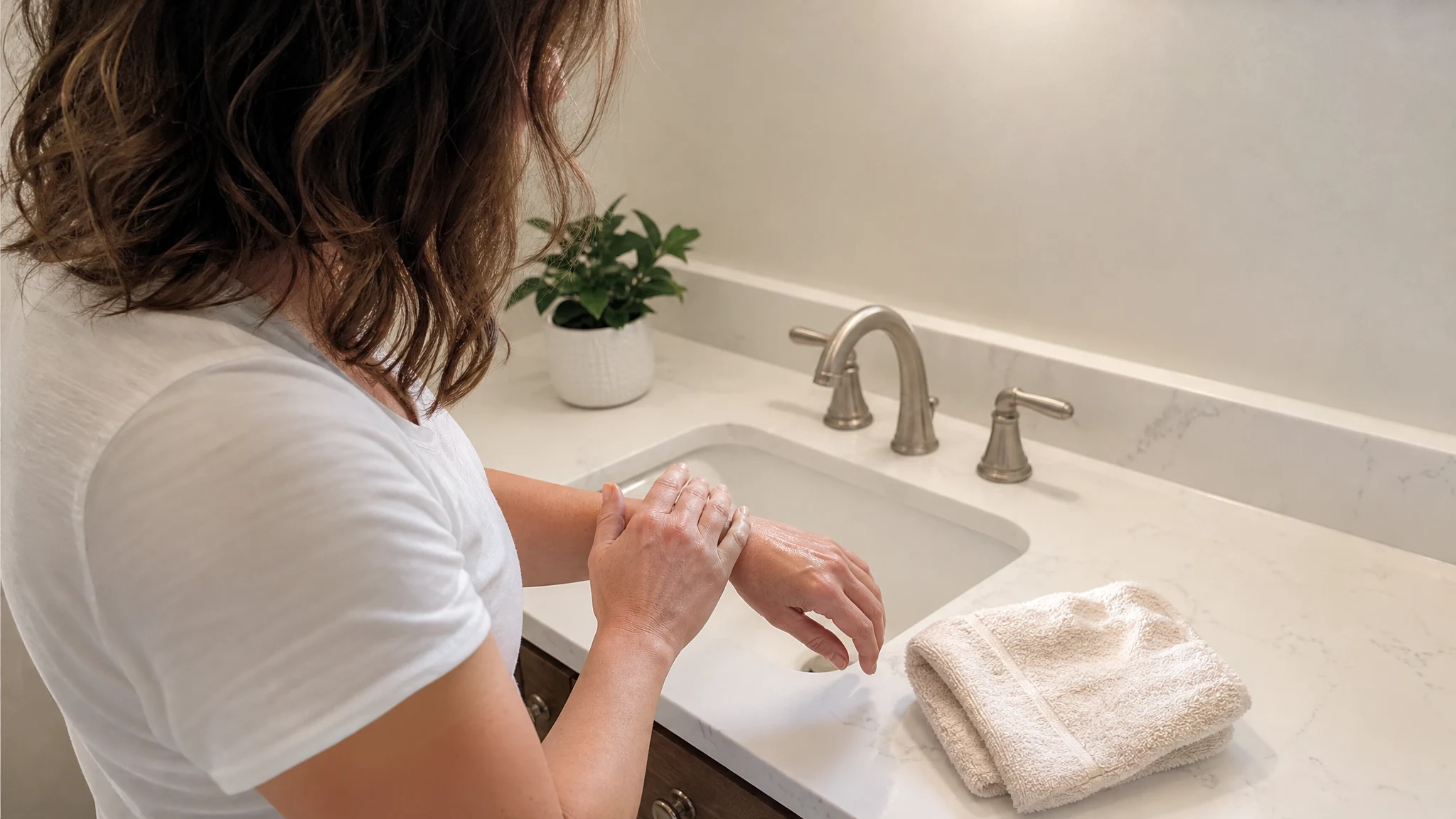
It is strong enough that perfumers use it in traces, and we would treat it the same way: a whisper in a diffuser blend, a trace in soap or a candle, a light dilution in a carrier oil. For skin we recommend 0.5% to 2% in a carrier and a patch test first. It is a concentrated oil for external, aromatic and cosmetic use only, never for swallowing, and we keep it away from eyes, children and pets. We also suggest skipping it during pregnancy as a precaution and not combining it with sedative medication. If either applies to you, your doctor or pharmacist is the right person to ask.
How to read a sleep claim on any oil page
Next time you meet a bold claim, a few plain questions will get you most of the way. Which material does the claim describe: the root swallowed, or an oil in the air? How many people were in the study, and for how long? Does the page link to the study at all, and if it does, did the study use the same thing that is being sold? A page that cites a capsule trial to sell a diffuser oil has quietly swapped one material for another. We would rather you walk away with good questions than with our opinion.
If sleep is the real question
If nights have been hard for a while, that deserves a conversation with a doctor, who can look at the cause rather than the scent. Our rundown of which oils have human trials and our closer look at the insomnia studies can help you read the claims you will meet along the way, and valerian and melatonin compares two names that get lumped together.
What we can offer is an oil with real character and a plain description of what it is. Whatever you pick, the nicest thing about a strong aroma is that you notice it straight away.
Valerian Root Essential Oil
Valerian Root Essential Oil from our own shop, in sizes from 0.5 oz to bulk.
From $31.99
Shop Now →Sources & Further Reading
- Bent S, Padula A, Moore D, Patterson M, Mehling W. "Valerian for sleep: a systematic review and meta-analysis." American Journal of Medicine, 2006. PMC4394901
- Fernandez-San-Martin MI et al. "Effectiveness of Valerian on insomnia: a meta-analysis of randomized placebo-controlled trials." Sleep Medicine, 2010. PubMed 20347389
- Sateia MJ et al. "Clinical Practice Guideline for the Pharmacologic Treatment of Chronic Insomnia in Adults: An American Academy of Sleep Medicine Clinical Practice Guideline." Journal of Clinical Sleep Medicine, 2017. PMC5263087
- NCCIH. "Sleep Disorders and Complementary Health Approaches: Usefulness and Safety." nccih.nih.gov
- European Medicines Agency. "European Union herbal monograph on Valeriana officinalis L., aetheroleum" (draft, EMA/HMPC/278053/2015). ema.europa.eu
- European Medicines Agency. "Assessment report on Valeriana officinalis L., radix and Valeriana officinalis L., aetheroleum" (EMA/HMPC/150846/2015). ema.europa.eu