Valerian Oil vs Fragrance Oil: How to Read the Label
Open a bottle marked "valerian" and your nose alone will not tell you whether you are smelling distilled root or a composition built to smell like it. Both can be dark, damp and musky, with that wet-earth depth people either love or back away from. The difference lives in what went into the bottle and what the seller will put in writing, and that is worth learning to read.
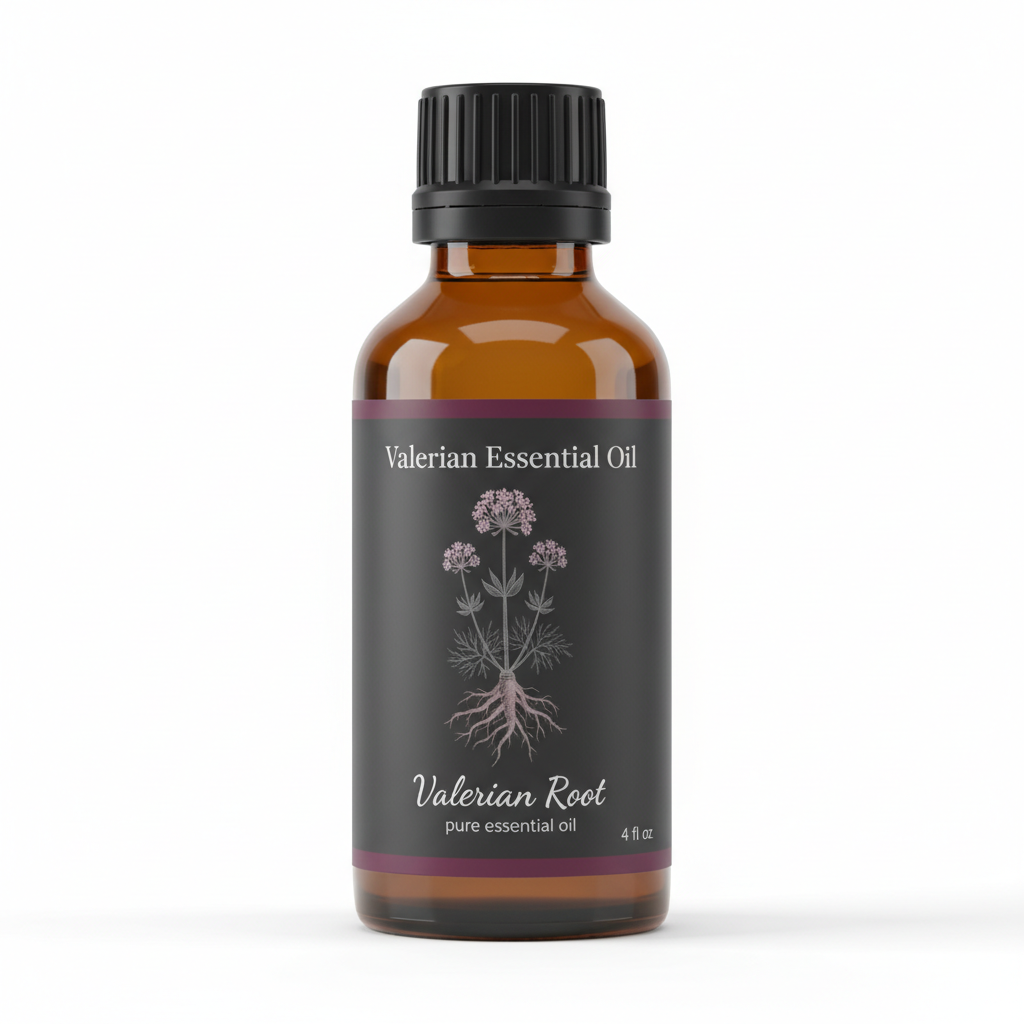
Valerian Root Essential Oil
Our own Valerian Root Essential Oil, in sizes from 0.5 oz to bulk.
From $31.99
Shop Now →What the word "fragrance" covers
The FDA is refreshingly blunt about this. It says there is no regulatory definition for "essential oils", and that the law treats ingredients from plants the same as ingredients from any other source (Fragrances in Cosmetics). So "valerian fragrance oil" is simply a perfumer's composition chosen to evoke valerian. It may contain distilled root, isolated aroma molecules, a solvent, or none of the plant at all, and the name on the front does not say which. That is not a scandal. It is a different product that happens to share a smell.
What a distilled root oil looks like on paper
The European Medicines Agency's assessment report on valerian reproduces the German pharmacopoeia definition: an essential oil obtained from the dried, cut roots of Valeriana officinalis by steam distillation, with bornyl acetate and camphene as the major constituents. The same report adds that the composition varies with origin (Assessment report on Valeriana officinalis L., radix and Valeriana officinalis L., aetheroleum).
That variation is the most useful thing to know. When researchers in Estonia distilled five root samples in the laboratory, bornyl acetate ranged from 8.8% to 33.7%, valerenal from a trace to 14.7%, and valerianol from 0.3% to 16.7% (Variation in the composition of the essential oil of Valeriana officinalis L. roots from Estonia). Those were lab distillations, not retail oils, but they show what a plant does: it makes a range. A real distillate behaves like a vintage rather than a recipe, and a nose trained on one bottle should expect the next to differ a little.
Four questions worth asking of any bottle
- Does it name the species and the part? "Valeriana officinalis, root" says far more than "valerian". Our piece on species, names and chemistry explains why the Latin name matters.
- Does it name the process? Steam distillation is what the pharmacopoeia definition describes. A "root oil" could also be an infusion in a carrier or a solvent extract.
- What does the ingredient line say? A single botanical oil lists one ingredient. "Fragrance" or "parfum" lists a blend you cannot see into.
- What paperwork comes with the lot? A GC-MS report tied to a lot number tells you the most. Density, refractive index and optical rotation are useful consistency checks, but on their own they do not name a plant.
The last point is reasoning rather than a study result, and it is the one we keep coming back to. We sell one valerian root oil, steam-distilled from the dried root and rhizome of Valeriana officinalis, and the label prints that Latin name. The Certificate of Analysis we publish covers one batch and lists relative density 0.947, refractive index 1.473 and optical rotation of -19.80 degrees, all at 20 C. If you need GC-MS, species or origin confirmation, an allergen declaration, an IFRA certificate or a safety data sheet for the lot you will receive, ask us in writing through the contact page and rely on what comes back in writing. Our guide to reading the certificate goes through each line, and the buying guide applies the same questions to any supplier.
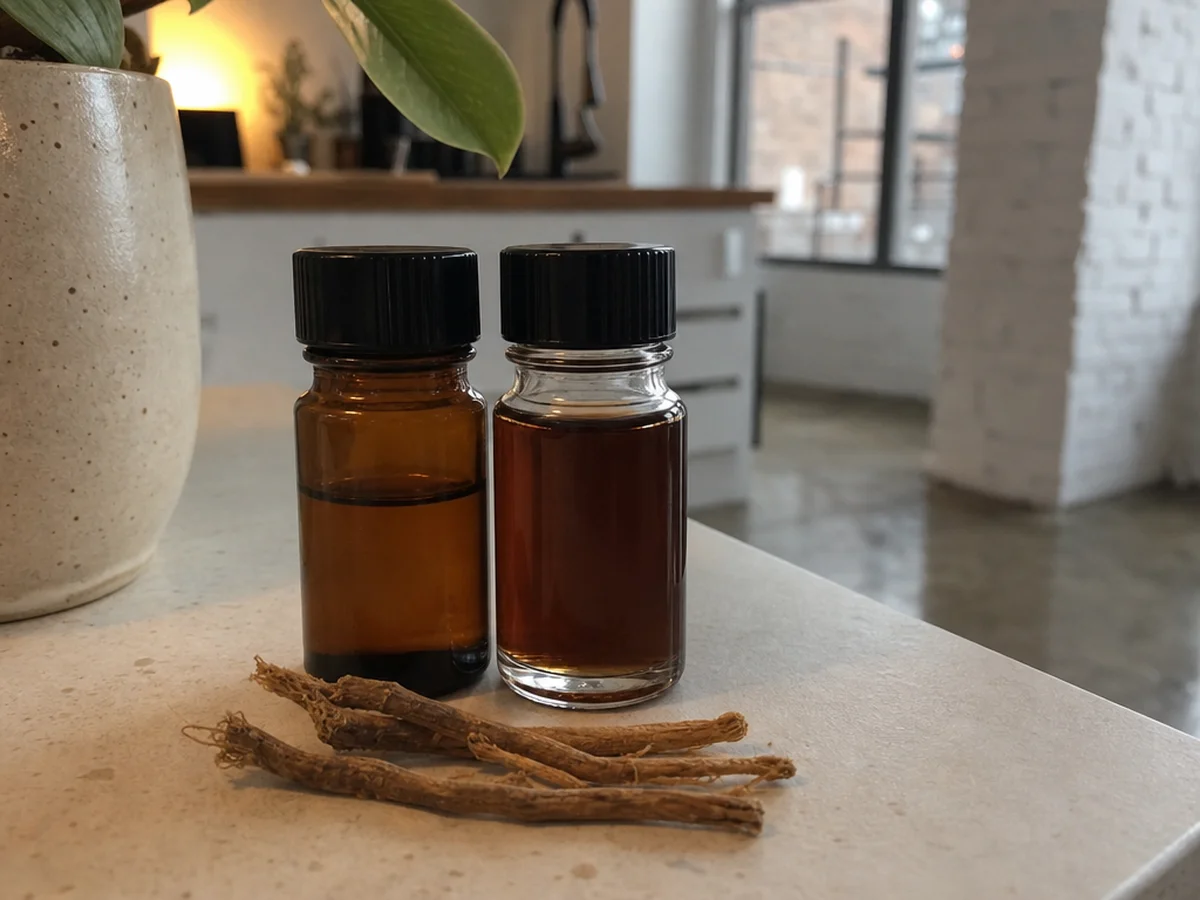
A smelling test you can do at home
Your nose cannot prove what is in a bottle, but it can raise good questions. Put a drop of each oil on separate strips and smell them right away, then again after an hour and the next morning. A distilled root oil tends to shift as it dries down, with the sharper opening giving way to something deeper. A composition built to resemble it may hold a steadier line from start to finish, or may drift in a direction you did not expect. Neither result is a verdict. It is just a reason to go back to the label and the paperwork with sharper questions.
Smell the strips in different rooms too. A heavy, earthy scent behaves differently in a cool hallway than in a warm kitchen, and it is better to find out on paper than in a finished product.
When a fragrance oil is the honest choice
A candle maker who needs the same scent at the same strength every pour may reasonably prefer a fragrance oil, and a good one is labelled for exactly what it is. Trouble only starts when a composition is presented as a plant oil, or when assumptions about plant origin carry over to claims it cannot support. For anything that touches skin the rule is the same either way: the FDA says fragrance ingredients in cosmetics must meet the same safety requirement as other cosmetic ingredients, so a patch test and the supplier's own safety paperwork matter whichever you pick.
Distilled valerian is also a strong personality. It is a base note that dominates what sits beside it, and we suggest using it in traces, so anyone who wants a dependable earthy scent in a pour-in product should say so to their supplier. If instead you want a plant oil to build accords the way a perfumer would, our notes on natural perfumery and the chemistry behind the smell show where it sits.
One practical habit helps whichever bottle you choose: write the name, the Latin name or ingredient line, and the date you opened it on the label or in a notebook. Months later, when you are trying to repeat something you liked, that single line saves a lot of guessing. And if you ever share a project with a friend, the same note tells them exactly what they are smelling.
Either way, a good bottle comes with a name you can check and a seller who answers questions in writing, and that is the standard we try to hold ourselves to.
Valerian Root Essential Oil
Valerian Root Essential Oil from our own shop, in sizes from 0.5 oz to bulk.
From $31.99
Shop Now →Sources & Further Reading
- U.S. Food and Drug Administration, Fragrances in Cosmetics.
- European Medicines Agency, Assessment report on Valeriana officinalis L., radix and Valeriana officinalis L., aetheroleum (EMA/HMPC/150846/2015).
- Raal A, Orav A, Arak E, Kailas T, Müürisepp M. Variation in the composition of the essential oil of Valeriana officinalis L. roots from Estonia. Proc Estonian Acad Sci Chem 2007;56(2):67-74.