How to Compare Two Valerian Oils Side by Side
Two bottles can both say "valerian essential oil" and be quite different things. The label name, the price tag and the brand story tell you very little; the useful facts hide in a handful of lines on the listing. Rather than rank anyone, we would like to hand you the questions to ask, so you can compare any two valerian oils, ours included, and trust your own judgement.
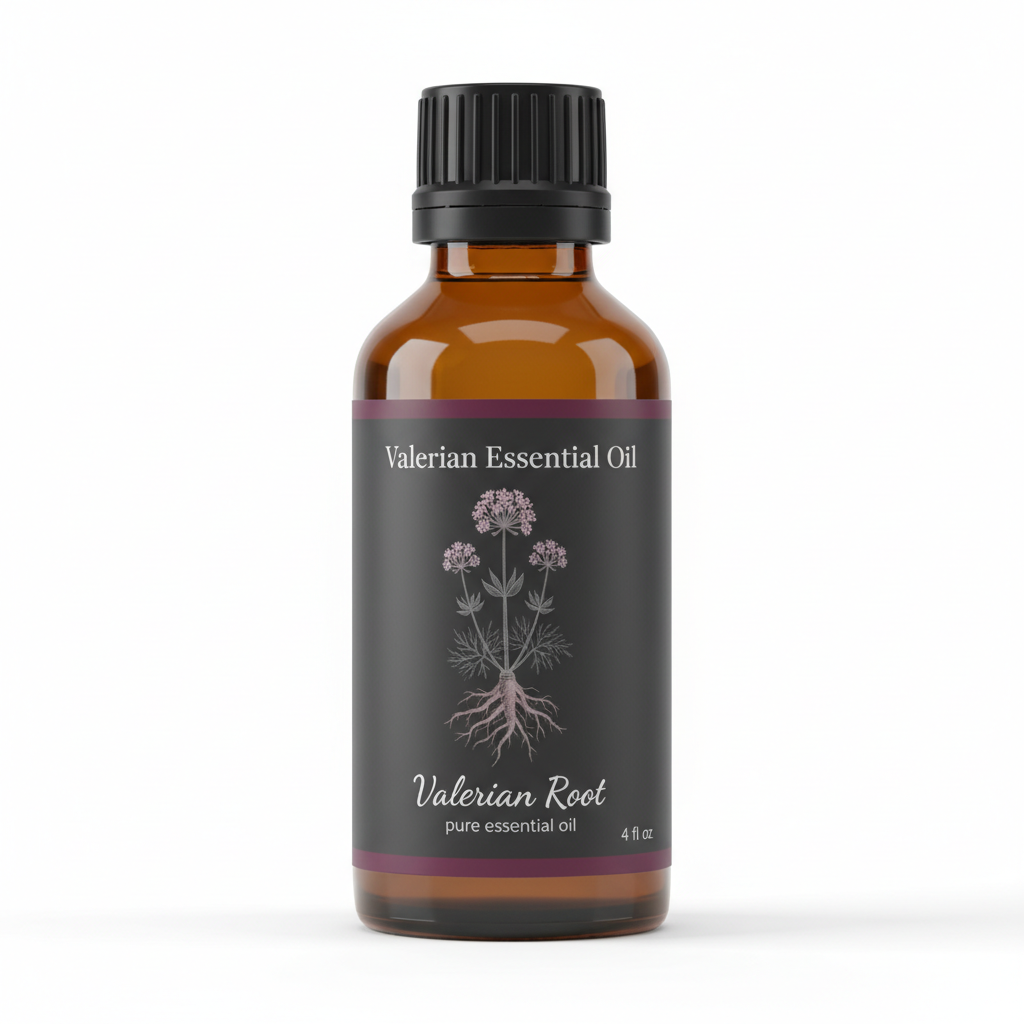
Valerian Root Essential Oil
Our own Valerian Root Essential Oil, in sizes from 0.5 oz to bulk.
From $31.99
Shop Now →Which plant is it?
The accepted botanical name for common valerian is Valeriana officinalis L. Other plants are sold under valerian names, and they smell different. Indian valerian, Valeriana jatamansi, is the best known; in an analysis of seven of its root oils, patchouli alcohol ranged from under 1% to nearly 64% and maaliol from about 3% to 54% (Raina and Negi, 2015). That is a different profile from the bornyl-acetate-led oils reported for V. officinalis. If a listing says only "valerian oil" and gives no Latin name, that is the first thing to ask about. Our label and Certificate of Analysis both print Valeriana officinalis. Our posts on the types of valerian oil and on valerian against spikenard help with look-alikes.
Which part, and how was it made?
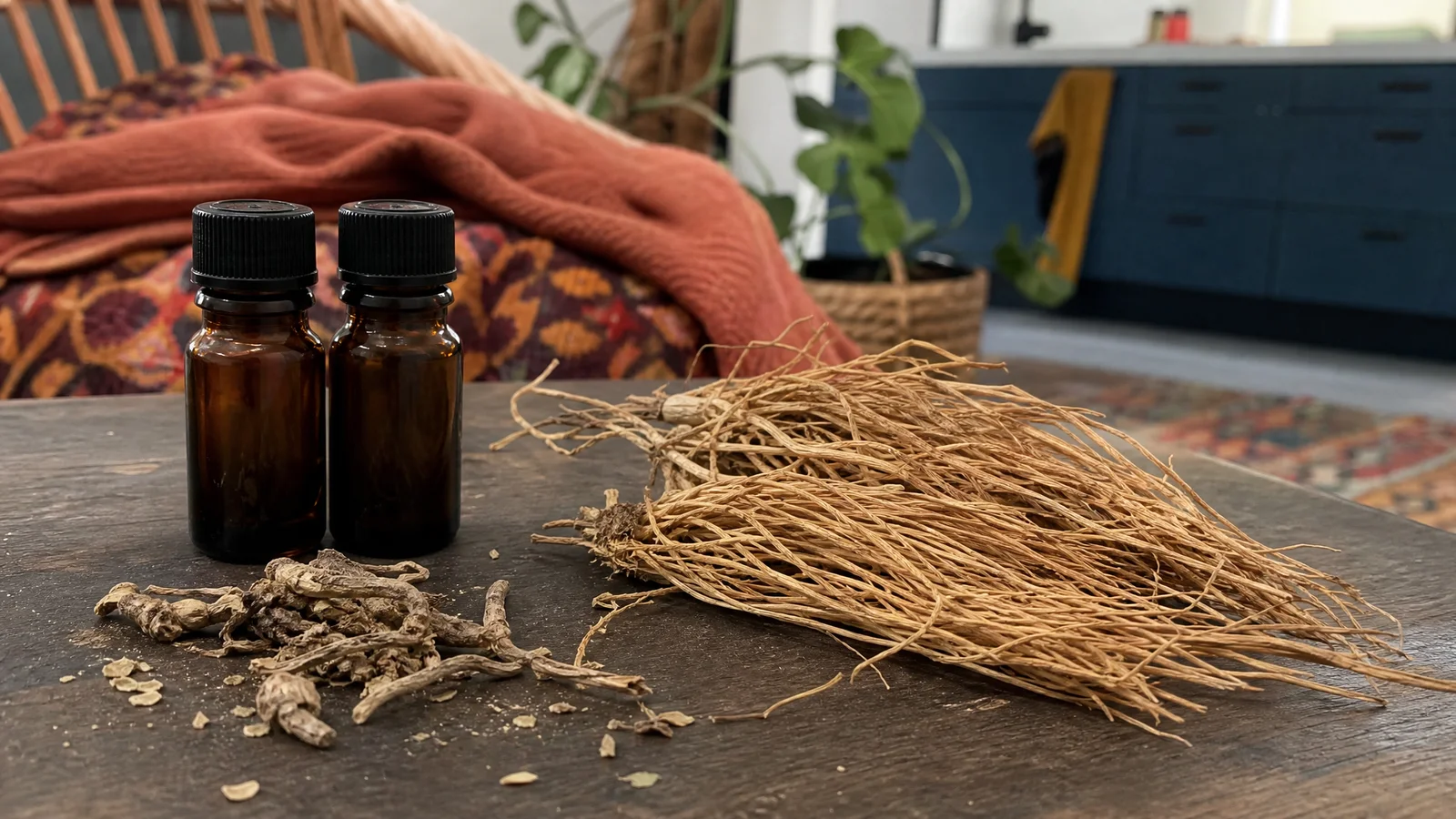
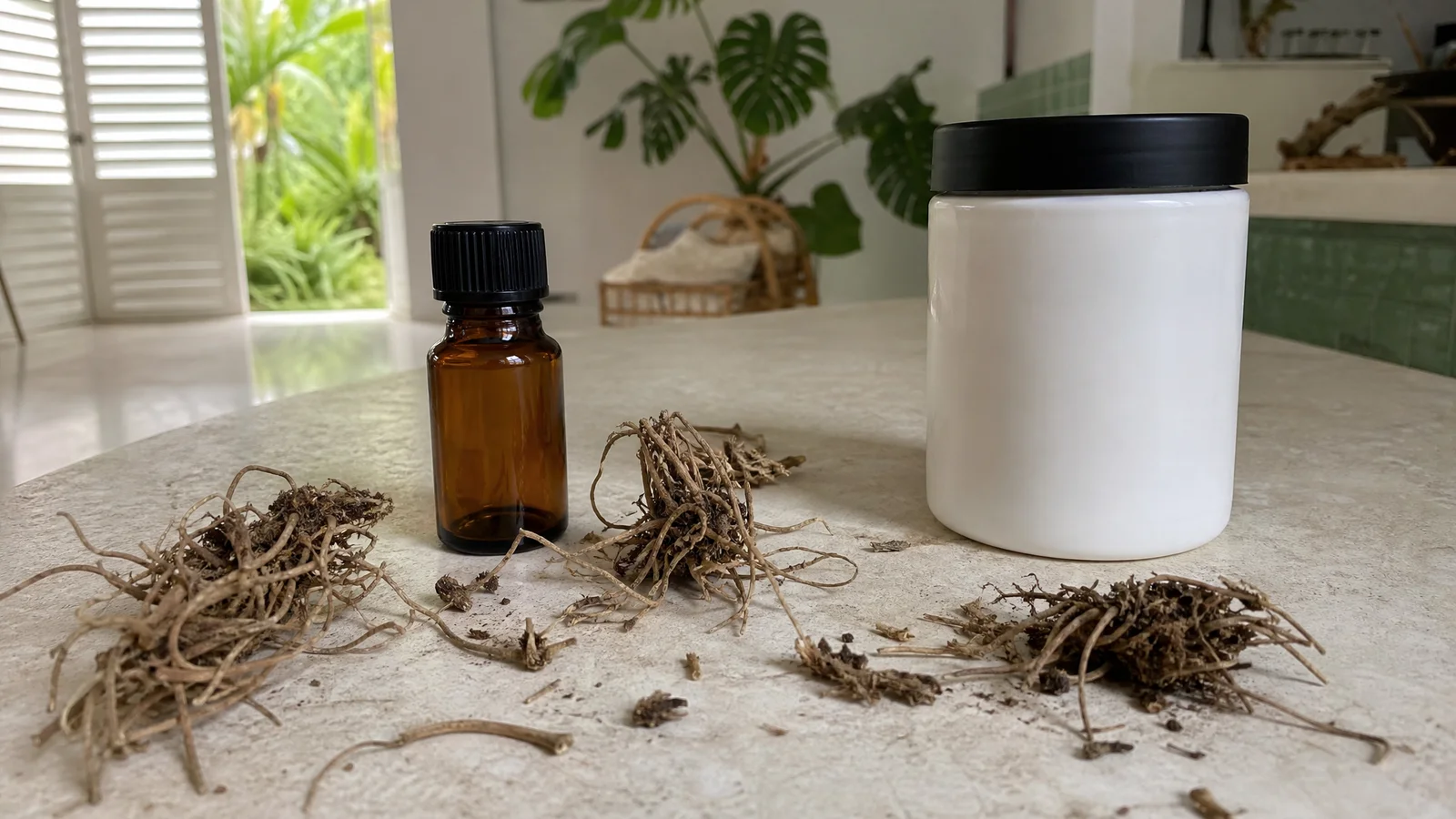
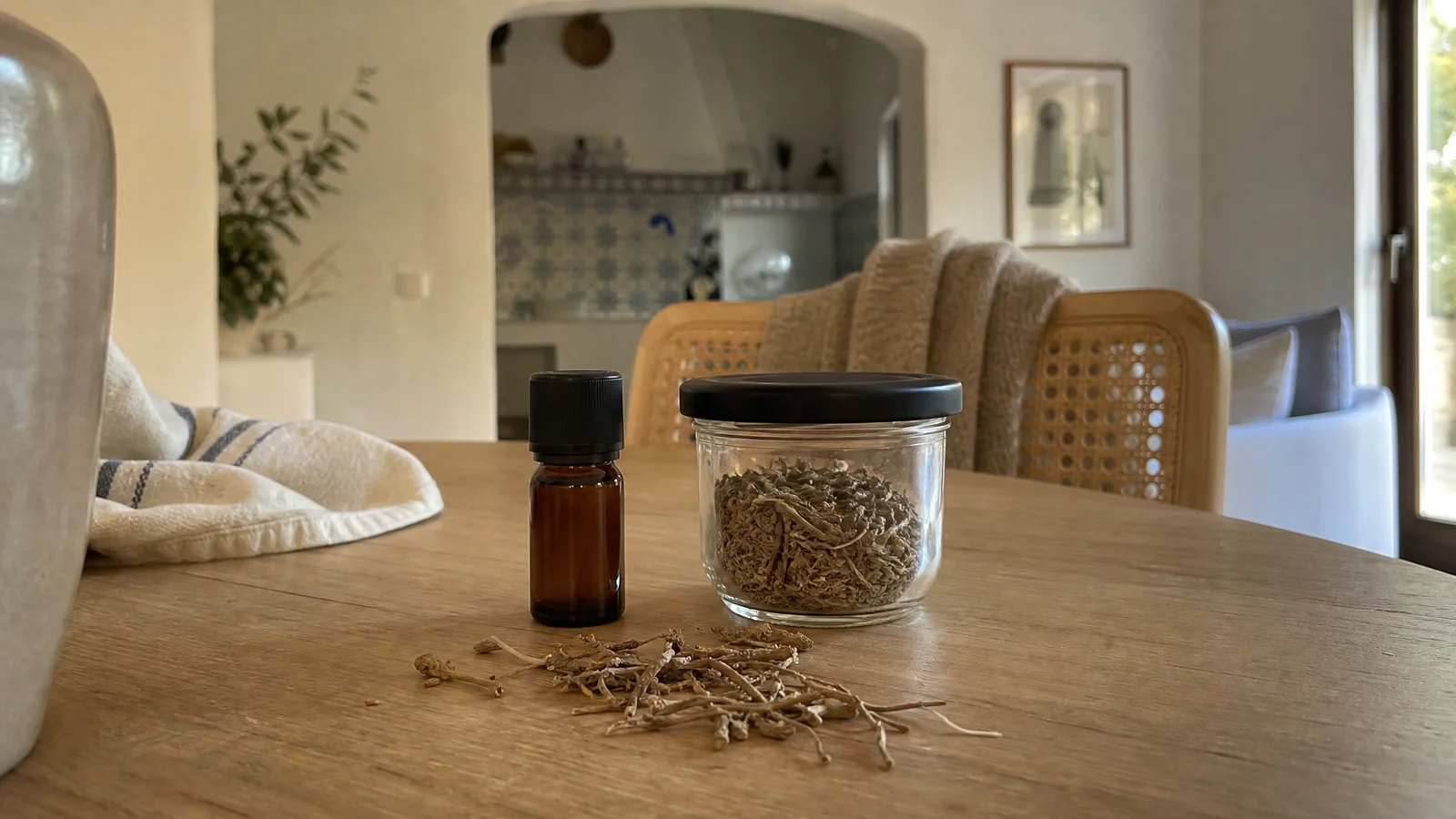
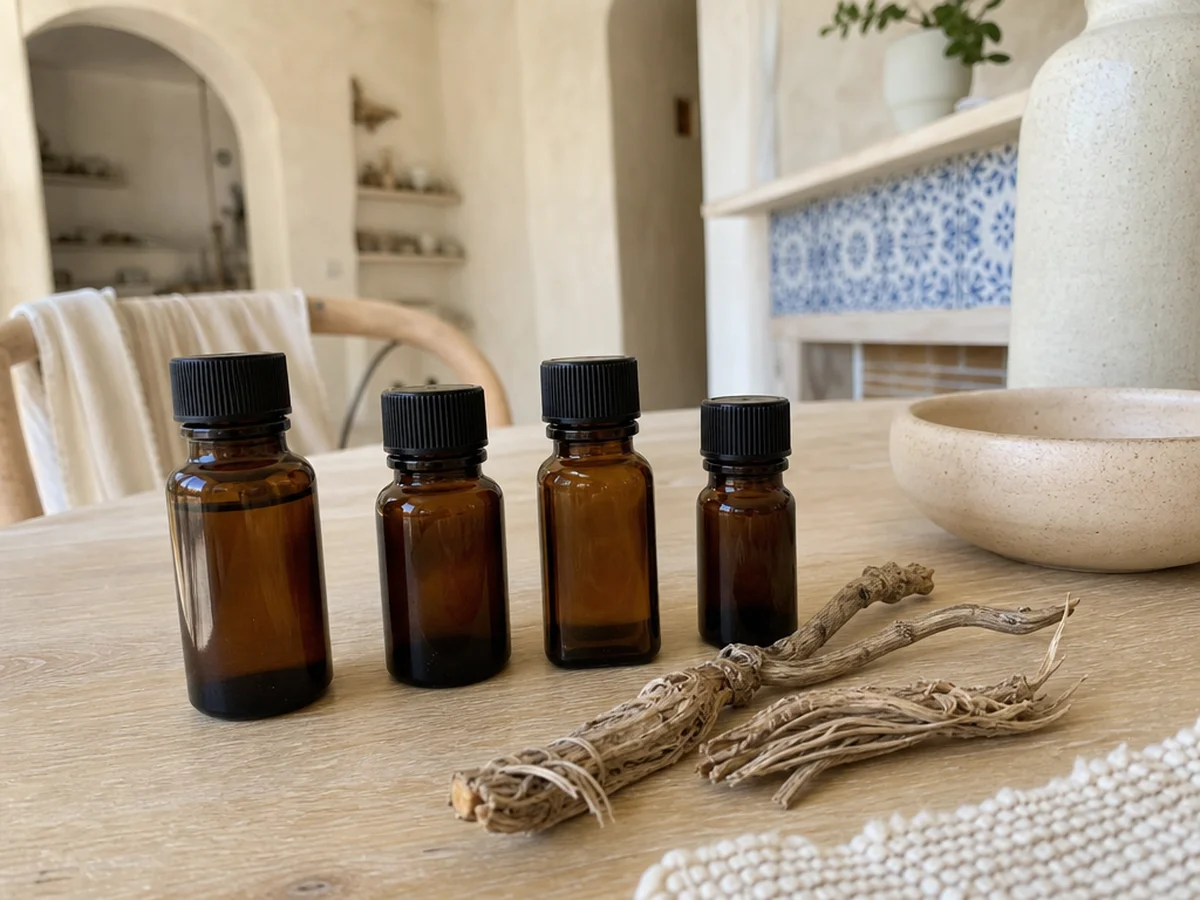
Valerian oil comes from the root and rhizome, not the flowers. We describe ours as steam-distilled from the dried root and rhizome, and the certificate says "Steam distilled." That detail matters because other sellers offer extracts made a different way, and an extract is a different material. Arctander, the perfumery writer, made the same distinction in 1960: the steam-distilled oil is the true essential oil, while a solvent-extracted valerian "oil" is a by-product of pharmaceutical extract-making and behaves like an absolute (Arctander, 1960). Do not compare an extract and a distilled oil as if they were one product. Our piece on root oil versus essential oil unpicks the naming.
What document backs it?
This is where listings differ most, and it helps to know the three kinds you might meet.
- A certificate of physical constants. This is the type we publish: one batch, with relative density, refractive index and optical rotation, each shown against a stated range, plus a best-by date. It tells you the batch sits inside those ranges. It does not list constituents, and we say so plainly.
- A GC-MS report. This lists compounds and percentages. If you need one, ask us in writing through the contact page before ordering, for the lot you will receive, and get the answer in writing before you rely on it.
- A marketing phrase. "Top grade" and "lab tested" are not documents. The FDA notes that it has no regulations defining "natural" or "organic" for cosmetics, so such words on a label are the seller's own (FDA).
Our guide to reading the certificate goes through ours line by line.
One more habit helps: ask every seller the same questions in the same words, and keep their answers in writing. It makes the comparison fairer, and everyone knows exactly what was asked.
Don't treat one number as a pass mark
If a seller does give you a constituent list, you need a benchmark, and the benchmark is wide. In the Estonian study of five laboratory-distilled V. officinalis root oils, bornyl acetate ran from about 9% to 34% and valerianol from under 1% to about 17% (Raal et al., 2007). A review reports earlier studies finding bornyl acetate at 20% to 60% of the oil (Chen et al., 2015). So a 15% reading and a 45% reading could both come from genuine valerian, depending on the variety, the growing conditions and the processing. Be wary of anyone who treats a single figure as proof of quality.
Compare the way a perfumer would
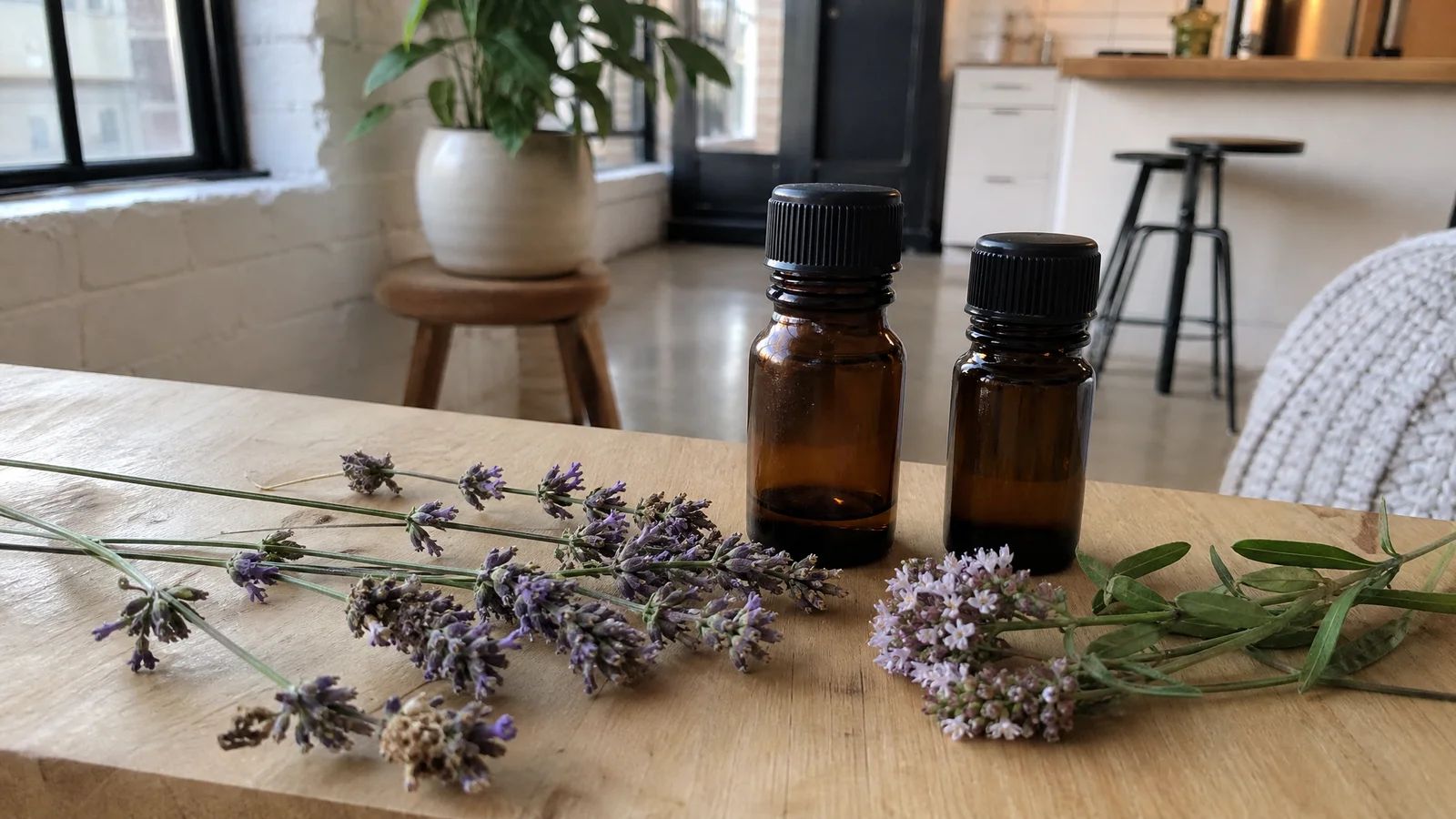
When you have two bottles, resist the urge to sniff straight from each opening, one after the other. Your nose tires fast, and a strong root oil will flatten the second sample. Instead, put a drop of each on its own paper strip, label them in pencil and set them side by side. Smell one, rest for a minute, then smell the other. Come back after ten minutes and again the next day.
You'll notice that the first impression and the later one are not the same. A base note changes as it dries, and that slow change is part of what you are comparing. Jot down words like green, woody, sweet, sharp or musty. If one strip smells oddly flat or sour next to the other, that is a useful answer no listing can give you.
Smell it, and buy small
All the paperwork in the world will not tell you whether you like the smell, and valerian is polarising. We describe our oil as earthy, musky and woodland-damp, with a balsamic sweet finish, and a base note in the perfumery sense. The sensible approach is to buy the smallest size from any seller and decide. Our 0.5 oz bottle is meant for exactly that, and the buying guide adds more questions worth asking. For larger quantities, our bulk page and wholesale page explain sample bottles and sizes.
A fair way to use this
Write the listing's answers in a short table for each oil: plant, part, method, document, size and aroma. Gaps are information. A listing that answers every line plainly tells you more than one with bigger claims. We have tried to answer these lines for ours in the open, and we would encourage you to put the same questions to anyone you buy from.
Comparison shopping is at its best when it makes you a more confident buyer, not a more suspicious one.
Valerian Root Essential Oil
Valerian Root Essential Oil from our own shop, in sizes from 0.5 oz to bulk.
From $31.99
Shop Now →Sources & Further Reading
- Raina AP, Negi KS. "Essential oil composition of Valeriana jatamansi Jones from Himalayan regions of India." Indian Journal of Pharmaceutical Sciences, 2015. ijpsonline.com
- Arctander S. "Perfume and Flavor Materials of Natural Origin" (1960), monographs on Valerian Oil and Valerian Absolute. archive.org
- FDA. "Aromatherapy." fda.gov
- Raal A, Orav A, Arak E, Kailas T, Muurisepp M. "Variation in the composition of the essential oil of Valeriana officinalis L. roots from Estonia." Proceedings of the Estonian Academy of Sciences, Chemistry, 2007. kirj.ee
- Chen H-W, Wei B-J, He X-H, Liu Y, Wang J. "Chemical Components and Cardiovascular Activities of Valeriana spp." Evidence-Based Complementary and Alternative Medicine, 2015. PMC4695638