Blending With Valerian Oil: Mask It or Pair It?
Here is our honest position: valerian is very hard to mask, and trying to is the usual reason blends with it go wrong. A louder oil does not hide it so much as sit next to it. The blends that work either use so little valerian that it is a shadow underneath, or choose partners with enough character to stand beside it. Both start with measuring, not guessing.
Valerian Root Essential Oil
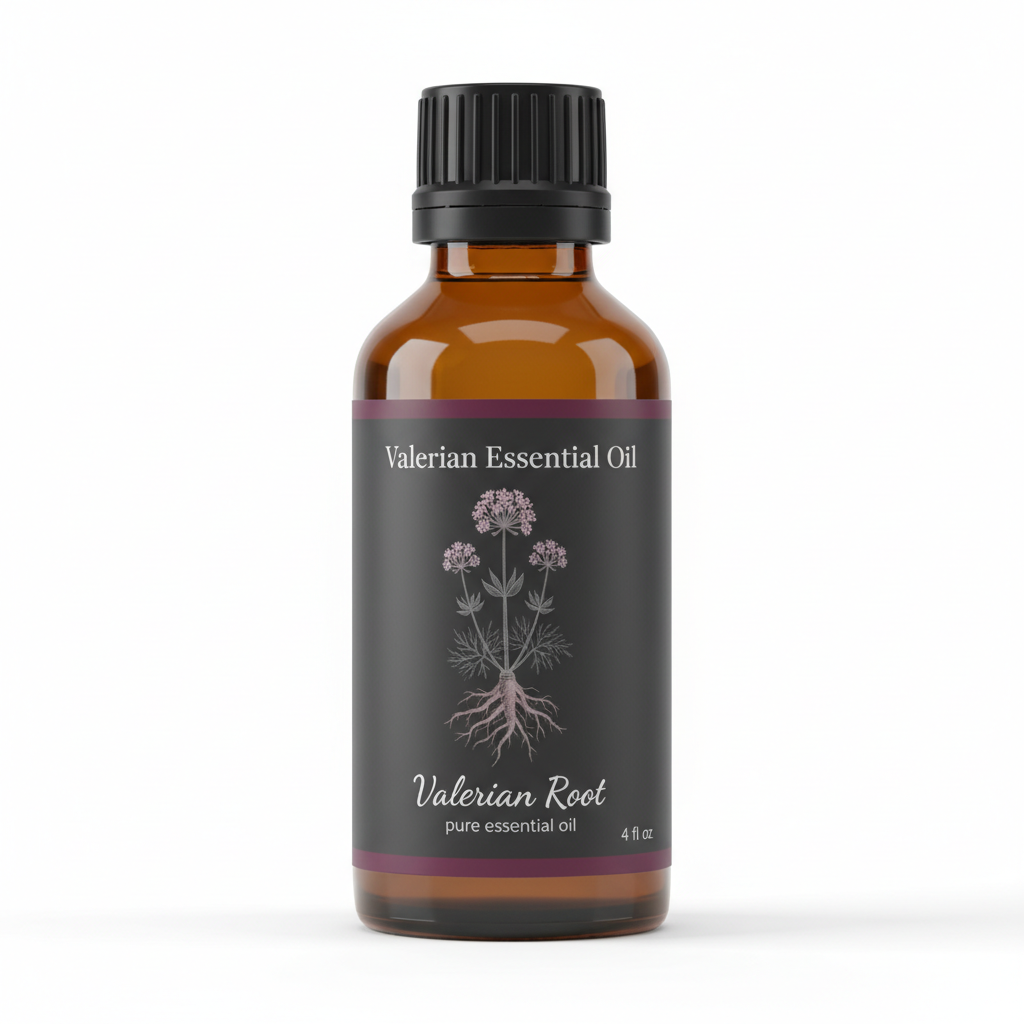
Our own Valerian Root Essential Oil, in sizes from 0.5 oz to bulk.
From $31.99
Shop Now →What you are working with
We describe our oil as earthy, musky and woodland-damp, with a balsamic sweet finish, and as a base note for perfumery-style work. The Good Scents Company, a perfumery reference, lists the odor of valerian rhizome oil as green, warm, woody, balsamic, rooty and animal-musky. Perfumers will recognise the family: the same dark, slow-evaporating character you find in vetiver and patchouli.
Roots also differ from one another. In an Estonian study of five valerian root samples distilled in a laboratory, bornyl acetate ranged from 8.8% to 33.7% of the oil, and valerenal from a trace to 14.7%. That is a reminder that valerian oil is not one fixed recipe. Reasoning from it, a ratio that works beautifully with one bottle may want a nudge with the next, so write your ratios down.
Why masking rarely works
Masking means adding enough of a louder oil to push valerian into the background. Our reasoning is that the louder oil would have to outweigh valerian many times over, and then you have a patchouli or cedar blend with a faint root underneath, which is a fine result but a different goal. A bright citrus top note will not cover a base note either, because the citrus fades first and the root is still there afterwards.
If the aim is to remove valerian's character altogether, another oil is a better starting point. If the aim is to give it good company, read on.
Marrying it to good partners
We list patchouli, vetiver, cedarwood, lavender, oakmoss and clary sage as oils that blend well with valerian. We sell none of them, so look to an aromatherapy or perfumery supplier. A routine that works for any partner:
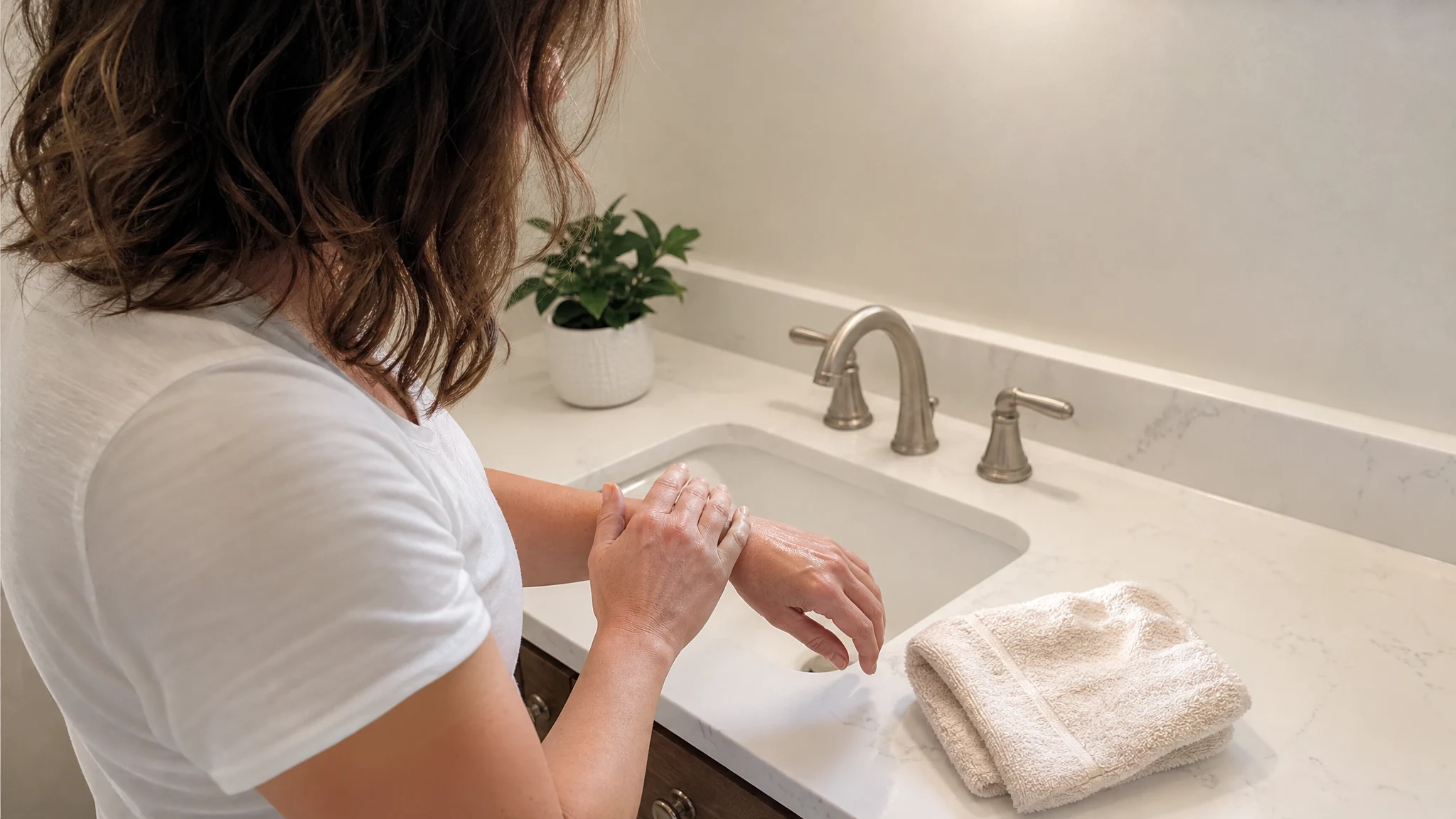
- Decide where the blend is going. A diffuser and a skin oil have different ceilings. Our skin guidance is 0.5% to 2% total in a carrier with a patch test first, and we would start at the low end. The dilution guide shows the arithmetic.
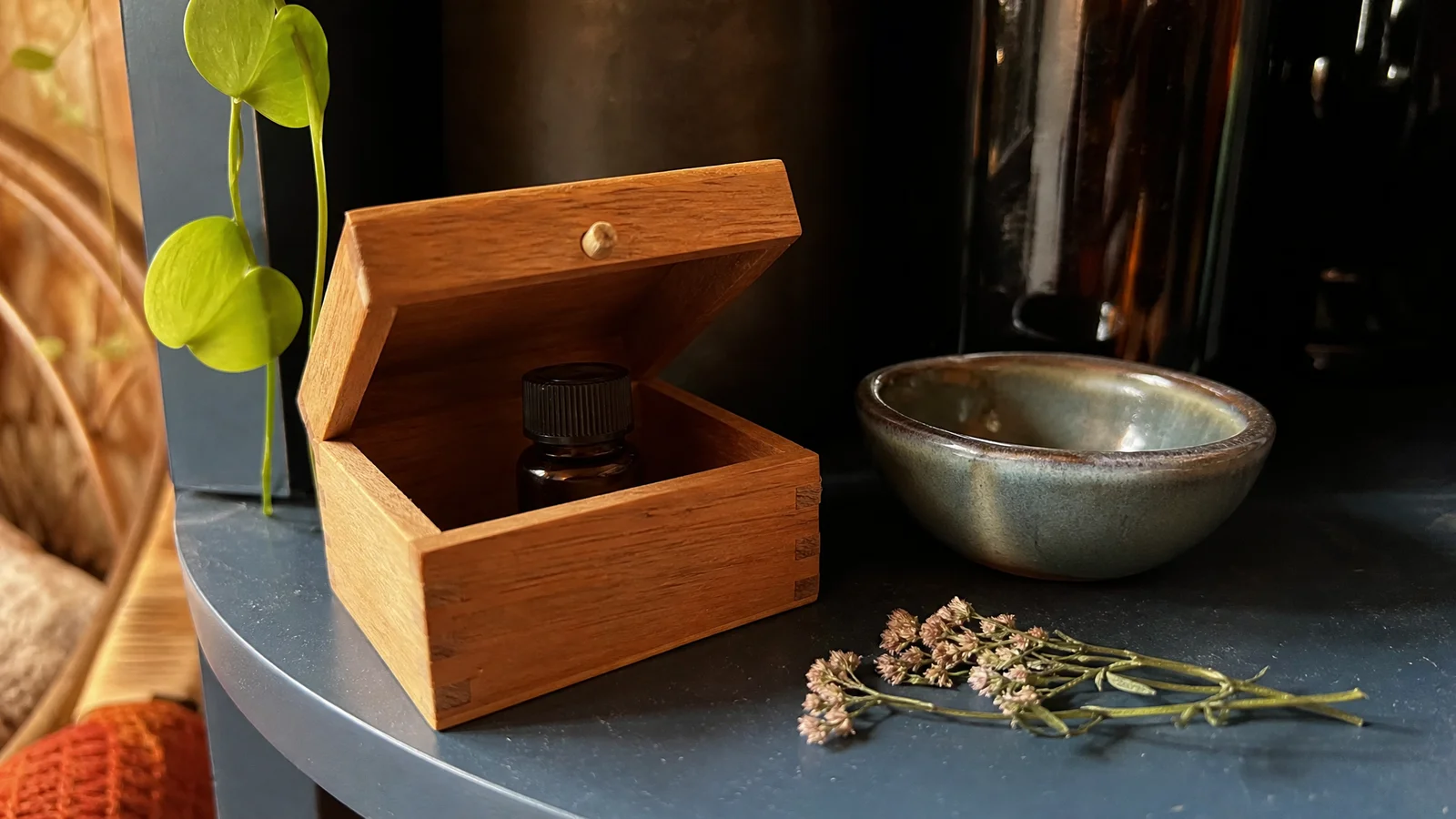
- Make a 10% stock. Mix 1 ml of valerian into 9 ml of a carrier oil you already use. A trace of a strong oil is hard to count in drops, and a stock turns it into something you can measure.
- Smell it beside one partner. Put a drop of stock and a drop of partner on separate paper strips, hold them together, and smell at once, after ten minutes and the next day. The base note is what remains.
- Change one thing at a time. Keep the partner fixed and move the valerian share up or down, writing each version down.
Let the blend rest
One habit makes every blend better: give it time. Smell a freshly mixed blend and you mostly meet the lightest oils, because they are the first to leave a paper strip. Come back after an hour and the middle of the blend steps forward. Come back the next morning and the base note, valerian included, has the last word. That is why we suggest judging a blend on day two, not in the first minute.
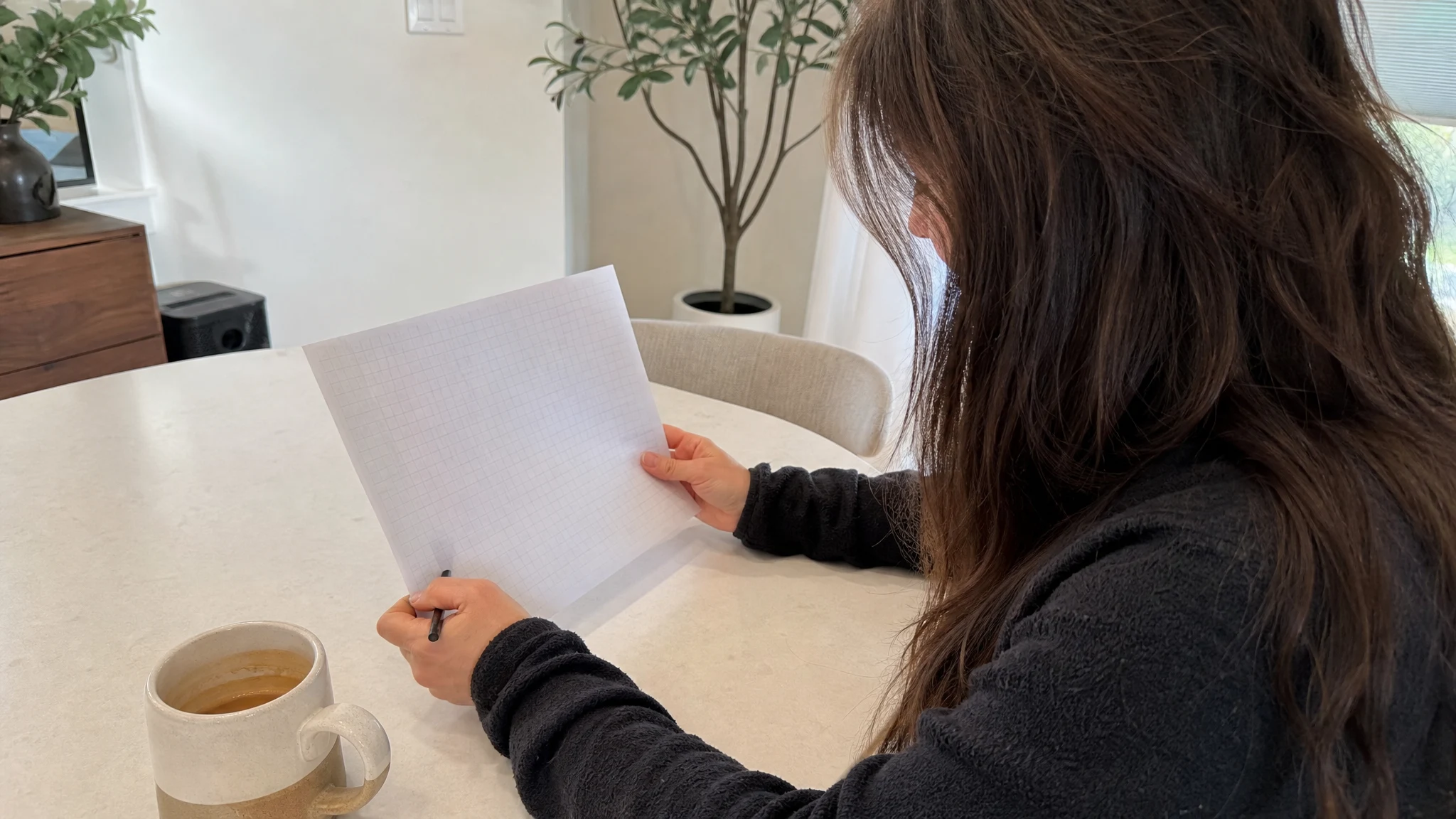
Keep a scrap of paper beside your strips and write a word or two about each one: "damp wood", "too sweet", "root only". Those little notes are worth more than memory, and they stop you chasing the same dead end twice.
The arithmetic, worked through
Take a 10 ml roller at 1% total essential oil. One percent of 10 ml is 0.1 ml, which is about two drops at 20 drops to the millilitre. If valerian is a tenth of that, it is 0.01 ml, a fifth of a drop, which you cannot count out. With the 10% stock, 0.1 ml of stock (about two drops) carries exactly that 0.01 ml of valerian, and your partner oils supply the other 0.09 ml. Everything else in the roller is carrier. The numbers are arithmetic, not a tested recipe, and the same logic works for any partner.
For a diffuser the shortcut is a premix: one drop of valerian plus nine drops of partner oils is a 10% valerian blend, and a few drops of that premix in a tank carries a quantity of valerian you could never reach by counting. If you work in perfumery, The Good Scents Company lists a usage level up to 5% in the fragrance concentrate for this oil. That is a ceiling from a reference site and a share of a concentrate you will dilute again, not a skin limit. Our post on valerian in natural perfumery takes the craft side further.
Other people's noses, and a few cautions
Scent travels. Canada's occupational health agency notes that some people report headaches, dizziness and upper respiratory symptoms around scented products, and that a dense, animalic base note is a poor candidate for an office, classroom or shared car. Test blends where you live, and ask the people who share the room.
Patch test the finished blend, not just the parts, because a blend is only as gentle as its most reactive oil. We advise avoiding valerian in pregnancy as a precaution, not combining it with sedative medication, and keeping the bottle and any blends away from cats, which are strongly drawn to the scent; see valerian and cats. For a neighbour worth comparing, valerian against vetiver is the closest sibling.
The simplest rule is to start smaller than feels right, smell the blend again tomorrow, and if valerian still comes first, halve it before you change anything else.
Valerian Root Essential Oil
Valerian Root Essential Oil from our own shop, in sizes from 0.5 oz to bulk.
From $31.99
Shop Now →Sources & Further Reading
- Raal A, Orav A, Arak E, Kailas T, Muurisepp M, 2007. Variation in the composition of the essential oil of Valeriana officinalis L. roots from Estonia. Proceedings of the Estonian Academy of Sciences, Chemistry 56(2):67-74.
- The Good Scents Company. valerian rhizome oil china, 8008-88-6
- CCOHS. Scent-Free Policy for the Workplace