Valerian in Perfumery: Why a Trace Is Enough
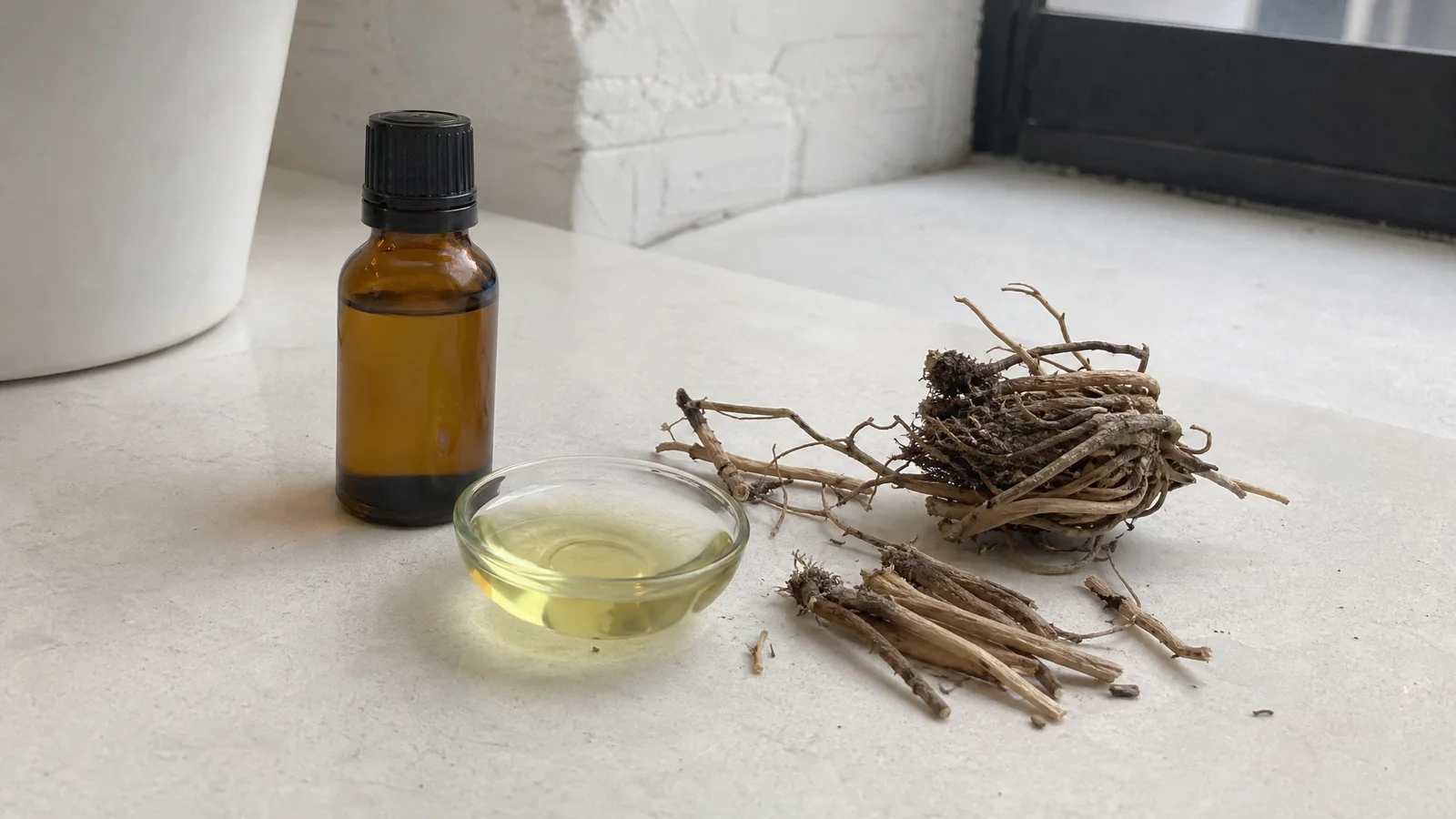
Open a bottle of valerian root oil and the first impression is earthy, musky and woodland-damp, with a balsamic sweetness arriving last. It is not a flower and it is not a citrus. It is a shadow, and a perfumer's job is to decide how much shadow a composition can take. The answer, almost always, is less than you think.
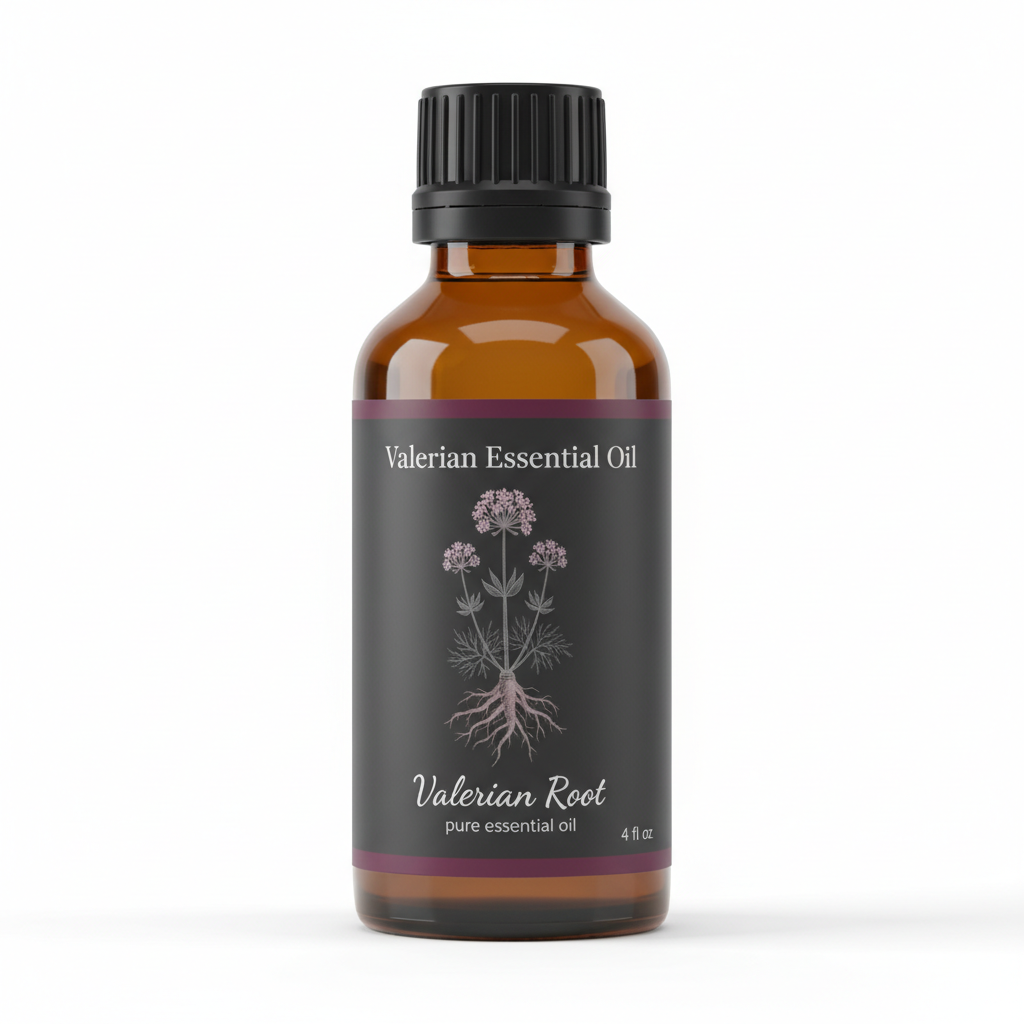
Valerian Root Essential Oil
Our own Valerian Root Essential Oil, in sizes from 0.5 oz to bulk.
From $31.99
Shop Now →What the old handbooks say it is for
The most useful description we know comes from Steffen Arctander's 1960 handbook of natural perfume materials. He describes the steam-distilled oil as warm, woody and balsamic, with a distinct animal undertone and great tenacity, and notes that a good oil also carries a fresh-green, slightly camphoraceous top note (Arctander, 1960). He suggests it for musky-woody, balsamic effects alongside patchouli, costus, oakmoss and cypriol in modern chypre-style compositions, and says it blends well with pine materials, lavenders, cedarwood derivatives and mandarin petitgrain.
That is a 1960 palette, but it tells you what job the oil does. It adds a dark, mossy, faintly animal depth to forest accords, chypres and fougeres. It sits at the base of a blend, and we describe ours as a base note too. Our blending partners are patchouli, vetiver, cedarwood, lavender, oakmoss and clary sage, all of which you can find at a craft or supply shop, since we sell only the valerian.
Building around a shadow
Think of valerian the way a painter thinks of a dark umber: you rarely use it on its own, and you notice it most when it is missing. In a woody or mossy accord it supplies depth, a sense that the blend has a floor under it. Start with the pieces you already love and add the valerian last, in the smallest amount you can measure, then wait before judging. Strong base materials need time to settle into a blend, so smell it after a few hours and again the next day.
Oil, absolute, and why the name matters
Arctander drew a line that is still useful. Steam-distilled valerian oil is the true essential oil. The "absolute", he explains, is a by-product of making pharmaceutical valerian extract; he calls it not truly an essential oil and describes a very powerful, balsamic-green, sweet-woody material with a hoppy, pine-forest undertone, used only rarely. A formula written for one will not behave the same way with the other. Ours is the steam-distilled root oil, so match your recipes to that.
It is also worth knowing that valerian oil is not a single fixed scent. In one study of five root samples distilled in a laboratory in Estonia, the proportion of bornyl acetate, a major component of the oil, ranged from about 9% to about 34% (Raal et al., 2007). Different roots, different oils. That is one reason we suggest you smell before you formulate.
Why a trace is the right amount
Strong, tenacious materials are best handled in tiny amounts, and valerian is among the strongest. We would rather you under-use it and add more than over-use it and start again. The following is arithmetic, not a recipe we are claiming to have made.
Imagine a 10 ml eau de parfum at 15% fragrance concentrate, which is roughly 1.5 g of concentrate. If valerian made up 0.5% of that concentrate, you would need about 7.5 mg of oil. For scale, one drop of the batch on our Certificate of Analysis (relative density 0.947, and a rough 20 drops to the millilitre) is about 47 mg. So a single drop is already several times the whole dose, and drop sizes vary from bottle to bottle.
A common workaround is pre-dilution. Weigh 1 g of the oil with 9 g of perfumer's alcohol to make a 10% stock, then work from the stock. At that strength, the 7.5 mg in our example becomes about 75 mg of stock, a quantity you can weigh on a 0.001 g scale. This is a way of thinking about the quantities, not a standard, and you should always check your own formula against the safety limits that apply to your product category.
Safety limits are yours to check
If you plan to sell what you make, the limits that apply come from the IFRA standards and your own safety assessment, and we could not locate a published IFRA standard specific to valerian root oil. We recommend 0.5% to 2% in a carrier oil for general skin use, with a patch test first. For anything beyond that, ask for the documentation you need in writing through our contact page, for the lot you will actually receive, and get it in writing before you rely on it. Our guide to the Certificate of Analysis explains what the one we publish does and does not contain, and our wholesale page has details on samples, and larger sizes are listed on our bulk page.
Practical habits at the bench
- Label everything. Write each trial's drops or weights next to its date, so a version you like can be repeated.
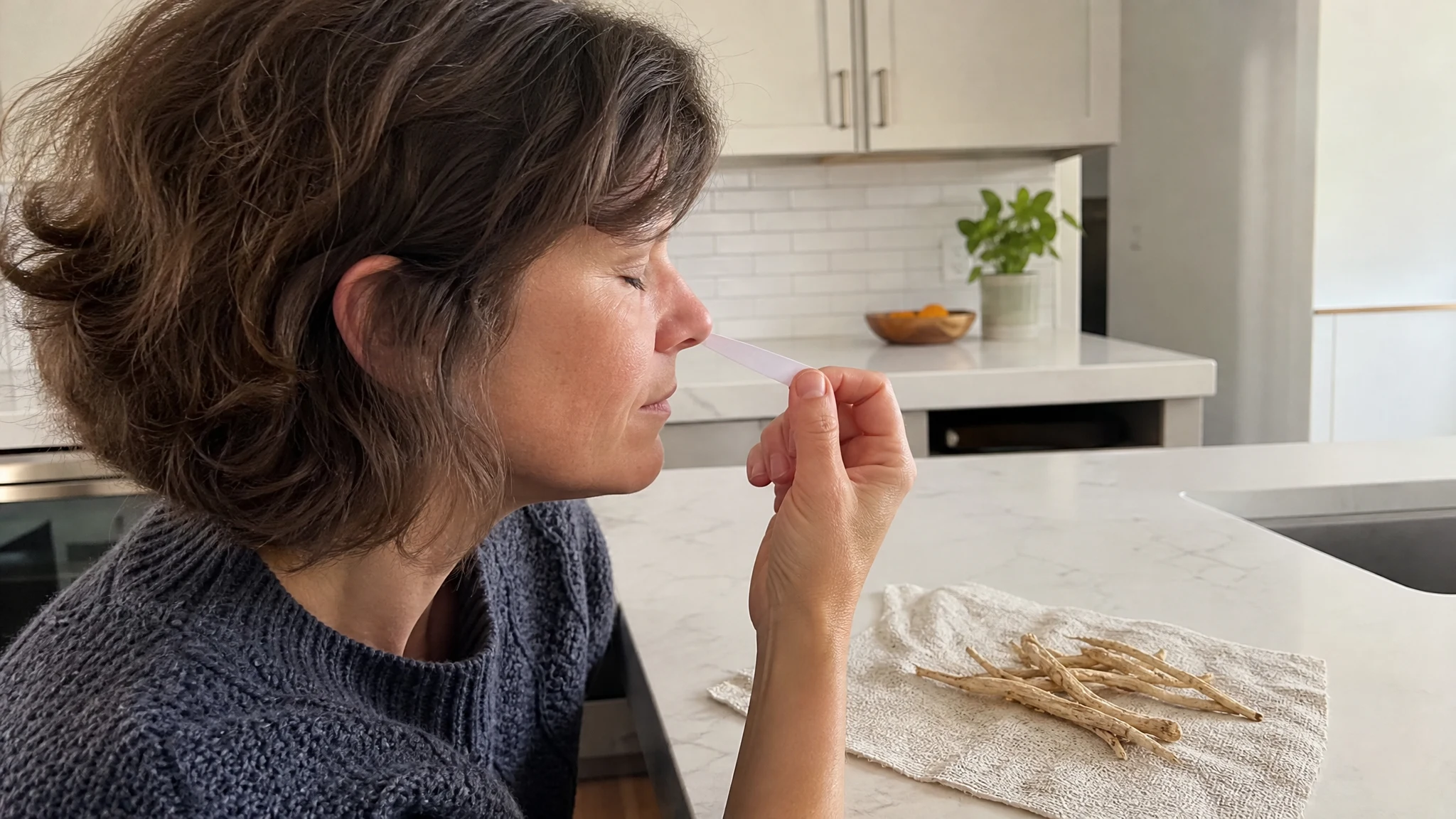
- Use blotters. Dip a strip into the blend, never straight into the bottle, and note the time you smelled it.
- Change one thing at a time. If the blend feels too heavy, reduce the valerian before touching anything else.
- Keep a clean nose. Smell sessions of more than a few strips blur together, so stop early and come back later.
None of this is complicated, but it is the difference between a happy accident and something you can make again.
Keep it fresh
Arctander also notes that under poor storage the oil darkens, thickens and picks up an unpleasant isovaleric acid odour. So treat the bottle kindly: keep it tightly capped, cool and dark, and decant working amounts into a smaller airtight bottle so the main one is not opened constantly. Our article on storing valerian oil covers it in more detail. For ideas on pairing, masking or marrying is a fun read.
Valerian will never be the star of a composition. It is the quiet reason a blend feels deep.
Valerian Root Essential Oil
Valerian Root Essential Oil from our own shop, in sizes from 0.5 oz to bulk.
From $31.99
Shop Now →Sources & Further Reading
- Arctander S. "Perfume and Flavor Materials of Natural Origin" (1960), monographs on Valerian Oil and Valerian Absolute. archive.org
- Raal A, Orav A, Arak E, Kailas T, Muurisepp M. "Variation in the composition of the essential oil of Valeriana officinalis L. roots from Estonia." Proceedings of the Estonian Academy of Sciences, Chemistry, 2007. kirj.ee