Valerian Oil and Medications: Questions for Your Pharmacist
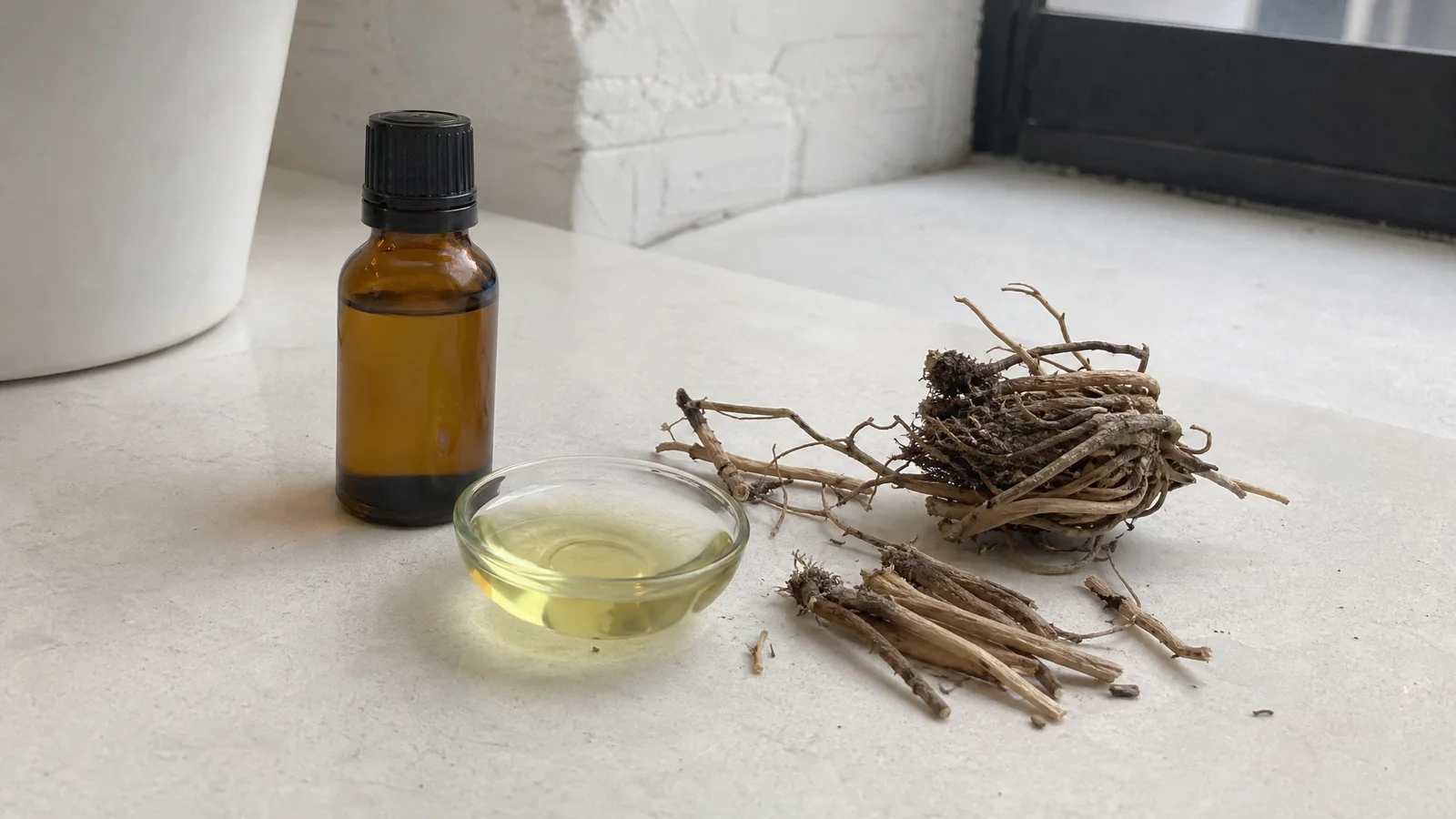
Every interaction warning about valerian that we could find in the sources we read is about valerian taken by mouth: capsules, extracts and tea. For an essential oil used as an aroma or in a skin dilution, we found no interaction studies at all. That is not the same as "no interaction". It means the question has not been looked at, and it is why we keep a cautious default: we advise not combining the oil with sedative medication.
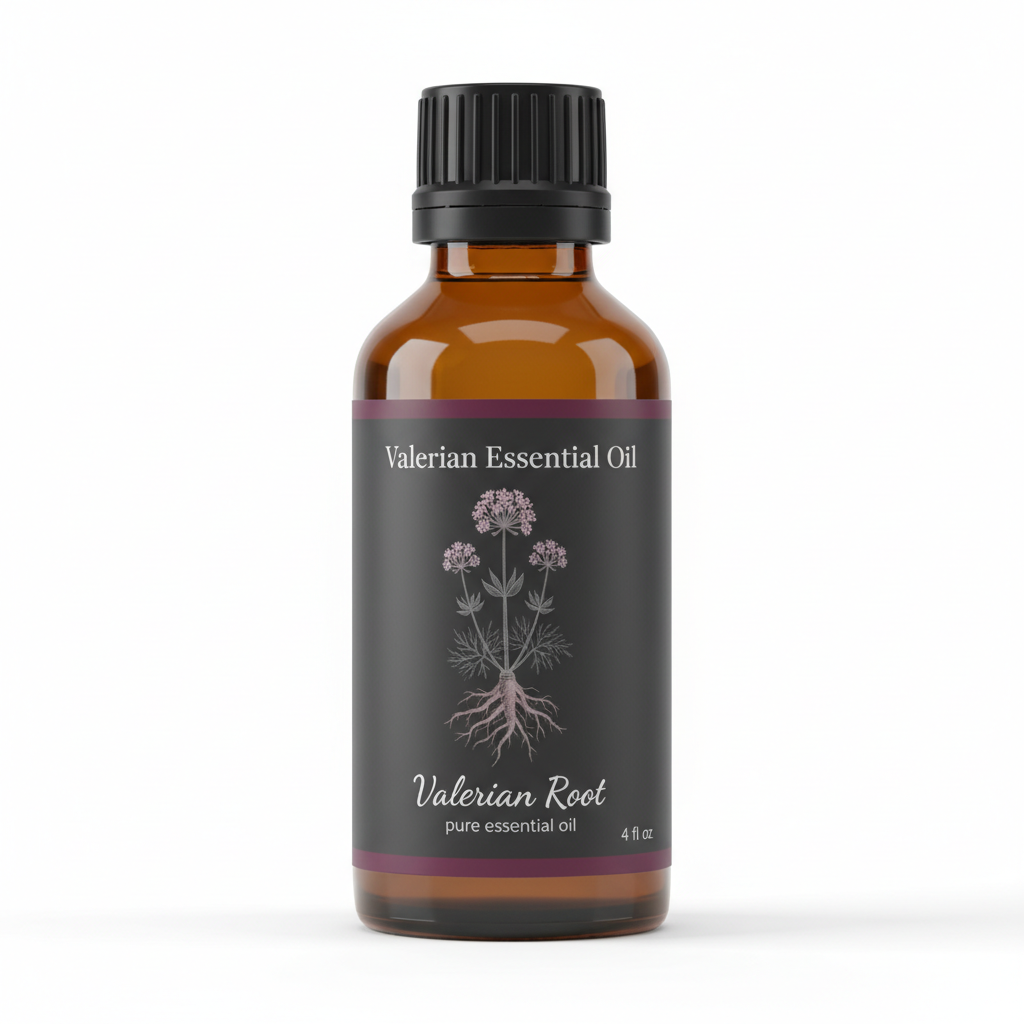
Valerian Root Essential Oil
Our own Valerian Root Essential Oil, in sizes from 0.5 oz to bulk.
From $31.99
Shop Now →What the oral warnings say
The National Center for Complementary and Integrative Health says that because it is possible, though not proven, that valerian might have a sleep-inducing effect, it should not be taken along with alcohol or sedatives, and that anyone taking medicine should talk with a health care provider before using herbal products. That is advice about the herb as a supplement.
A 2014 review of the interaction potential of valerian root preparations (Kelber, Nieber and Kraft) points the other way on metabolism. It found seven laboratory studies on liver enzymes and transport proteins that were not suitable for predicting clinically relevant interactions, clinical studies on several valerian preparations that did not show relevant interaction with four key enzymes, and concluded that the interaction potential of valerian preparations seems low and without clinical relevance. The European Medicines Agency's draft monograph for the essential oil lists interactions as "none reported", for an oral liquid or bath additive.
Making sense of two views
These do not contradict each other as much as they first appear. Additive drowsiness with sedatives or alcohol is a plausible, if unproven, effect of the herb itself, and that is where the cautionary advice sits. The measured evidence on how drugs are broken down in the body is largely reassuring. Our reading is that the strongest documented concern is extra sleepiness, the metabolic evidence is mostly reassuring, and the whole picture is thin enough that anyone on a narrow-margin drug should ask a pharmacist rather than guess.
Where the oil fits
The "none reported" in the European draft describes a medicine taken as a 15 mg oral dose or used in a bath, and it describes an absence of reports, not a study. Nothing we read addresses inhaling a diffused oil or wearing a diluted one. It is plausible that a few drops in a carrier, or a scent in a room, deliver far less than a capsule does, but no source measures either, and we will not name a "low enough" amount.
The rule we follow is our own: if you take a sedative, ask before adding anything with valerian in it. We advise that for our oil, which is sold for aromatic and cosmetic use only, never for swallowing, and which makes no sleep or calming claim.
Who should check first
- People taking sedating prescriptions such as sleep or anti-anxiety medicines, or opioids. Ask the prescriber or pharmacist.
- People who drink alcohol most evenings. The oral advice is not to combine it with valerian.
- Anyone with an operation planned. Tell the anaesthetist about every herbal and aromatic product you use.
- Anyone who also takes valerian by mouth. That is where the documented warnings live. Our oil is not a substitute and not a supplement; capsules versus oil and tea versus oil explain the difference.
- People on narrow-margin drugs, for example blood thinners or anti-seizure medicines. None of our sources names these as valerian interactions, so we claim none, but a pharmacist can check the specific drug.
NCCIH also notes that liver injury has been reported in very rare cases with valerian, most often alongside other herbals, and that its long-term effect on the liver is unknown. A Berlin surveillance study of herb-induced liver injury, by Douros and colleagues, rated five of 198 hepatotoxicity cases as possibly related to valerian. Possible causality is not proof, and these were oral products. We mention it for completeness; our side effects post has more.
Driving
The European draft monograph says the oil taken orally may impair the ability to drive and use machines, and that affected patients should not drive or operate machinery. That is an oral-dose warning. It gives no basis for saying a scent affects driving, and none for saying it cannot. If you feel drowsy or unsteady while using any scented product, stop using it and do not drive.
Keep a simple list
A short written list makes any counter conversation easier: the oil, how you use it (diffused or diluted on skin), roughly how often, and every medicine, supplement and regular drink you have. Update it when something changes and take it along to appointments. Pharmacists see lists like this all the time, and it saves you trying to recall details on the spot. Keep the bottle itself capped and out of reach of children and cats, somewhere separate from your medicine cabinet so the two never get mixed up.
What to say at the pharmacy counter
Bring the bottle or the product page and tell the pharmacist four things: the material (a steam-distilled valerian root essential oil, not an extract), the route (diffused or diluted on skin, never swallowed), the amount (drops, and how often), and everything else you take, alcohol included. We do not offer a safety data sheet or constituent report for the oil, so the pharmacist will be working from the general literature above. If one of those documents matters to you, ask us in writing through the contact page and rely only on what you receive. If a rash or unexpected drowsiness appears, stop the product and contact a clinician. The wider picture is in Valerian Essential Oil Safety.
A good question at the counter is worth more than any rule of thumb from a web page, ours included.
Valerian Root Essential Oil
Valerian Root Essential Oil from our own shop, in sizes from 0.5 oz to bulk.
From $31.99
Shop Now →Sources & Further Reading
- NCCIH. Valerian: Usefulness and Safety
- Kelber O, Nieber K, Kraft K, 2014. Valerian: no evidence for clinically relevant interactions. Evidence-Based Complementary and Alternative Medicine.
- Douros A, Bronder E, Andersohn F, et al., 2016. Herb-Induced Liver Injury in the Berlin Case-Control Surveillance Study. International Journal of Molecular Sciences.
- European Medicines Agency, 2015. European Union herbal monograph on Valeriana officinalis L., aetheroleum (draft)