Valerian Oil and Pregnancy: What We Advise
If you are pregnant or nursing and wondering about valerian oil, the clearest thing we can tell you is also the simplest: we recommend avoiding it as a precaution. That is not a dramatic warning. It reflects the fact that nobody has established an exposure level you could rely on, so we do not give one, and we would rather say so plainly than invent a number.
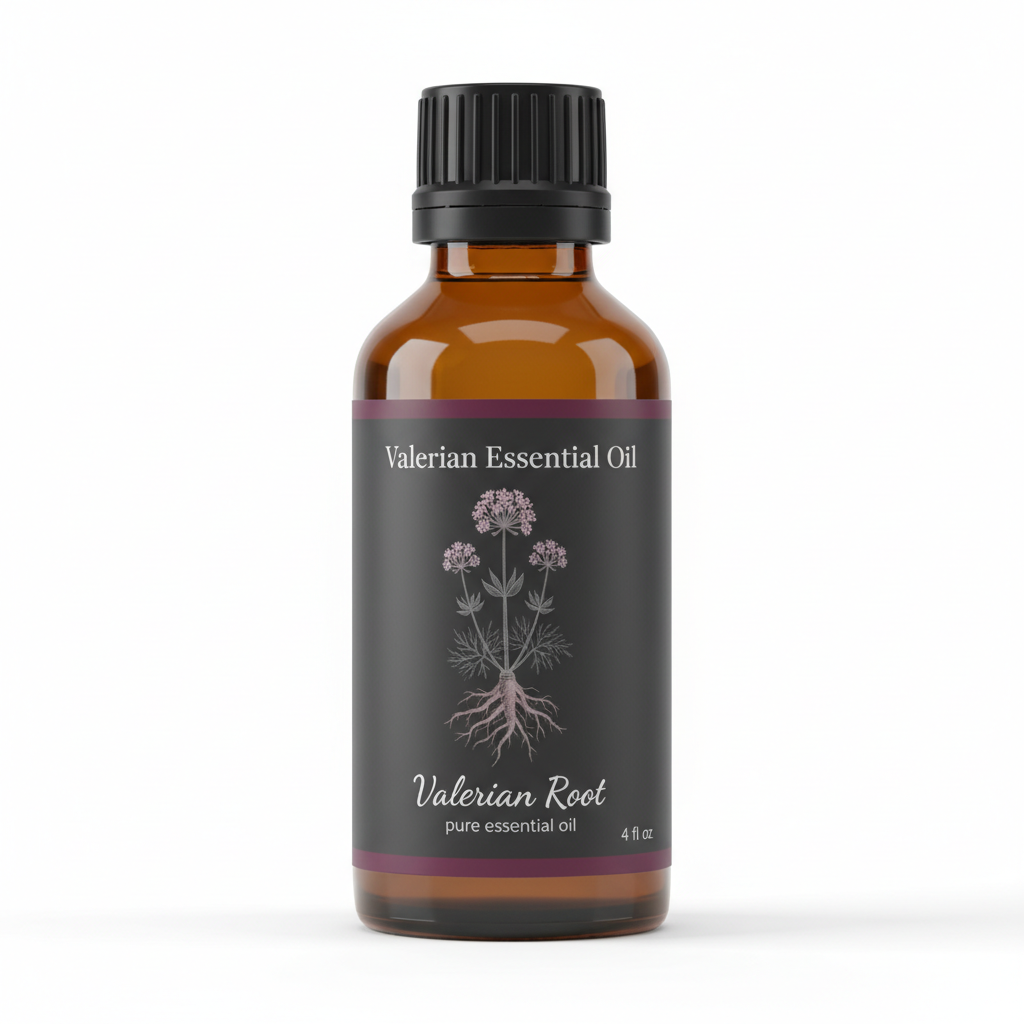
Valerian Root Essential Oil
Our own Valerian Root Essential Oil, in sizes from 0.5 oz to bulk.
From $31.99
Shop Now →Where we stand
We sell one valerian oil, from Valeriana officinalis, as an aromatic, perfumery-style base note for external use. Our guidance is to avoid it in pregnancy as a precaution and not to combine it with sedative medication. The disclaimer on our site adds the broader rule, which is to consult your physician before using essential oils if you are pregnant, nursing or managing a medical condition. We offer no pregnancy dilution, no nursing dilution and no allowance for a few drops in a diffuser, because no source supports a number.
What the authorities say
None of the sources below is about our oil as an aroma, so read each with its material in mind.
NCCIH, writing about oral valerian supplements, says that little is known about whether valerian is safe to use during pregnancy or while breastfeeding. The European Medicines Agency reaches a similar conclusion for oral valerian root in its assessment report. It notes limited information on reproductive and developmental toxicity and says use during pregnancy and lactation cannot be recommended. Its draft monograph for valerian essential oil, which covers oral liquids and bath additives sold as traditional medicines, says safety during pregnancy and lactation has not been established and that, in the absence of sufficient data, use is not recommended. The same assessment adds that the committee considered the available data not sufficient to prove the safety of the essential oil.
Notice the pattern. Different bodies, different materials, same message: there is not enough information. That is a statement about missing evidence, not evidence of harm, and it is the reason a cautious default makes sense.
Why a gentle route is not automatically a settled one
It is easy to assume smelling an oil exposes you to less than swallowing a capsule, and as a piece of reasoning that is plausible. But we are not aware of a source that puts a figure on it for valerian oil, and this is a concentrated material that we ourselves suggest using in traces because it dominates whatever sits beside it. Skin is the route where a defined limit would matter most in pregnancy, and no such limit has been verified even for general adult use. Poison Control adds two general points worth remembering: essential oils may interact with medications, and stopping use and washing the oil off is the right response to a rash.
If someone else in the house uses it
Pregnancy is also a reason to think about shared spaces. If a partner, relative or housemate likes valerian, a friendly request goes a long way: keep it in their own room, keep the cap on, and leave the diffuser out of the shared areas. That is a household courtesy, not a medical instruction, and your doctor or midwife can say more.
There is also no shame in leaving an aroma out for now. It will still be there later, and we would rather you felt unhurried than pressed.
Nursing adds a second person
When you are breastfeeding, the questions widen: whether the baby shares the room, whether the oil is on skin that the baby touches or mouths, and whether a diluted product could end up on the infant. We know of no source that answers those for valerian oil. Our rule that the oil stays away from children applies to a nursing infant too, and the specific question is one for a lactation consultant or your baby’s pediatric clinician.
Questions worth writing down
If you are going to raise this at an appointment, a few notes make the conversation quick. Write down the name on the bottle: ours reads Valerian Essential Oil, with Valerian Root and Valeriana officinalis on the label. Note how you would use it (a diffuser, a skin blend, a candle), which room, and who else shares the space. Mention any other herbs or products you use. A clear picture lets your doctor or midwife answer in a sentence.
And if a scent that you used to enjoy suddenly bothers you, there is nothing to prove. Put the bottle away and leave it for another time.
Who to ask, and what to bring
Your obstetrician, midwife or lactation consultant is the person who knows your situation. Tell them the specific product, how you would use it and what else is in the room. They can say yes, no or wait, and that decision belongs to them rather than to a shop.
- If you have already been using the oil, there is no need to panic. The position of the sources is lack of data, not a report of harm from aroma. Stop and mention it at your next appointment, or sooner if you feel unwell.
- If someone swallows the oil, call a poison center. In the United States the number is 1-800-222-1222, free and open around the clock.
- If a rash appears, stop, wash the area with soap and water, and speak to a pharmacist if it persists. Trouble breathing is an emergency.
For neighboring questions, our post on valerian and medications, our children and storage guide and our safety overview cover the rest. In short, we say avoid, the regulators say the data are not there, and the people best placed to decide anything else are the ones caring for you and your baby.
Valerian Root Essential Oil
Valerian Root Essential Oil from our own shop, in sizes from 0.5 oz to bulk.
From $31.99
Shop Now →Sources & Further Reading
- NCCIH: Valerian: Usefulness and Safety
- European Medicines Agency: Assessment report on Valeriana officinalis L., radix and Valeriana officinalis L., aetheroleum (EMA/HMPC/150846/2015)
- European Medicines Agency: European Union herbal monograph on Valeriana officinalis L., aetheroleum (draft, 2015)
- Poison Control: Essential oils: Poisonous when misused