Valerian vs Lavender Oil: Which Scent Suits You?
Lavender is the oil nearly everyone knows by scent. Valerian is the one most people have to be introduced to, and often the introduction is memorable. Placing them side by side is a good way to understand what a bold root oil is, because almost every difference you can name comes back to a flower on one side and a root on the other.
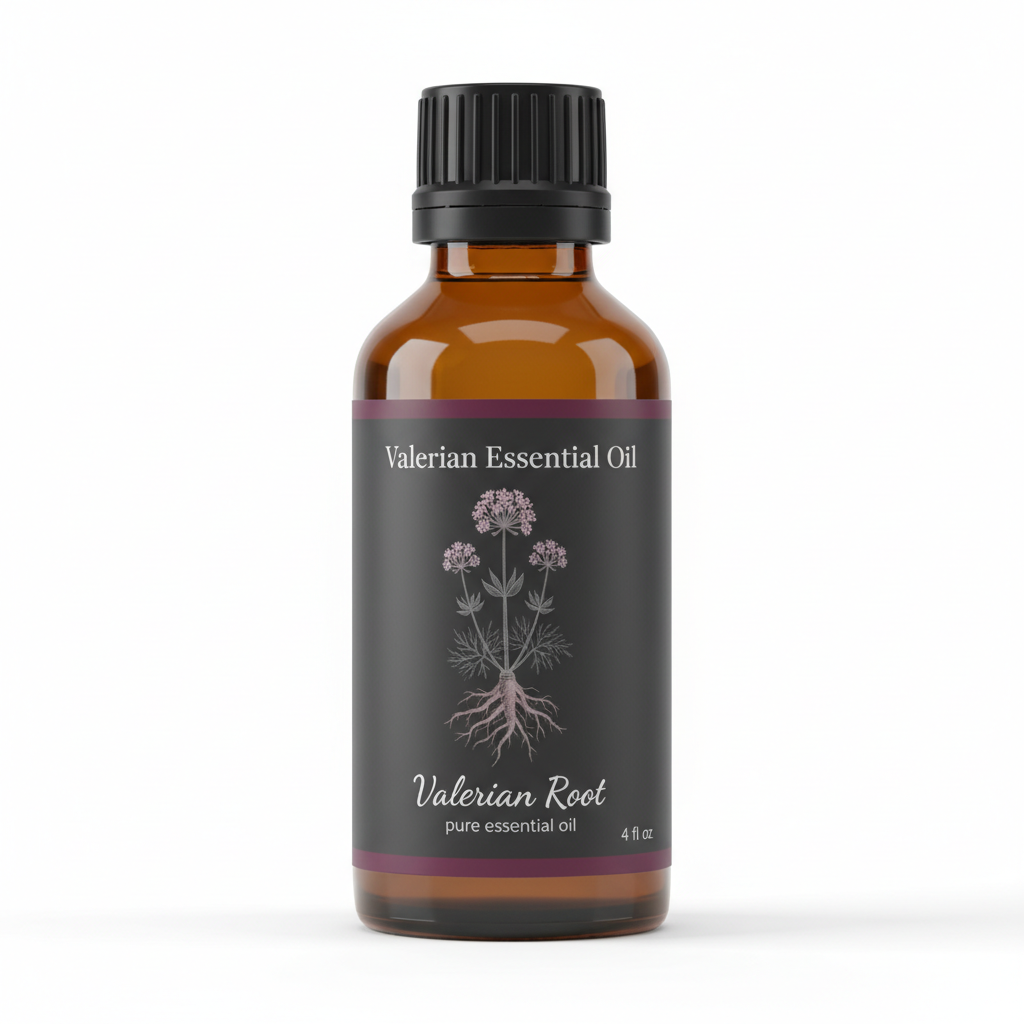
Valerian Root Essential Oil
Our own Valerian Root Essential Oil, in sizes from 0.5 oz to bulk.
From $31.99
Shop Now →Flowering tops against roots
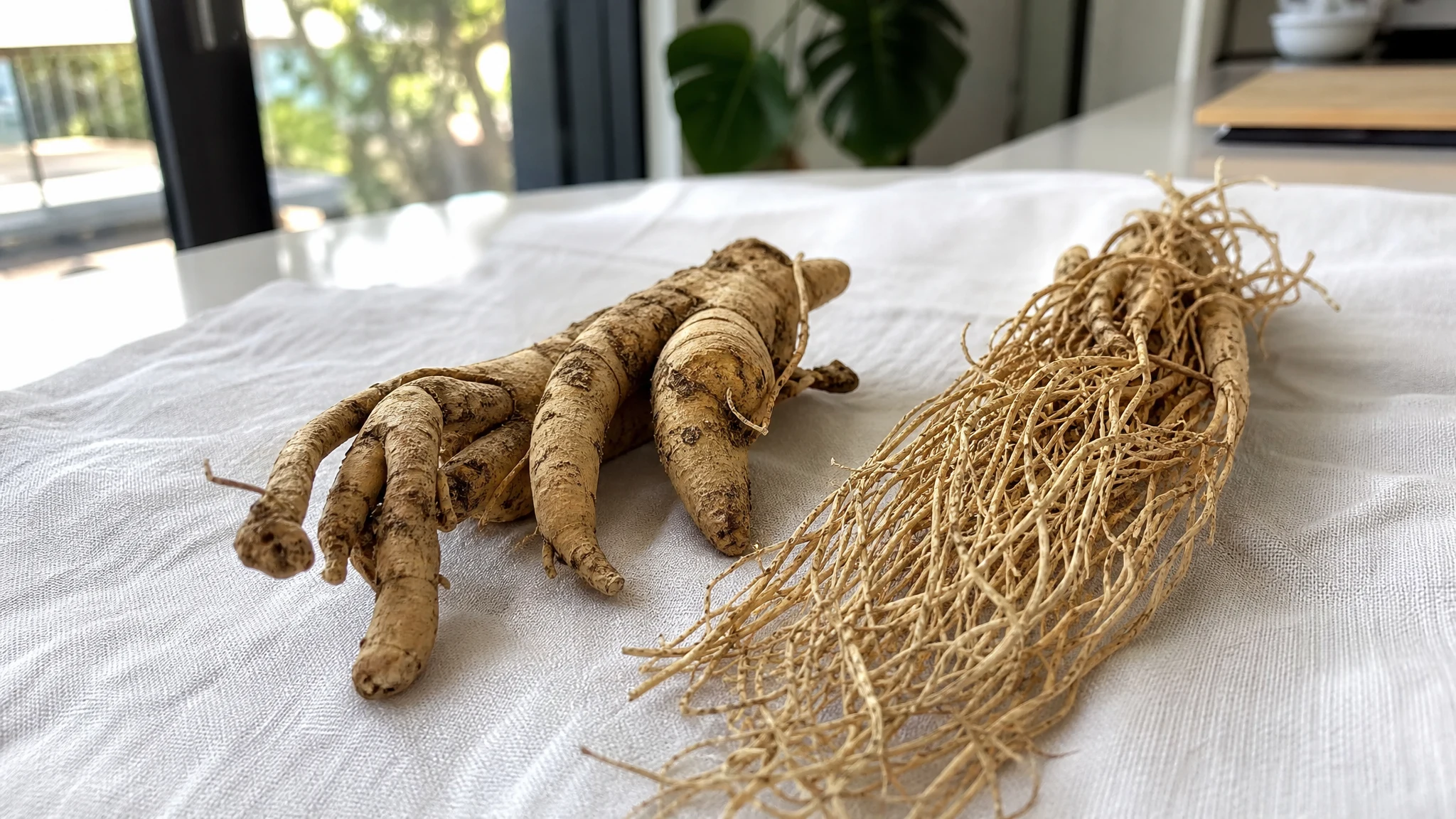
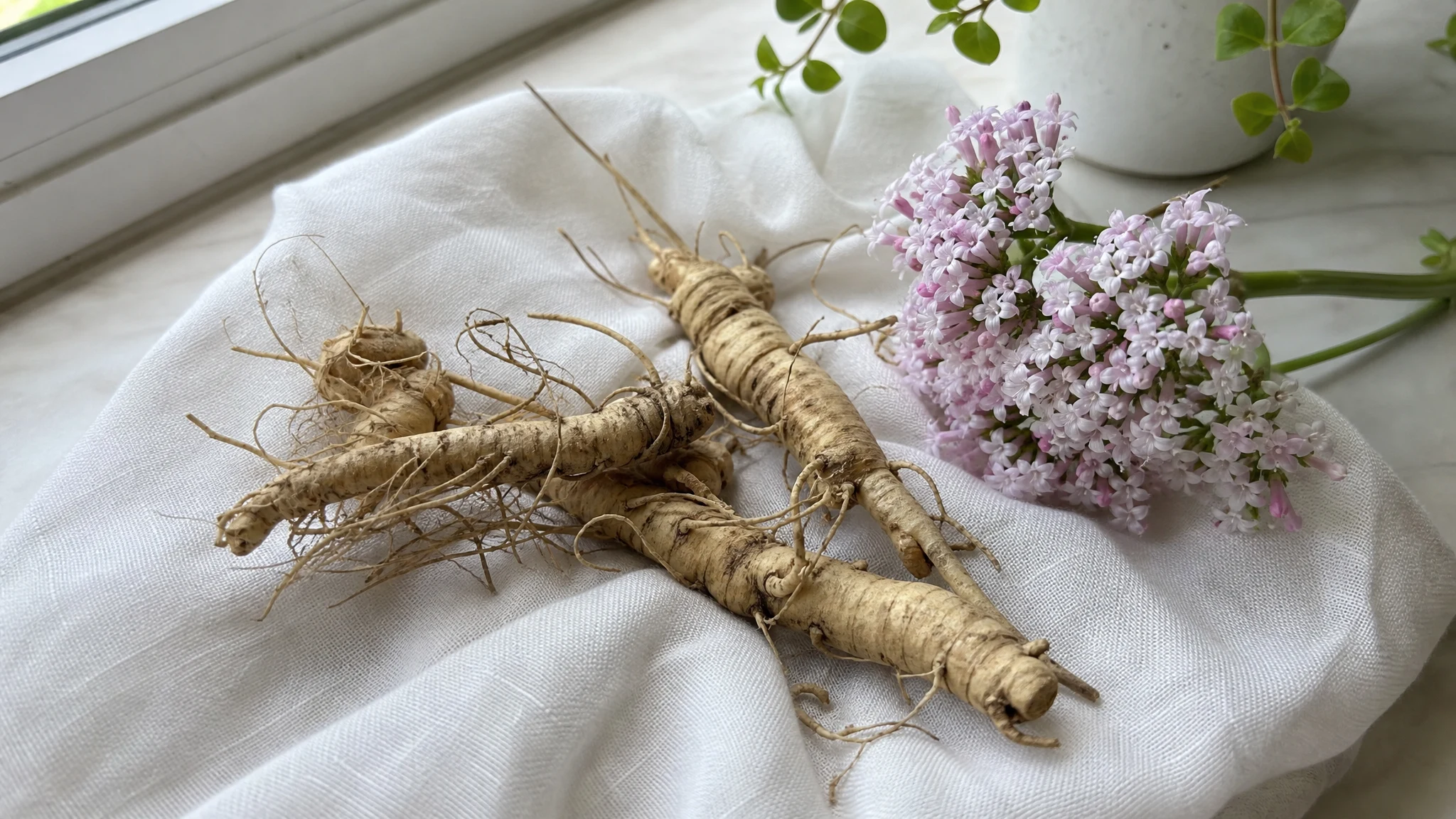
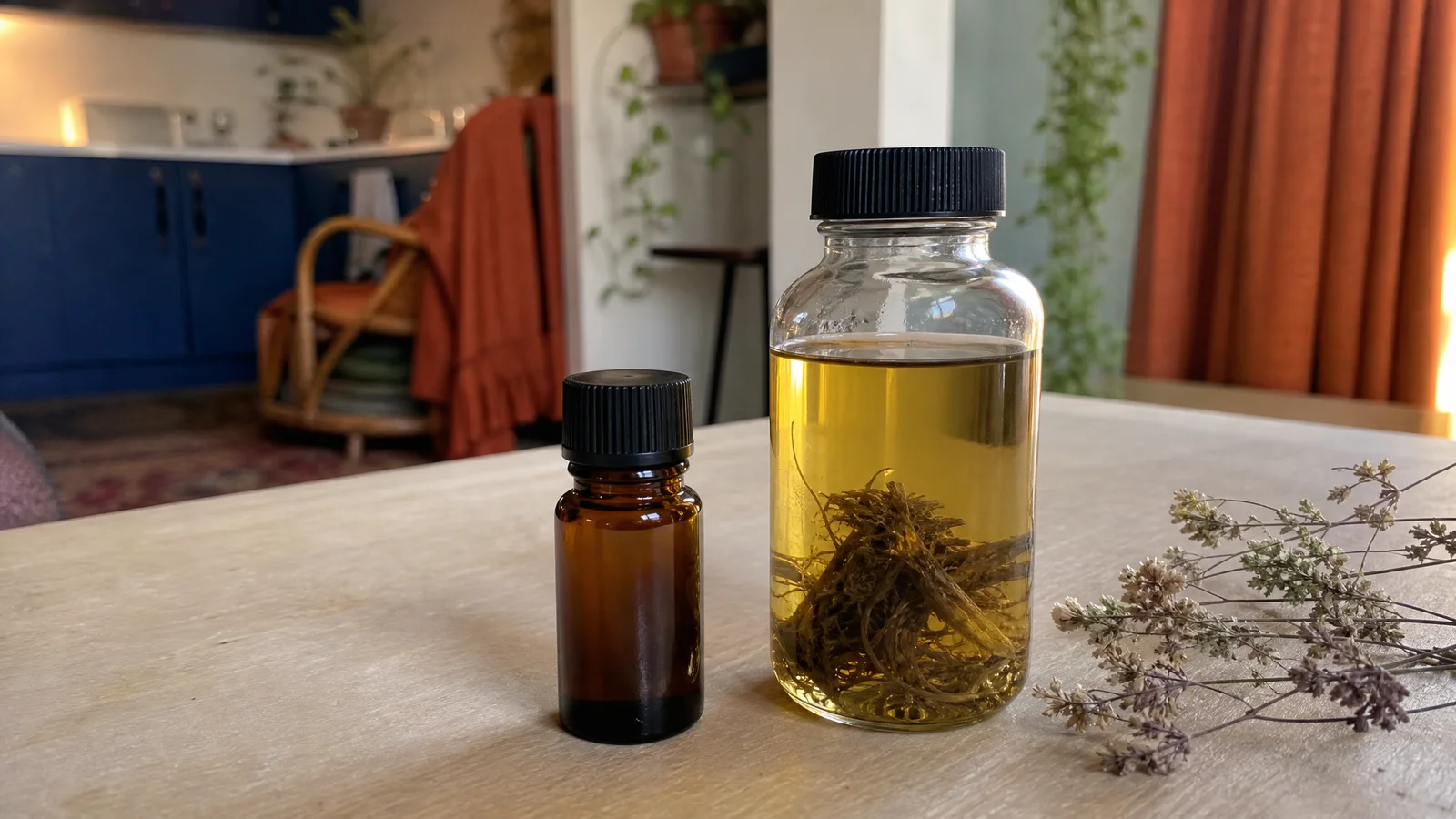
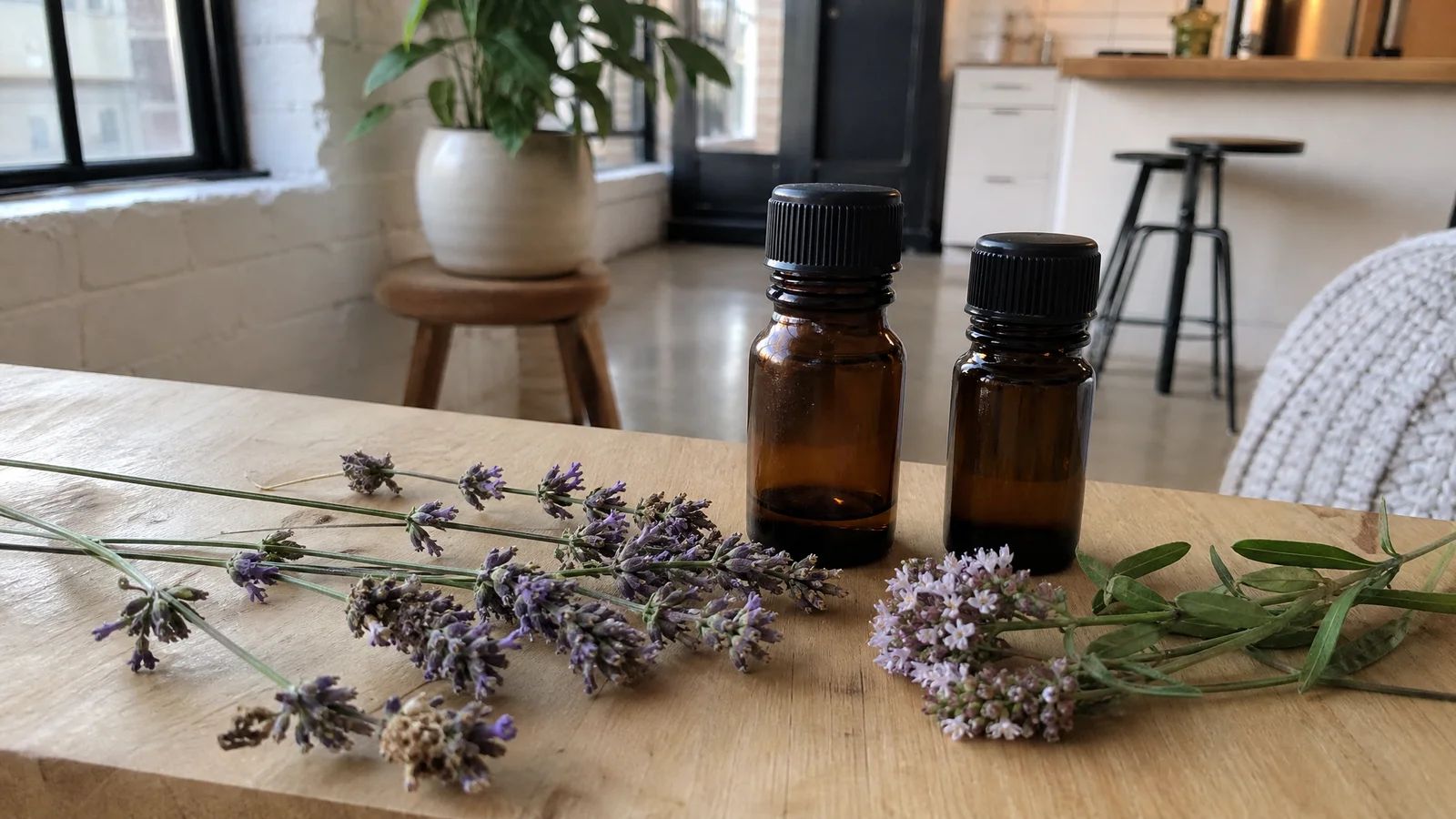
Lavender oil is distilled from the flowering tops of Lavandula angustifolia. Valerian oil is distilled from the root and rhizome of Valeriana officinalis, and ours is steam-distilled from the dried plant. That difference sets the chemistry. In a Utah study of cultivated lavender, the whole flowering top gave an oil led by linalool acetate (34.3%) and linalool (26.5%), with lavandulyl acetate and terpinen-4-ol well behind (Essential Oil Profile and Yield of Corolla, Calyx, Leaf, and Whole Flowering Top of Cultivated Lavandula angustifolia Mill. (Lamiaceae) from Utah). Valerian root is led by different molecules, bornyl acetate prominent among them. In five Estonian laboratory distillations bornyl acetate ran from 8.8% to 33.7%, alongside valerenal and valerianol in widely varying amounts (Variation in the composition of the essential oil of Valeriana officinalis L. roots from Estonia). Both are single lab samples from single seasons, so read them as pictures of what each plant can make rather than guarantees about a bottle.
The Certificate of Analysis we publish for one batch of our valerian lists relative density 0.947, refractive index 1.473 and optical rotation of -19.80 degrees at 20 C. It does not list constituents, and we say so plainly. If you need a GC-MS report, ask us in writing through the contact page for the lot you would receive. Our guide to the certificate explains each line.
Two very different noses
Lavender is a bright, floral-herbal oil that is easy to like, and it behaves in a room the way a window does: it opens things up. Valerian is the opposite. We describe it as earthy, musky and woodland-damp with a balsamic sweet finish, and it behaves like a cellar: dark, rich and persistent, with an almost animal edge. It is a base note, it is tenacious, and it dominates what it sits beside, so we suggest it in traces. The two are not rivals so much as opposite ends of a scent palette, and lavender is one of the oils that blend with valerian; our pairing notes explain how to pair the two. We sell the valerian only, so lavender comes from a general supplier.
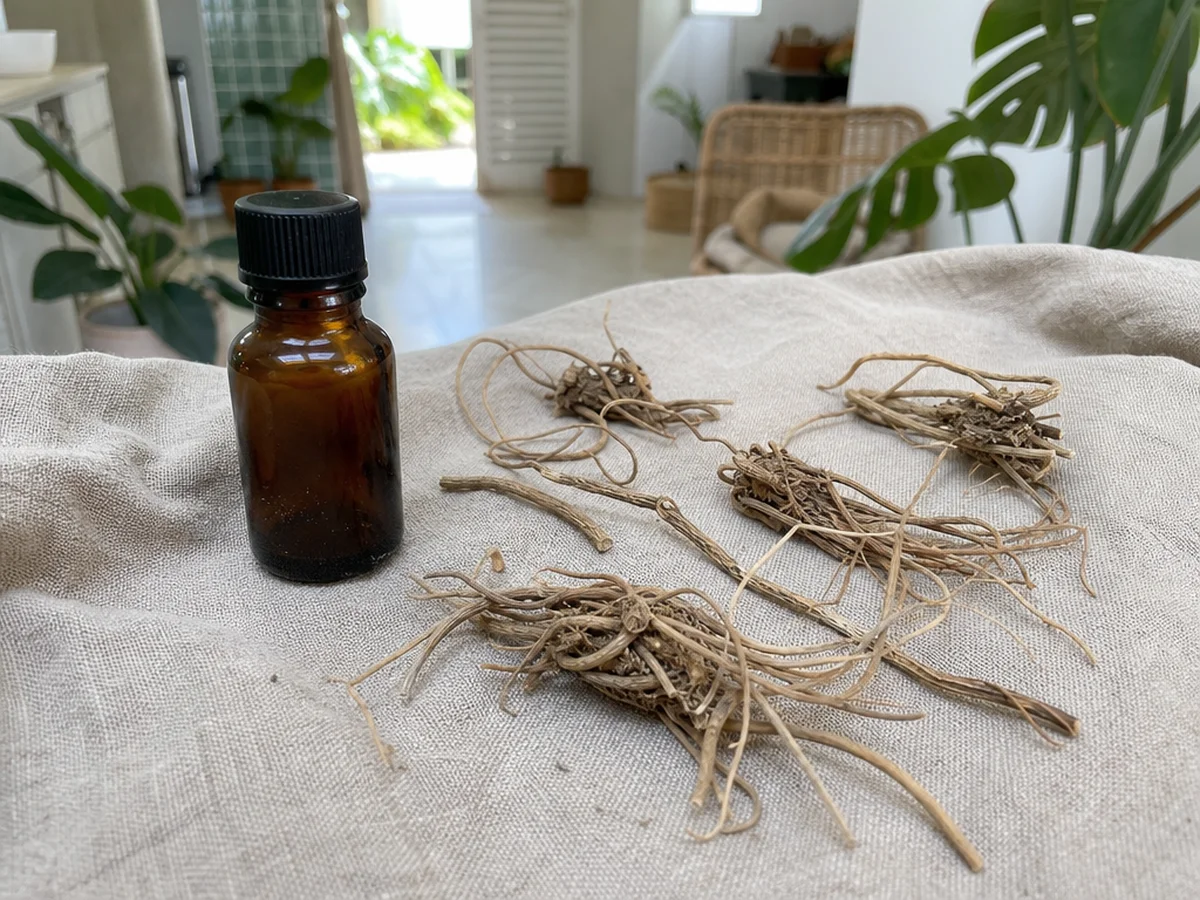
The same room, two different days
It is worth living with each oil for a day. Lavender is the one that feels at home anywhere, in a hallway, a kitchen, a drawer of linens. Valerian is more particular. In a small closed room a trace can fill the air, while in a big airy space it may almost disappear. Try a strip of each in the place you actually plan to use it and you will quickly learn how much room each oil wants.
Skin and storage: lavender's well-documented side
Lavender's behaviour on skin has been studied closely, and one finding is practical. A Swedish group showed that lavender oil lacks natural protection against autoxidation: exposed to air, its main terpenes oxidised at the same rates as the pure compounds, the same oxidation products formed, and patients already allergic to oxidised linalool reacted to air-exposed lavender oil on patch testing (Lavender oil lacks natural protection against autoxidation, forming strong contact allergens on air exposure). In everyday terms, a half-empty bottle left open is not the same oil as a fresh one. It is a good habit for any essential oil, valerian included: keep the cap tight, the bottle in a cool, dark cabinet and the oil out of the light. We say our oil typically keeps for 3 to 5 years unopened when stored that way.
For valerian oil, our guidance is to dilute to 0.5% to 2% in a carrier and patch test first, choosing the lower end for anything left on the skin, and to keep it away from eyes, children and pets, cats especially, since cats are famously drawn to the scent. No safety authority we could cite gives a skin limit for valerian oil, which is one more reason to go low. Our dilution guide shows the arithmetic.
Try them on blotter strips
The most useful comparison costs almost nothing. Put one drop of each oil on two separate strips, label them, and smell both right away. Then leave them on a table and come back after an hour and again the next morning. Lavender usually stays recognisably itself, while valerian shifts as the top layer fades and the deeper, balsamic part comes forward. You will learn more from those three sniffs than from any description, ours included.
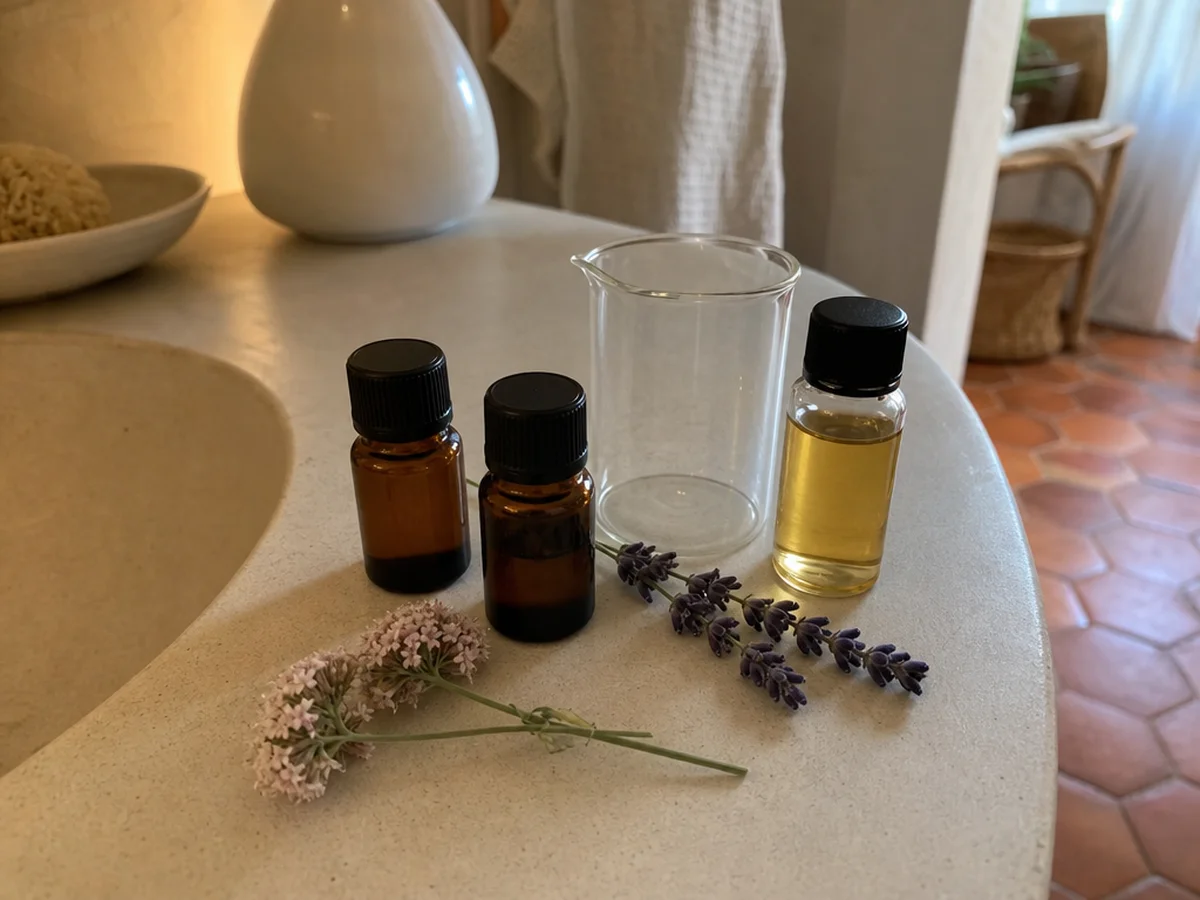
A quick way to choose
| If you want | Lean toward |
|---|---|
| A light, floral-herbal room scent | Lavender |
| A dark, earthy base note for a perfume or soap accord | Valerian, in traces |
| An oil whose composition has a published range to compare with | Lavender |
| A conversation piece for adventurous noses | Valerian |
If you like both, you are in good company, since lavender is one of the oils that blends with valerian. Keep the proportions in favour of the lavender at first and add valerian by the smallest amount you can measure.
Neither oil is something we offer for sleep or calm; both are scents, and anyone with a medical question should take it to a doctor or pharmacist. Try them in the same room on different days and you will quickly learn which end of the palette suits you.
Valerian Root Essential Oil
Valerian Root Essential Oil from our own shop, in sizes from 0.5 oz to bulk.
From $31.99
Shop Now →Sources & Further Reading
- Wilson TM et al. Essential Oil Profile and Yield of Corolla, Calyx, Leaf, and Whole Flowering Top of Cultivated Lavandula angustifolia Mill. (Lamiaceae) from Utah. Molecules 2021.
- Raal A, Orav A, Arak E, Kailas T, Müürisepp M. Variation in the composition of the essential oil of Valeriana officinalis L. roots from Estonia. Proc Estonian Acad Sci Chem 2007.
- Hagvall L et al. Lavender oil lacks natural protection against autoxidation, forming strong contact allergens on air exposure. Contact Dermatitis 2008.