Best Diffuser for Valerian Oil: Ultrasonic or Nebulizer?
Choosing a diffuser for valerian oil is a bit like choosing a speaker for a bass guitar: the instrument is big, so the equipment matters less than how you turn it up. We sell no diffusers, so this is a reading of manufacturer manuals and animal-health sources, with our own reasoning marked as ours.
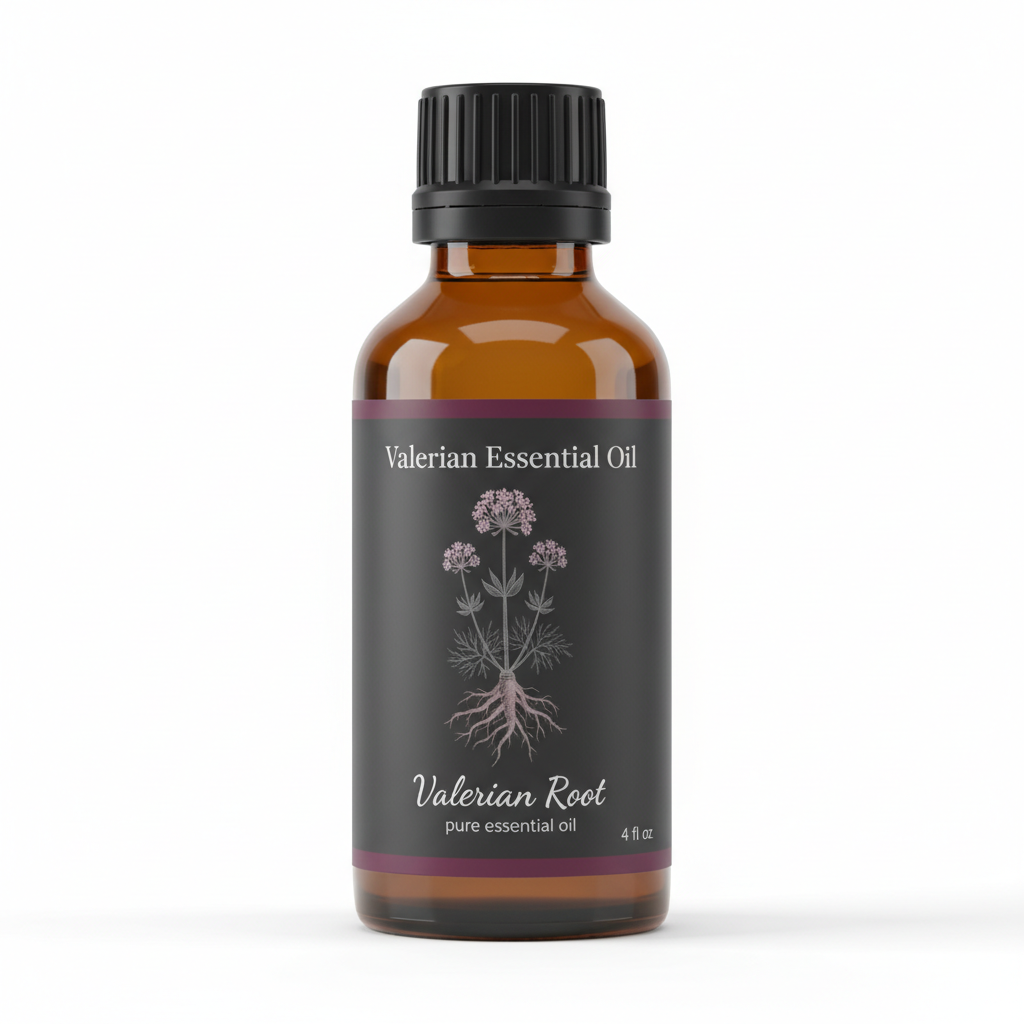
Valerian Root Essential Oil
Our own Valerian Root Essential Oil, in sizes from 0.5 oz to bulk.
From $31.99
Shop Now →Ultrasonic is where we would begin
An ultrasonic diffuser shakes a mix of water and oil into a fine mist with a vibrating ceramic disc. A nebulizing diffuser works differently, drawing undiluted oil up a narrow tube with air and breaking it into droplets. Both are called "active" diffusers, but they have different tolerances.
The manual for one popular nebulizer asks owners not to use thick oils, such as those from tree resins and others it lists by name (benzoin, myrrh, frankincense, patchouli, vetiver, clove and sandalwood), because they can dry inside and clog the micro-tubes. It also advises against adding too much oil at once, since contact with air can make the oil stiffen and block the nozzle. Valerian is not on that list, but several oils we often pair with it are, and the manual says nothing about how a root oil would behave. So our suggestion is simple: begin with an ultrasonic unit, and use a nebulizer only if its maker confirms that oils like patchouli and vetiver are welcome.
Ultrasonic manuals have their own housekeeping. The 2022 manual for one 120 ml unit says to use unfiltered tap water rather than distilled, to clean the unit every time you change oils because oil clinging to the ceramic disc or sensor is a common reason the mist stops, to avoid detergents and solvents, and to remember that oil mist can mark wooden and painted surfaces. Since valerian leaves a lingering scent, we would give the tank a thorough rinse and the disc a gentle wipe with a cotton swab after each session. Your own unit's manual is the final word.
How much to put in
Ultrasonic makers typically specify a few drops of ordinary oil per tank. We would put in a single drop of valerian for a typical tank. That is a suggestion from us rather than a published figure, and it rests on the scent being so assertive that one drop is a statement. If you want more, add a drop on another day instead of doubling up. A plug-in timer helps too, because the nose adapts and the room can drift stronger than it seems. For ideas about what to put alongside it, our diffuser blends post has four pairings.
Cats, birds and shared rooms
This is the part we feel strongest about. The ASPCA says cats are especially sensitive to essential oils and does not recommend using them in areas where pets can reach. The Merck Veterinary Manual explains why: cats lack an enzyme that other animals use to clear certain compounds, active diffusers release microdroplets into the air, and birds are particularly sensitive to fragrances and aerosolized particles. The Tisserand Institute takes a more permissive view, saying you can diffuse around cats so long as there is good ventilation, in small amounts, for limited periods, and with the cat free to leave the room.
Those positions differ, and none of them is about valerian specifically. What we add is that cats are famously drawn to this scent, so a cat may follow it into the room, which weakens the "free to leave" safeguard. With a cat or bird at home, our recommendation is to skip diffusing this oil and enjoy it in other ways. If you have a dog, rabbit or other pet, ask your veterinarian. We say more in valerian oil and cats.
People matter too. Canada's workplace safety agency lists oils and candles among scented products and notes that scents can bring on headaches, dizziness and upper respiratory symptoms for some people, so a shared office or flat is a place to ask first. We suggest avoiding valerian oil in pregnancy as a precaution and not combining it with sedative medication; ask a doctor or pharmacist if either applies.
Where to put it
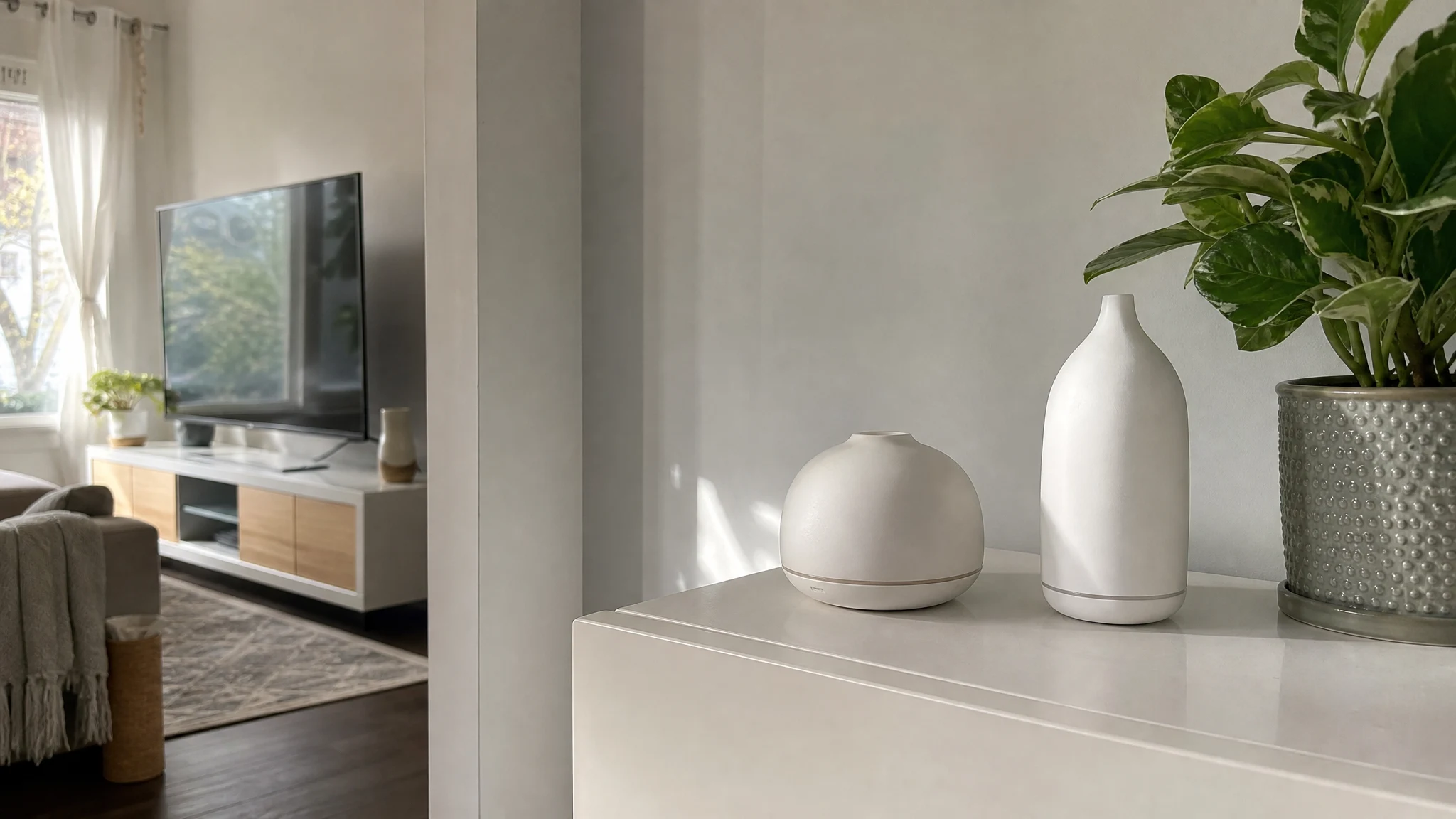
Placement does a lot of the work. Set the diffuser on a flat, stable surface at about table height, not on the floor and not tucked into a bookshelf where scent will pool. A small tray underneath catches drips and protects wood and paint. Put it in a room where you will actually enjoy the smell, and leave a door open so the scent can drift rather than hang. Because valerian lingers, a corner of a larger room is often easier to live with than the middle of a small one.
When you get a new machine, run it once with water only to see how the mist looks and where it lands before any oil goes in.
A short buying checklist
- An ultrasonic unit, unless a nebulizer maker says in writing that oils like patchouli and vetiver are fine.
- A tank and mist disc you can reach with a cotton swab.
- Automatic shut-off when the water runs out, plus a separate timer.
- A manual that states the oil-to-water ratio and how to clean it.
- Surfaces around it that tolerate a little mist.
If a diffuser feels like too much for a base note, our personal inhaler is a no-machine option with its own limits, and our overview of how valerian oil is used shows the wider picture. Start with one drop and let your nose set the pace.
Valerian Root Essential Oil
Valerian Root Essential Oil from our own shop, in sizes from 0.5 oz to bulk.
From $31.99
Shop Now →Sources & Further Reading
- Mobile-Mini, Wireless Rechargeable Nebulizing Diffuser user manual (December 2018)
- NOW Foods, Ultrasonic Oil Diffuser, model 7512 manual (2022)
- ASPCA, Pet Poisons: Be Mindful of these Household Products and Cleaning Agents
- Merck Veterinary Manual, Toxicoses From Essential Oils in Animals
- Tisserand Institute, Cats and Essential Oil Safety
- CCOHS, Scent-Free Policy for the Workplace