Valerian Sleep Studies: What They Really Measured
The valerian sleep literature has a curious shape. Ask trial participants a simple question, "Did you sleep better?", and the answers lean toward valerian. Put a stopwatch on how long it took them to fall asleep, and the difference all but disappears. That gap between what people report and what gets measured is the whole story, and it is worth understanding before anyone draws conclusions from a headline.
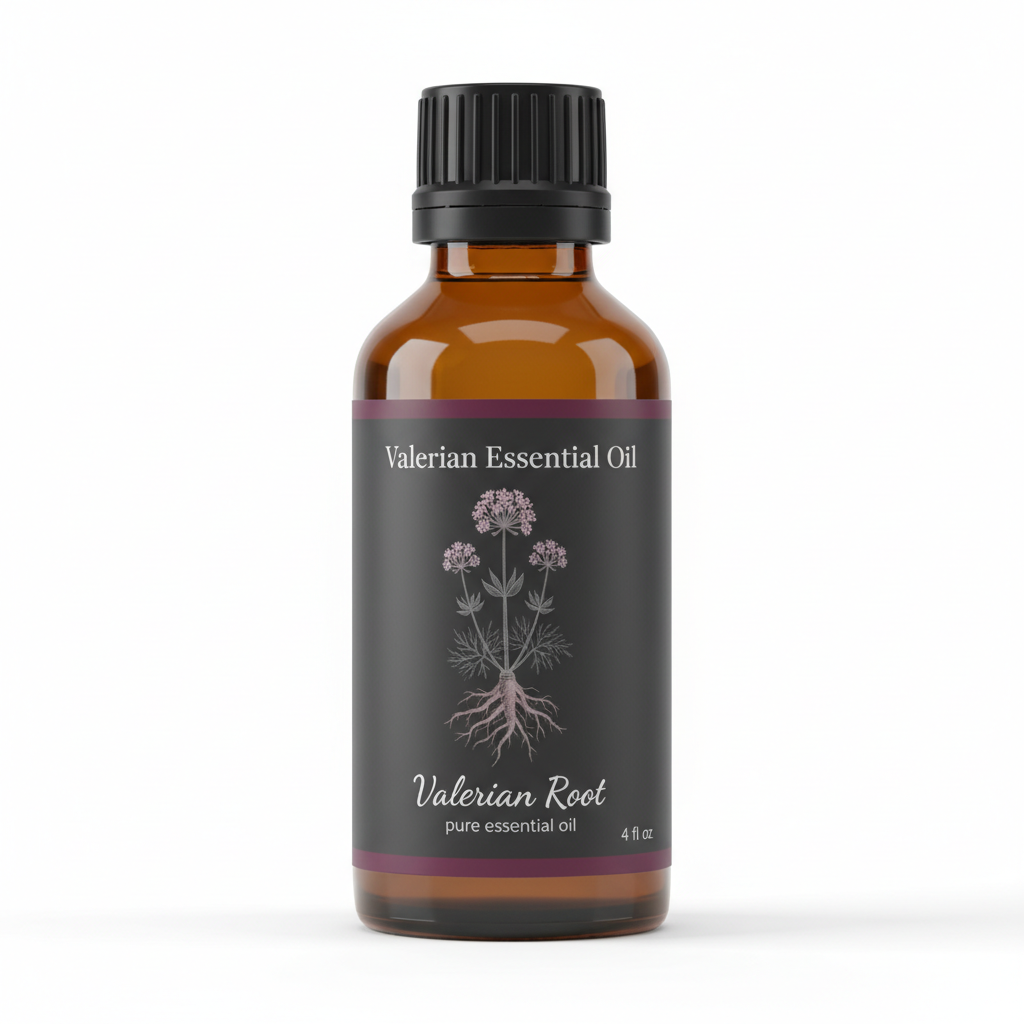
Valerian Root Essential Oil
Our own Valerian Root Essential Oil, in sizes from 0.5 oz to bulk.
From $31.99
Shop Now →One thing needs saying first, because it shapes everything below. Every study discussed here tested an oral root preparation: capsules, extracts, tablets. None tested an essential oil, and none tested ours. We sell valerian oil as an aromatic base note and make no sleep claim for it. This page is about the research people often quote next to the oil, and what it does and does not show.
The yes/no result
In 2006, Bent and colleagues pooled 16 randomized, placebo-controlled trials covering 1,093 patients. Six of those trials asked a yes/no question about whether sleep quality had improved, and together they pointed to a relative risk of 1.8 in valerian’s favor. In plain terms, people taking valerian were about 1.8 times as likely as people taking placebo to say yes. The authors were careful, though. They noted that most studies had significant methodological problems, that doses and preparations varied widely, and that there was evidence of publication bias, which is a polite way of saying small negative studies may never have been printed. Their conclusion was that valerian might improve sleep quality.
The stopwatch result
Four years later, Fernandez-San-Martin and colleagues ran a meta-analysis of 18 placebo-controlled trials with three separate measures. The yes/no result still leaned positive, with a relative risk of 1.37. But the time to fall asleep differed by just 0.70 minutes between valerian and placebo, with a confidence interval running from 3.44 minutes shorter to 4.83 minutes longer. A range that wide, centered near zero, is compatible with a small benefit, with no change, or with a slightly worse result. The sleep-quality scale told the same story, with a difference of essentially zero. The authors concluded that valerian may bring a subjective improvement, but that effectiveness has not been demonstrated with quantitative or objective measures.
Those two numbers do not contradict each other. A yes/no question captures how someone feels about their night, which can be real and still small. A stopwatch captures how many minutes changed. A reader who sees only one of them gets a lopsided picture.
What a clinical guideline made of it
The American Academy of Sleep Medicine reviewed the pharmacologic options for chronic insomnia in adults and, in its 2017 guideline, made a weak recommendation: it suggests that clinicians not use valerian as a treatment for sleep onset or sleep maintenance insomnia. A weak recommendation signals real uncertainty, not a verdict that valerian does nothing. It reflects a body of evidence that has not been strong enough to recommend.
Why none of this transfers to a bottle of oil
Three differences matter, and they are reasoning from how the materials work rather than a finding about our oil. The material differs: a root extract contains the plant’s water- or alcohol-soluble compounds, while a steam-distilled oil carries volatile ones. The route differs: swallowed versus inhaled or applied. The dose differs too, milligrams of extract against a few drops in a room. For our own oil, the Certificate of Analysis we offer for one batch lists density, refractive index and optical rotation, not constituents; our post on reading that certificate explains each line. If you are weighing the oil against capsules, our comparison goes through it.
A short guide to reading study numbers
Numbers in trial reports can feel slippery, so here is a quick way to hold them. A relative risk above 1 means more people said yes in one group than the other. A difference in minutes tells you how big the change was on the clock. A wide range around a number means the true figure could be fairly far from it in either direction. None of that needs a statistics course, only a willingness to ask, each time, "what exactly was counted?"
It also helps to notice what is missing. A summary that only quotes the friendly number is telling you half of a story.
Where a poor sleeper should go
The NHS says insomnia often improves with changes to sleeping habits, and recommends seeing a GP if that has not helped, if trouble sleeping has lasted for months or if it makes daily life hard to cope with. It notes that a GP may offer cognitive behavioral therapy, in person or as an online program, and that sleeping pills are now rarely prescribed because of serious side effects and dependence. That is the route we would point anyone toward. If you are taking sedative medication, please also read our note on valerian and medications, and know that we recommend not combining our oil with sedatives.
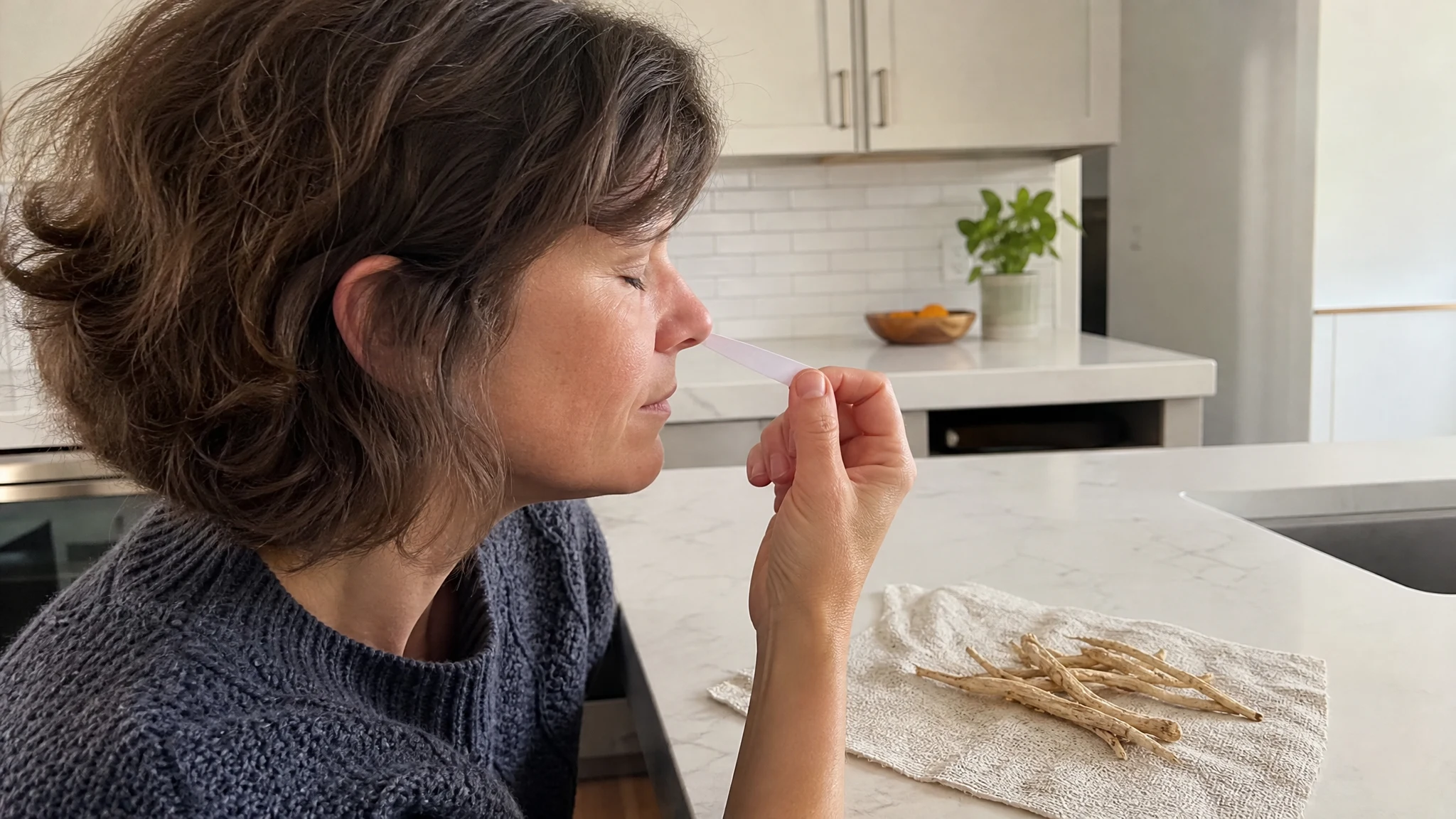
If you landed here while looking at the oil itself, the best next step is a gentler one: a small bottle, a blotter strip and a little curiosity about an unusual aroma. Earthy, musky and woodland-damp is how we describe it, and the only way to see whether you agree is to smell it.
For the wider picture on sleep and aroma, our post on valerian oil and sleep is the natural companion to this one. The short version: the research is about root extract, it is mixed, and it was never about a scent.
Valerian Root Essential Oil
Valerian Root Essential Oil from our own shop, in sizes from 0.5 oz to bulk.
From $31.99
Shop Now →Sources & Further Reading
- Bent S, Padula A, Moore D, Patterson M, Mehling W. Valerian for sleep: a systematic review and meta-analysis (Am J Med, 2006)
- Fernandez-San-Martin MI et al. Effectiveness of Valerian on insomnia: a meta-analysis of randomized placebo-controlled trials (Sleep Med, 2010)
- Sateia MJ et al. Clinical Practice Guideline for the Pharmacologic Treatment of Chronic Insomnia in Adults: An American Academy of Sleep Medicine Clinical Practice Guideline (J Clin Sleep Med, 2017)
- NHS: Insomnia