Valerian and Period Pain: What One Capsule Trial Found
Search for valerian and period pain and a single study turns up again and again. It is a real trial, carefully designed and published in a respectable journal, and it tested valerian capsules, not an essential oil. Since the question is a common one, here is what that trial did, what it found, and why we sell our oil as an aroma and nothing more.
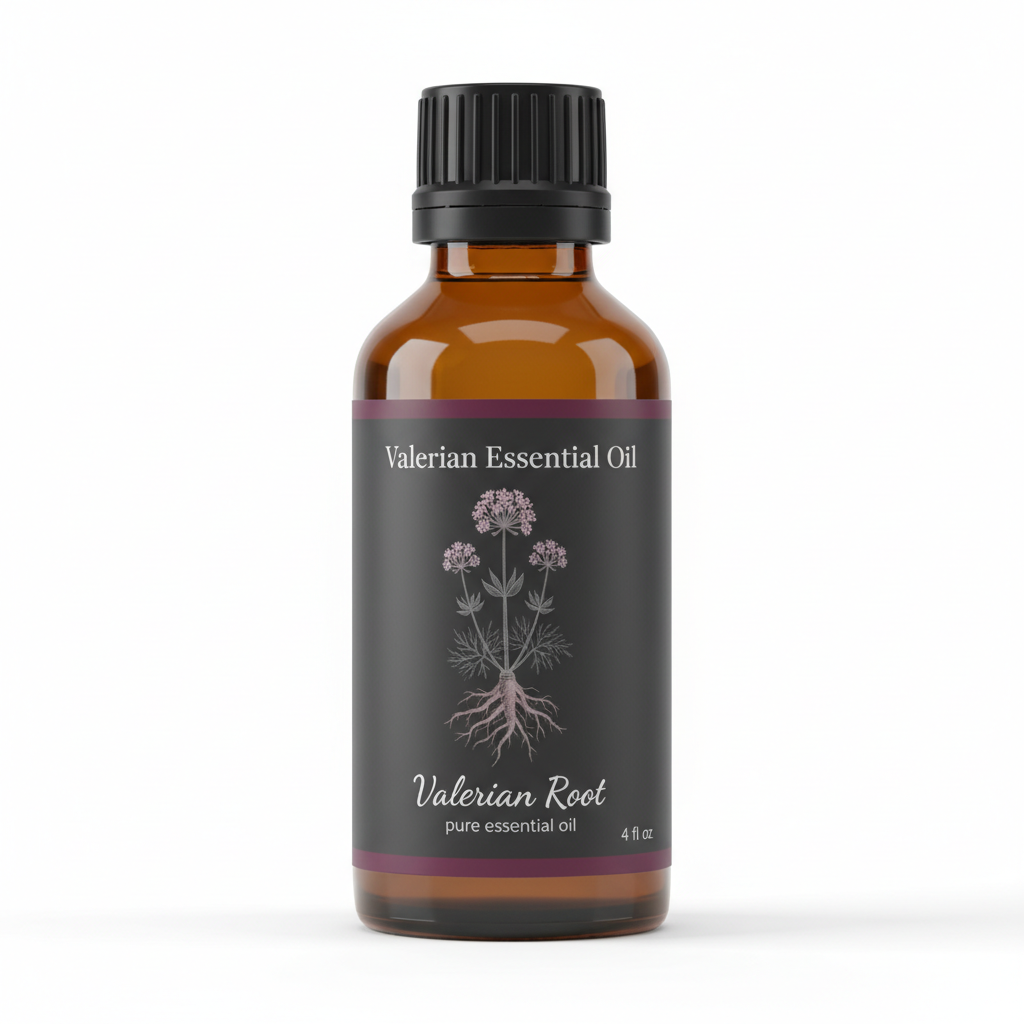
Valerian Root Essential Oil
Our own Valerian Root Essential Oil, in sizes from 0.5 oz to bulk.
From $31.99
Shop Now →The trial everyone cites
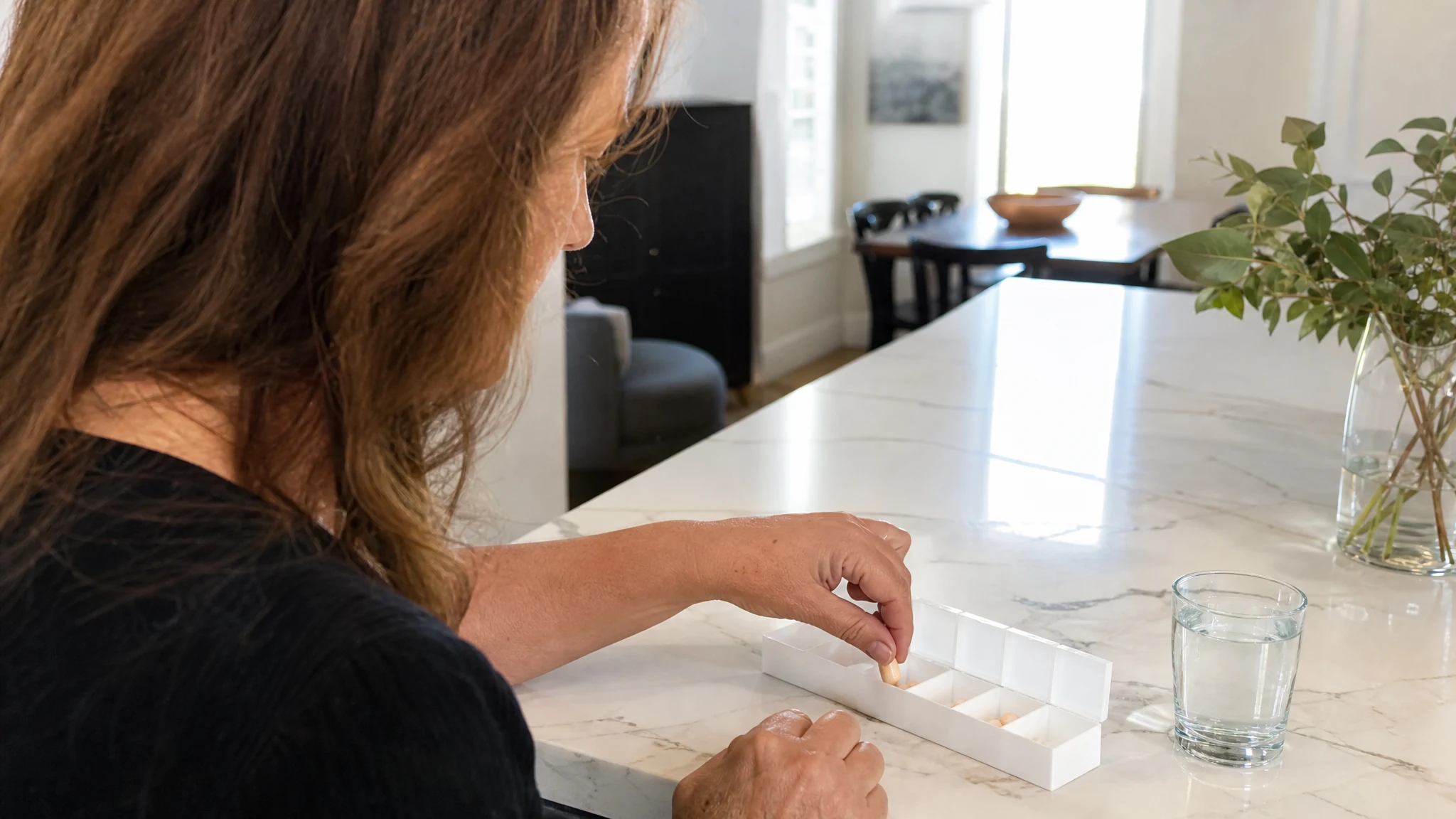
In 2011 a team in Iran ran a double-blind, placebo-controlled trial on 100 students with painful periods (Mirabi et al.). Half took valerian capsules, 255 mg three times a day for the first three days of their period, across two cycles; the other half took placebo capsules. Everyone scored their pain on a standard scale. Pain fell in both groups, which is exactly why the placebo group matters, and it fell further in the valerian group. The authors concluded valerian seemed to be an effective treatment.
The dose is easy to work out: 255 mg three times a day is 765 mg a day, for three days. For comparison, the US National Center for Complementary and Integrative Health mentions 300 to 600 mg a day as the range used in studies of oral valerian lasting up to six weeks (NCCIH). So this was a short, fairly generous course of a swallowed supplement. Nothing in it resembles dabbing or diffusing an oil.
Reading one trial sensibly
A single positive trial is a good prompt for more research, and that is how most scientists treat it. This one had 100 participants, all students in one country, scoring their own pain. It did not compare valerian with heat or an over-the-counter painkiller, and it followed people for only two cycles. We did not find a systematic review or guideline that built on it into a recommendation, and we did not find any trial of valerian essential oil for period pain.
None of that makes the study a bad one. It makes it a single data point about an oral preparation, and that is the most honest description we can give it.
What the NHS suggests
The UK's National Health Service takes a refreshingly practical line on period pain. It lists a heat pad or hot water bottle wrapped in a tea towel on your tummy, a warm bath or shower, gentle exercise such as yoga, swimming, walking or cycling, and everyday painkillers like paracetamol or ibuprofen. Herbal remedies do not feature on its page (NHS).
It also draws clear lines for when to get help: periods that become more painful, heavier or irregular, or pain that stops you doing everyday things, are a reason to see a GP, and severe pain that painkillers have not touched is urgent. That advice is worth more than any amount of scent. Pain that is changing deserves a proper look from a doctor, who can find out why.
Where our oil fits
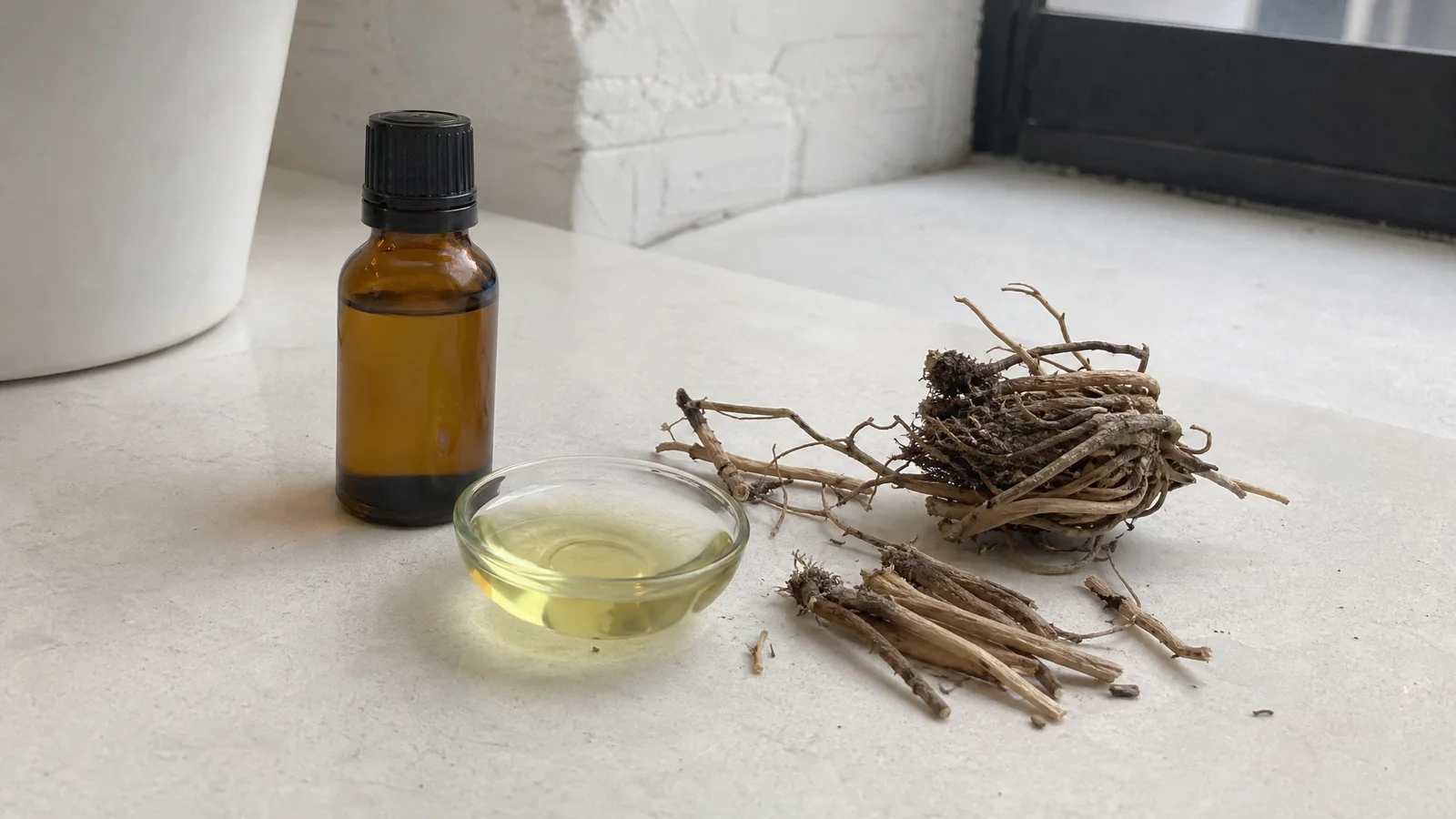
We sell valerian root essential oil, steam-distilled, as an aromatic with a perfumery-style character. It smells earthy, musky and woodland-damp, with a balsamic sweetness at the end, and we offer it for external, aromatic and cosmetic use only. We make no claim about periods, cramps or pain, and nothing in the research above would let us.
If you enjoy strong, grounded scents, there is a lot to like. A trace in a diffuser blend with lavender or cedarwood is the way we suggest starting (you would find those at a craft or supply shop, since we sell only the valerian). If you want it on skin, we recommend 0.5% to 2% in a carrier oil and a patch test first, and keeping the bottle away from eyes, children and pets. Our dilution guide walks through the arithmetic.
Two precautions come up often enough to repeat. We suggest avoiding the oil during pregnancy, and cramping pain in pregnancy is something to take to a midwife or doctor, not to a fragrance. We also advise against combining our oil with sedative medication. The longer discussion lives in our pregnancy article and our safety overview.
How to read a headline about one study
A quick habit makes any health headline easier to handle. Ask four things: what was used, who took part, what it was compared with, and for how long. If you can answer all four in one breath, you understand the study. If you cannot, the headline has probably left something out. It is a useful habit for anything with the word "natural" in it, and it costs nothing.
Capsules and oils are different things
The word "valerian" covers a tea, a capsule, a tincture and an essential oil, and they are not interchangeable. A capsule holds ground or extracted root; the oil holds the aromatic part that rides over on steam. Our comparison of oil and capsules sets out the difference, and it is a useful habit whenever a study is quoted: ask what exactly was used, and how.
If you simply like the scent
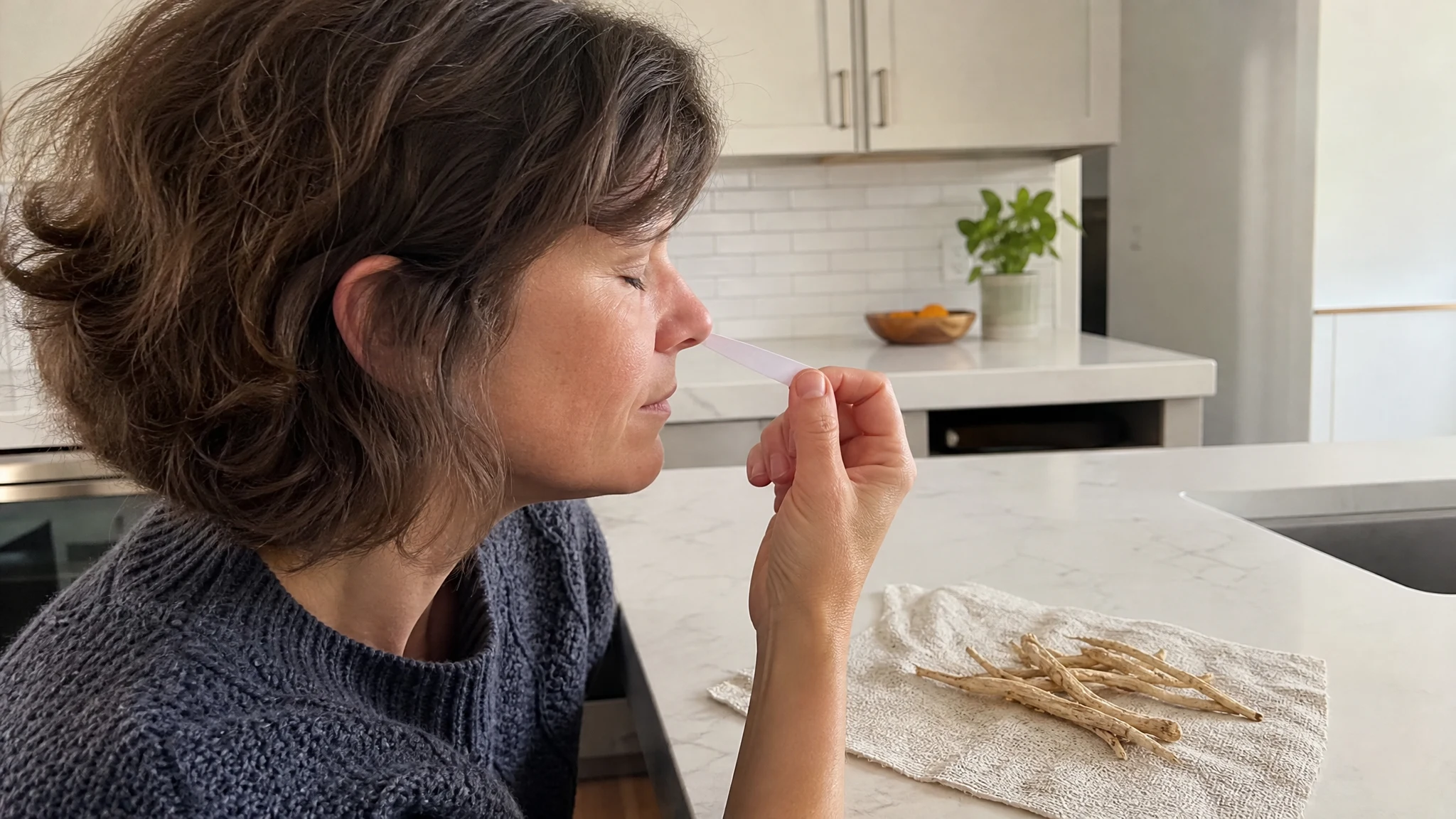
Plenty of people enjoy strong aromatics for their own sake, and valerian is a fine example of one. If that is what draws you, begin with a single drop on a blotter strip and see what you think after an hour. Notice the earthy, musky opening and the balsamic sweetness that arrives last. If it is not for you, you have lost very little, and if it is, a small bottle will last a long time because the oil is used in traces.
Studies deserve to be read that way, with interest rather than suspicion, and then put in their place.
Valerian Root Essential Oil
Valerian Root Essential Oil from our own shop, in sizes from 0.5 oz to bulk.
From $31.99
Shop Now →Sources & Further Reading
- Mirabi P, Dolatian M, Mojab F, Alavi Majd H. "Effects of valerian on the severity and systemic manifestations of dysmenorrhea." International Journal of Gynaecology and Obstetrics, 2011. PubMed 21959068
- NCCIH. "Valerian: Usefulness and Safety." nccih.nih.gov
- NHS. "Period pain." nhs.uk