Valerian Bath Oil: How to Make It Mix With Water
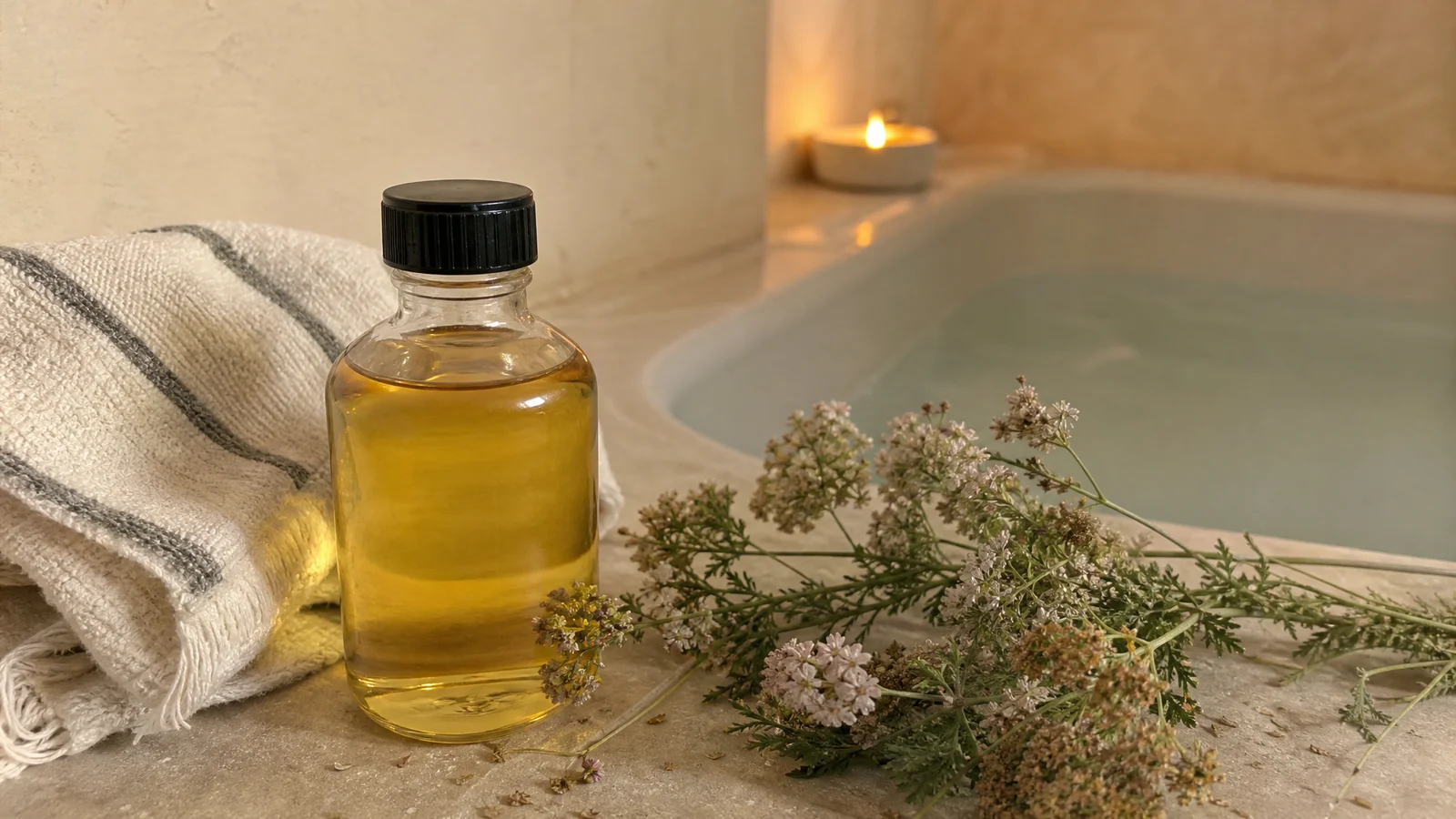
There is one way of using valerian oil we would gently talk you out of, and it is pouring it straight into a running bath. Essential oils do not dissolve in water, so the drops form a film that clings to you wherever you sit or lean. A bath oil that mixes properly solves it, and it is a satisfying small project.
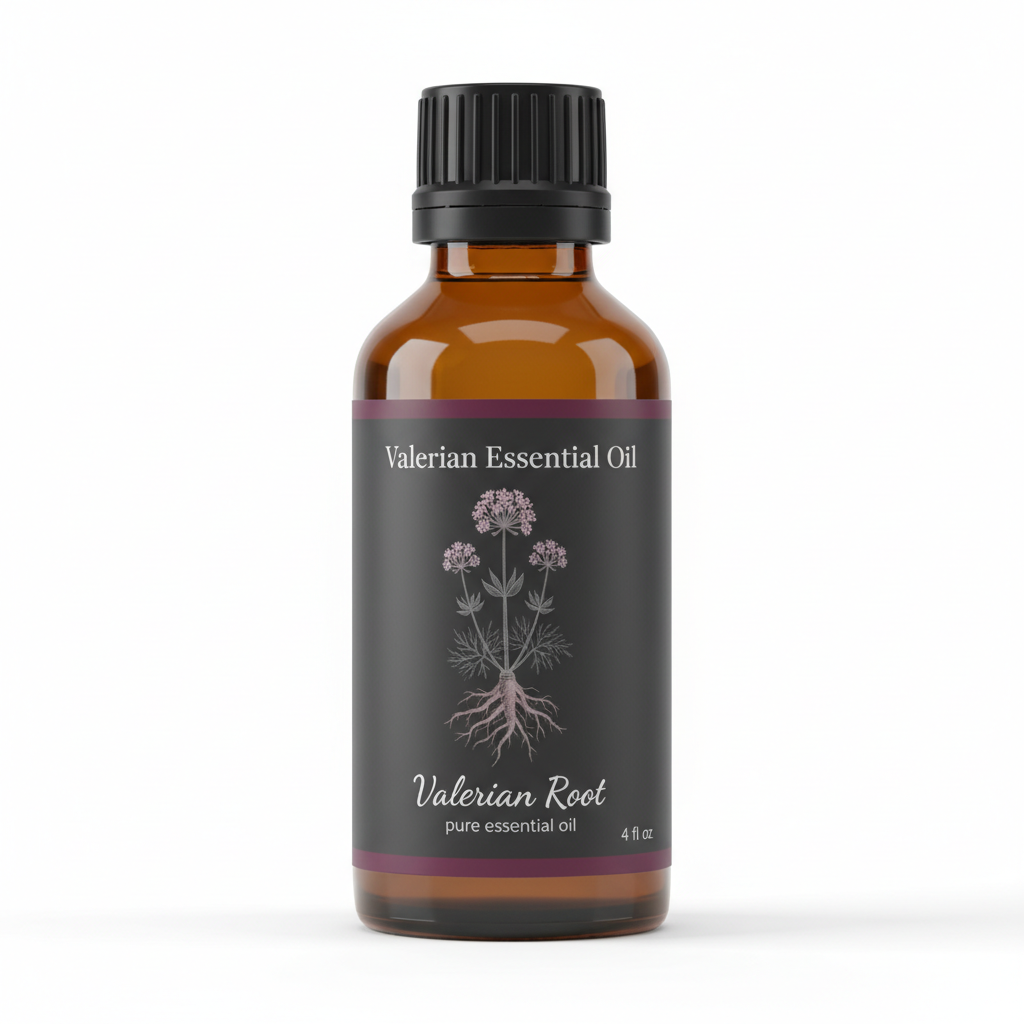
Valerian Root Essential Oil
Our own Valerian Root Essential Oil, in sizes from 0.5 oz to bulk.
From $31.99
Shop Now →Why the film matters
The Tisserand Institute puts it plainly: essential oils are not water soluble, undiluted oils warmed by bath water tend to sting, and a carrier oil on its own floats on the surface, clinging to the tub and your skin for what it calls a pretty slippery, greasy bath. Its suggested fix is a dispersant, and for a bath that contains both essential oil and carrier oil it names polysorbate 80, a cosmetic emulsifier, which it says can be used at up to 20 percent with carrier oils. It suggests fractionated coconut oil or jojoba for a bath oil that feels less greasy.
So we have two decisions to make on purpose: how much valerian goes into the blend, and what carries it into the water.
Decide the strength first
Our dilution guidance for skin is 0.5% to 2% in a carrier oil, with a patch test first. We could not find a published dermal maximum for valerian oil, and a bath covers a lot of skin, so we would sit at the bottom of that range. The formulation below is 0.5% valerian in the finished blend, and we would treat 1% as the most you would ever go.
For perspective, Tisserand's general suggestion for a bath base is 5 to 20 drops of essential oil per half ounce (a tablespoon). At about 20 drops to the milliliter, that works out to roughly 1.7% to 6.7%, which is a range for essential oils in general and not set for valerian. Valerian's own character argues for far less. It is a scent that will dominate anything beside it.
The formulation, by weight (100 g)
- Valerian Root Essential Oil, 0.5 g (0.5%)
- Polysorbate 80, 15 g (15%)
- Jojoba or fractionated coconut oil, 84.5 g (84.5%)
We sell the valerian only; polysorbate 80 and the carrier come from a cosmetic or soapmaking supplier or a grocery. The polysorbate share sits inside the 20 percent ceiling Tisserand gives for carrier oils. This is a formulation built from that guidance and the arithmetic here, so make a small batch first and see how the water behaves before you scale up.
Weigh rather than count drops. On the one batch on our Certificate of Analysis, relative density is 0.947, which makes 0.5 g about 0.53 ml, or around ten drops at the usual convention. Oil that runs slowly from a dropper makes larger drops, so use the drop count only as a sanity check.
Method: weigh the carrier and the polysorbate together and stir until uniform, add the valerian last and stir again, then bottle. With no water in the blend, microbial growth is much less of a worry, but wet hands or a wet spoon would change that, so keep everything dry. Keep it tightly capped in a cool, dark place, and label it with the percentage and the date so the next batch is changed on purpose rather than by memory.
Per-bath arithmetic
One tablespoon of blend per bath is about 15 ml. At an estimated blend density near 0.9 g/ml (weigh a spoonful to check), that is roughly 13 to 14 g, and at 0.5% it carries around 65 to 70 mg of valerian oil, a bit under one and a half drops of the neat oil. At 1% you would double it. Valerian is strong, so half that amount may be plenty. If it is too much, lower the percentage in the next batch rather than adding a second spoonful. Our notes on diluting a powerful aroma explain the thinking, and the massage oil formulation does the same arithmetic for a leave-on blend.
Who should skip it
- Pregnancy and breastfeeding. We suggest avoiding the oil in pregnancy as a precaution, and the pregnancy post gives the sources. Your doctor or midwife is the right person to ask.
- Anyone taking sedative medication. We suggest not combining the oil with sedatives; ask your pharmacist.
- Children. The European Medicines Agency lists the traditional bath use of valerian oil for adults and adolescents over twelve, and we suggest keeping the oil away from children, so skip it for a child's bath.
- Households with cats. Cats are famously drawn to this scent, and the ASPCA says cats are especially sensitive to essential oils and does not recommend using them where pets can reach. Close the bathroom door, cap the bottle, and rinse the tub.
- Skin that is broken or inflamed, or any time you are unwell. Ask a doctor before improvising.
Setting the scene
Cap the valerian bottle and put it away before you run the water, so the only scent in the room is the one in the tub. Warm water carries scent upward, so you may find the aroma strongest in the first minutes, which is one more reason a small amount is plenty. Keep a towel within reach and the bathroom fan or window ready, because a heavy, tenacious scent can fill a small room.
Before and after
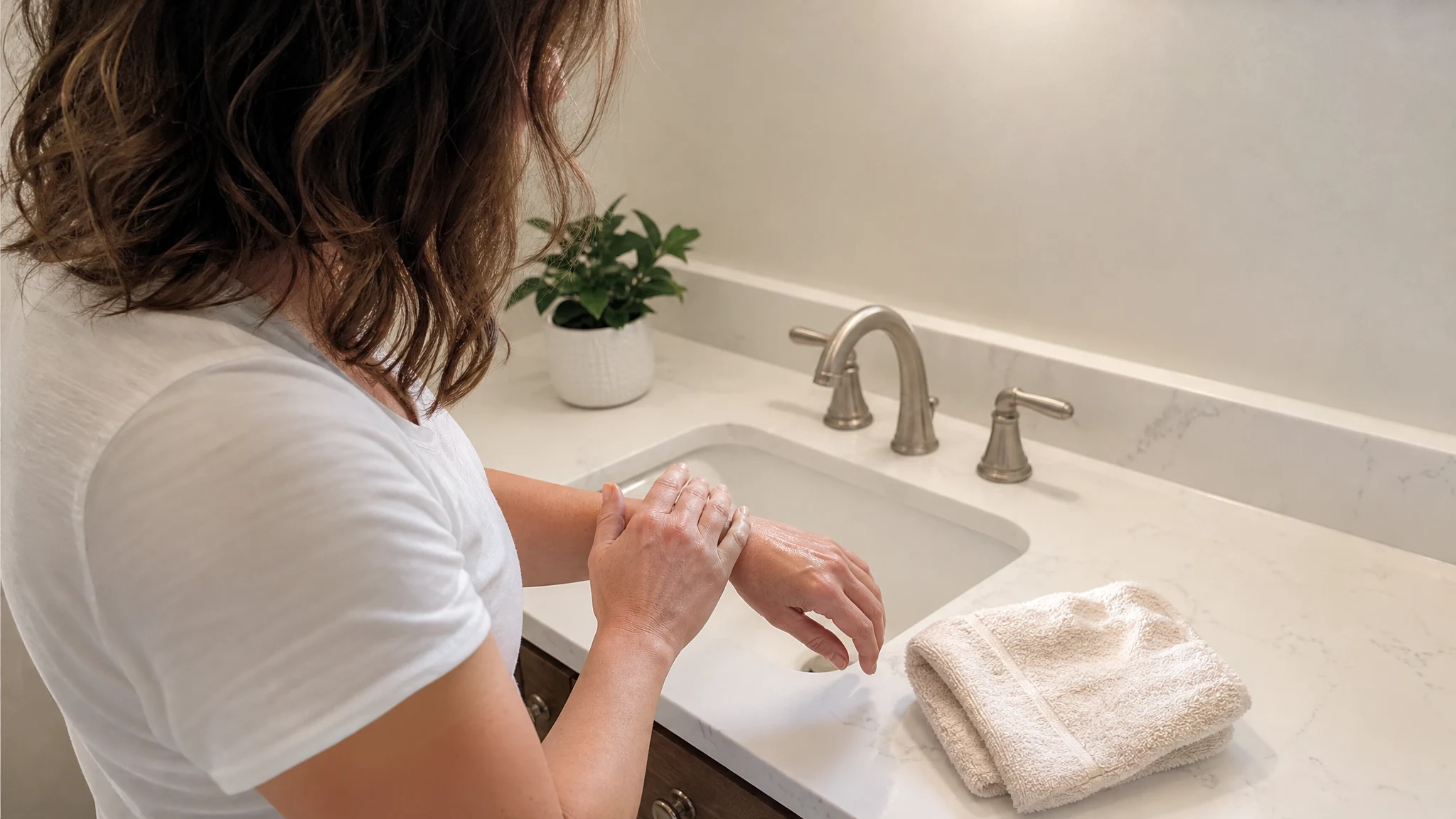
Patch test the finished blend, not the neat oil, on your inner forearm before the first bath, and stop at any redness, itching or burning. Our piece on where to apply valerian oil goes through it. Watch the water for a minute: if beads of oil sit on the surface, the blend is not dispersing, so remake it with a little more polysorbate, staying within the ceiling. Hold the tub edge when you climb out, since carrier oils make a tub slippery.
This is a fragrance project, and we make no claim that it does anything for the body. The point is an earthy, musky, heavy aroma in warm water, and you may find a lighter hand is the better one.
Valerian Root Essential Oil
Valerian Root Essential Oil from our own shop, in sizes from 0.5 oz to bulk.
From $31.99
Shop Now →Sources & Further Reading
- Tisserand Institute, Bath Safety: how to use essential oils safely in the bath
- European Medicines Agency, Valerianae aetheroleum - herbal medicinal product
- ASPCA, Pet Poisons: Be Mindful of these Household Products and Cleaning Agents