Valerian Massage Oil Recipe: A Light-Handed Blend
A good massage oil is mostly carrier, with just enough aroma to make you notice it. With valerian, that proportion matters more than usual, because this is a big, earthy, musky oil that dominates almost anything beside it. What follows is a formulation worked out from arithmetic and published guidance, for a 30 ml bottle with the strength, drops and carrier choices spelled out.
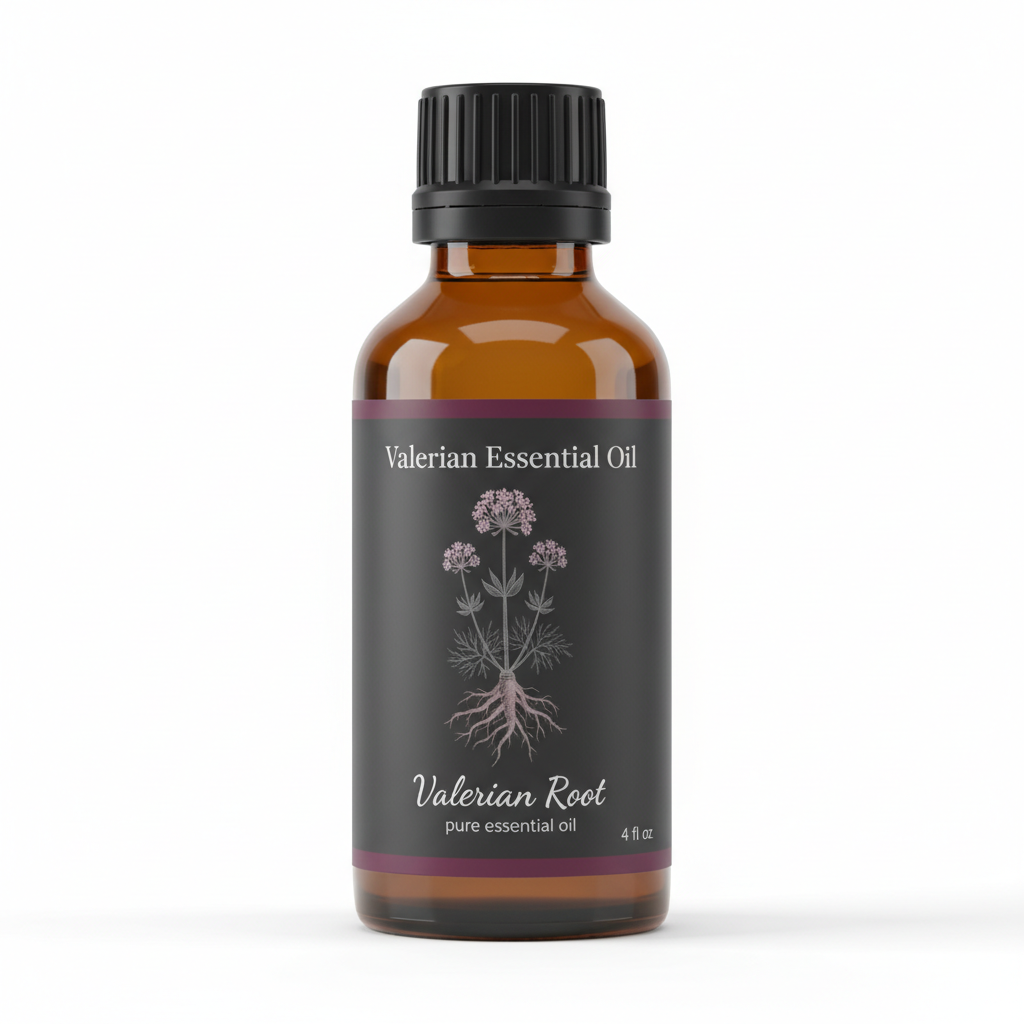
Valerian Root Essential Oil
Our own Valerian Root Essential Oil, in sizes from 0.5 oz to bulk.
From $31.99
Shop Now →Settle the strength first
We recommend diluting valerian oil to 0.5% to 2% in a carrier oil and patch testing before use. For a massage oil, we would start at 0.5% and go no higher than 1%. The reasoning is simple: a massage covers far more skin than a dab on a wrist, and it is usually applied generously. This is our judgement, not a measured result. Diluting in a carrier is also what Poison Control calls the best way to avoid a bad reaction from direct skin contact (Poison Control), and the NCCIH notes that essential oils are usually applied to the skin diluted (NCCIH).
There is a second reason. We looked for a published skin-use maximum for valerian oil, the sort of figure the Tisserand safety monograph, an IFRA standard or a RIFM assessment would give, and could not retrieve one. When the ceiling is not documented, starting low costs nothing.
The arithmetic for 30 ml
One ounce is 29.57 ml, so a 1 oz bottle of carrier is a close match. The batch described on our Certificate of Analysis has a relative density of 0.947, so a millilitre weighs about 0.95 g, and a rough convention is 20 drops to a millilitre. Droppers vary, and valerian is a thick oil, so drops may fall slowly and large.
| Strength | Oil in 30 ml | Approximate drops |
|---|---|---|
| 0.25% | 0.075 ml | 1.5 |
| 0.5% | 0.15 ml | 3 |
| 1% | 0.30 ml | 6 |
| 2% | 0.60 ml | 12 |
At 0.5%, three drops is the entire recipe, which means one oversized drop changes the strength noticeably. A 1 ml syringe or a graduated pipette removes the guesswork. If you only have drops, count slowly and lean on the low side, because a short measure shows up in the nose while an over-measure shows up on the skin.
Smell it before you decide
Before you measure anything, open the bottle and take one slow sniff from a hand's width away. Valerian smells earthy, musky and woodland-damp with a balsamic sweetness at the finish, and plenty of people find that a lot. Once it is diluted, the same oil reads softer on the skin than it does in the bottle, but the character stays. If you like what you smell, carry on; if you hesitate, that is useful information too, and a 0.5 oz bottle is the sensible size for finding out.
Choosing a carrier
We sell only the valerian, so the carrier comes from a pharmacy, grocery or craft shop. Jojoba, sweet almond, sunflower and grapeseed are all familiar massage bases, and which one suits you is a matter of feel and shelf life. A few practical points:
- Sweet almond is a tree nut oil, so choose something else for anyone with a nut allergy, and check with them first if you are making it for someone else.
- Whichever you buy, ask for the best-before date, buy only what you will use in a few weeks, and write the date you made the blend on the bottle.
- Pick a carrier you already know your skin gets on with. The valerian should be the only new thing in the bottle.
Putting it together
Here is the formulation, as arithmetic rather than a tested recipe.
- 30 ml carrier oil
- 0.15 ml valerian root oil (about 3 drops) for 0.5%
- Optional: one blending partner at a very low level, keeping the combined essential oils at or below 1% (0.3 ml in 30 ml). Cedarwood, lavender, patchouli, vetiver and clary sage all sit well beside valerian, but check each one's own guidance, because we have not verified skin limits for them.
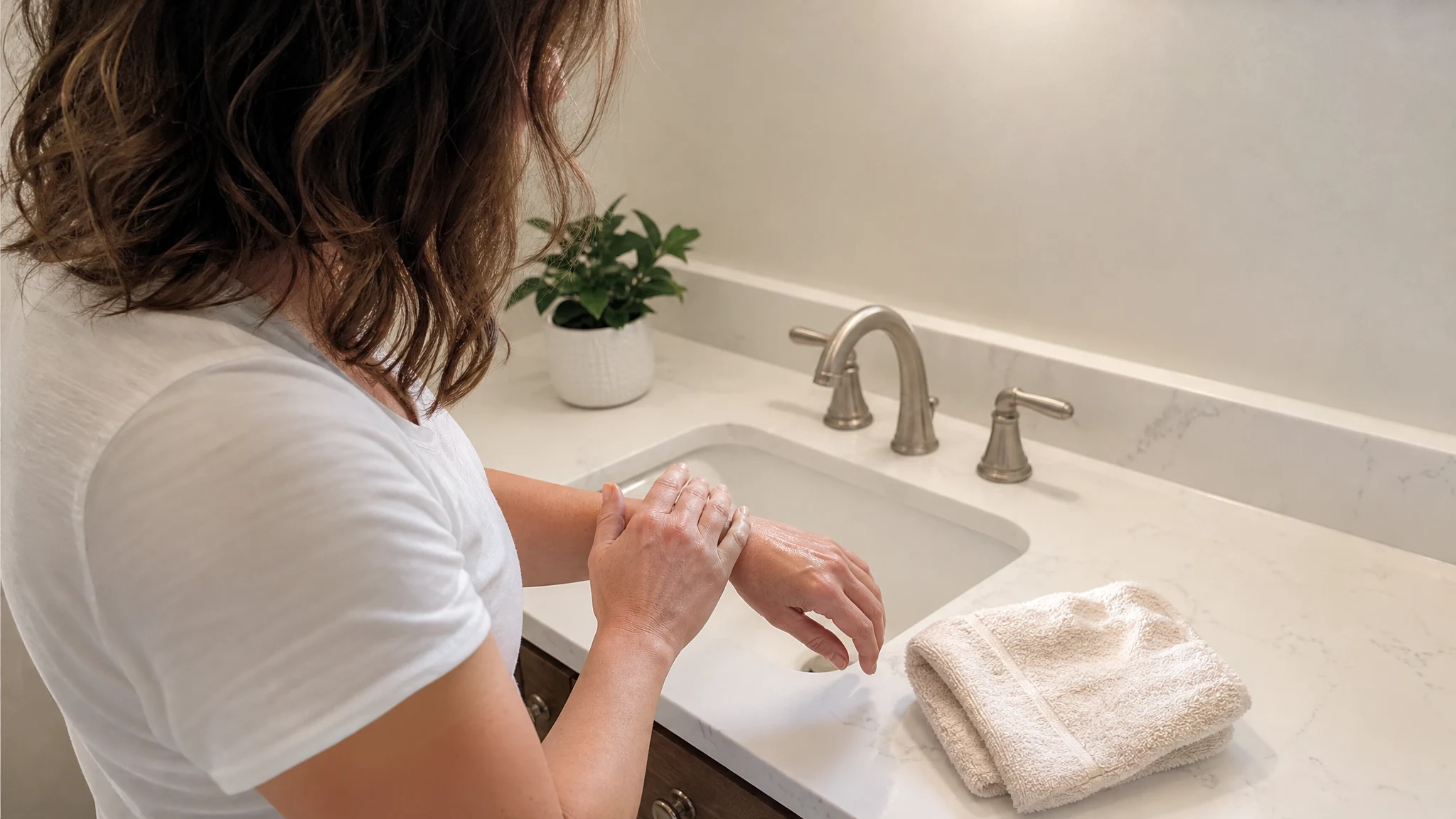
Warm the carrier bottle in a bowl of warm tap water, add the oil with your syringe, cap the bottle and roll it between your palms for a minute. Label it with the percentage, the date and the carrier, and wipe the threads so no neat oil sits on the outside. Patch test a small area first and wait a day before wider use. If any irritation appears, stop.
Small touches that make it nicer to use
- Pick a small bottle with a tight cap so the blend does not sit with half the volume as air.
- If the blend smells too strong when you try it, add more carrier rather than reaching for another drop of valerian; it is easy to add oil and hard to take it out.
- Wash your hands after you make it. The aroma is tenacious, and you will notice it on your fingers long after the bottle is capped.
- Keep a note of the carrier and percentage you used, so a pleasant blend can be repeated and an unpleasant one avoided.
The sensible extras
Keep the finished oil, like the bottle it came from, sealed, cool and dark, and away from eyes, children and pets. Cats in particular are drawn to the smell of valerian, so store it where no one can nose into it; our piece on cats and valerian explains why. We suggest avoiding the oil during pregnancy as a precaution and not combining it with sedative medication, and if either applies to you, your doctor or pharmacist can advise.
We offer this as a scented body oil with an earthy, grounded character, and make no claim for what it does to muscles, sleep or mood. If you want to explore more, our guide to where to apply valerian oil and our dilution guide cover the next steps, and roller bottle ideas use the same arithmetic on a smaller scale.
A little goes a long way, and that is half the pleasure of working with this root.
Valerian Root Essential Oil
Valerian Root Essential Oil from our own shop, in sizes from 0.5 oz to bulk.
From $31.99
Shop Now →Sources & Further Reading
- Poison Control. "Essential oils: Poisonous when misused." poison.org
- NCCIH. "Aromatherapy." nccih.nih.gov