Can You Grow Valerian? Site, Soil and Local Rules
Valerian is a handsome plant: tall, airy, with clusters of pale pink flowers that bees seem to love. It is also one of those garden perennials with a second life as a bit of a runaway, and the root, the part that gives us the oil, smells nothing like the flowers. Before you order seed, here is what extension sources say about where it thrives, what it asks of a bed, and what a home plot will and will not give you.
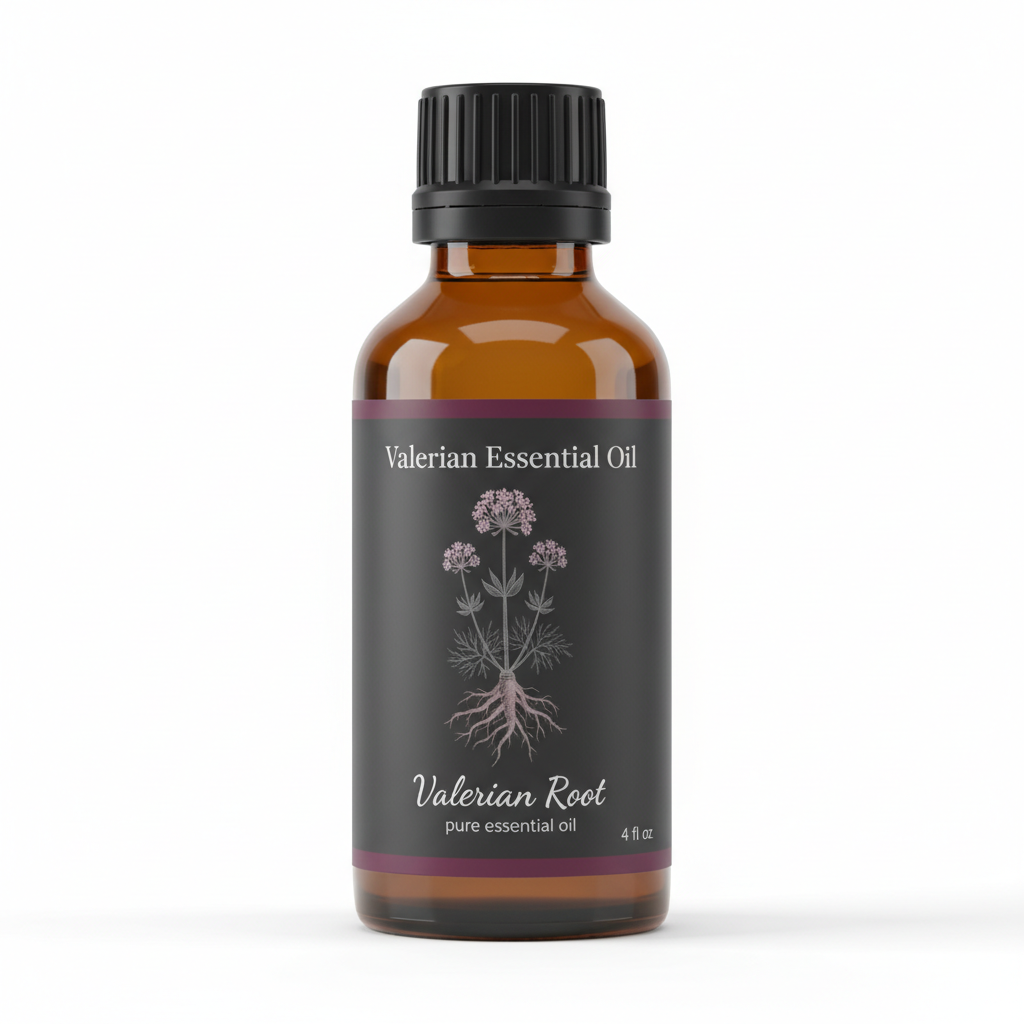
Valerian Root Essential Oil
Our own Valerian Root Essential Oil, in sizes from 0.5 oz to bulk.
From $31.99
Shop Now →Check the local rules first
This is the most useful step, and the least glamorous. North Carolina State Extension's plant database describes Valeriana officinalis as a non-native herb that has escaped cultivation, mainly in the northern United States, spreading by rhizomes and by wind-dispersed seed. It lists the plant as a noxious weed in Connecticut and Wisconsin. Rules change and vary by state, so a quick call to your county extension office or state department of agriculture before planting is time well spent.
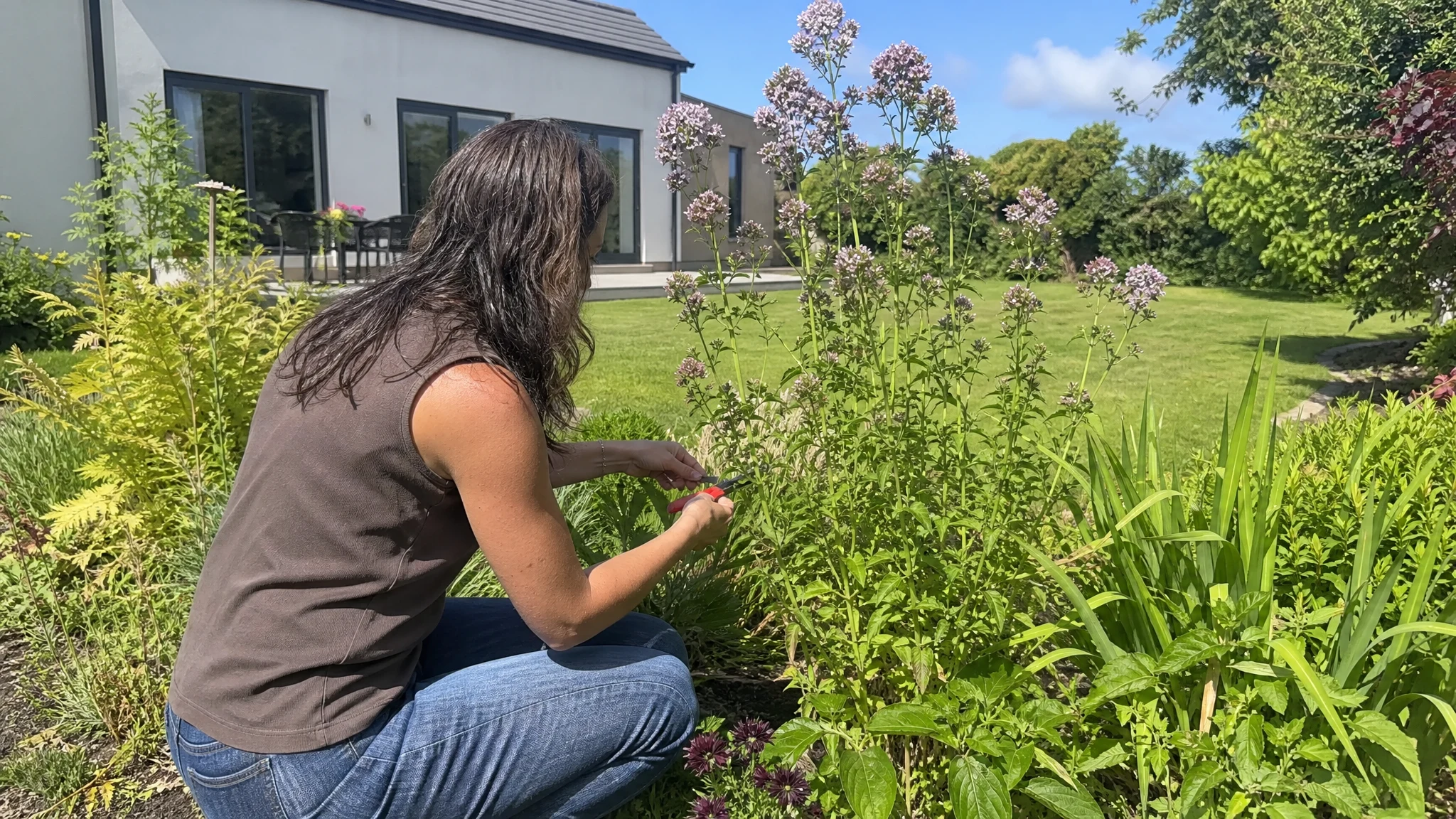
If valerian is restricted where you live, skip it or choose a different tall perennial. If it is allowed, a sensible habit is to cut the flower heads before they set seed. That is our reasoning from how the plant spreads, not a figure from the extension page, but it follows directly from the seed doing the travelling.
What it likes
The same extension profile gives a clear picture of the plant's preferences:
- Hardiness: USDA zones 4a to 7b.
- Light: full sun preferred, with part shade tolerated, though stems tend to flop in shade.
- Soil: fertile loam is ideal, but clay, loam and sand all work, in acid, neutral or alkaline pH. It prefers consistently moist soil with good drainage.
- Size: 3 to 5 feet tall and 2 to 4 feet wide.
Put that together and you get a plant for the back of a border, with room around it and a gardener willing to water in a dry summer. Plants that like moist soil with good drainage tend to sulk in a drought, which is our practical reading of the profile.
Where to put it in the bed
Valerian looks best with company. Set it behind lower plants, where the airy flower heads can rise above them, and give it room so air moves around the stems. Choose a spot you will pass often so you can enjoy the pale pink clusters up close, but keep it a little back from narrow paths where tall stems might flop across them. Bees are the other reason to plant it somewhere you can sit and watch.
A word about cats
If you share your garden with a cat, expect interest. A study in BMC Biology tested six domestic cats with five cat-attracting plants, valerian among them, and found that cats differed from one another in how they responded and in which plants they preferred. It measured attraction, not harm. Still, a bed of valerian is a plant your cat may want to roll in, which is also why we advise keeping any bottle of the oil sealed and well out of reach. Our post on valerian oil and cats goes into it.
Can your harvest become essential oil?
This is the question behind a lot of searches for growing guides, and the arithmetic is worth doing before you buy a still. In a laboratory study of five Estonian root samples distilled the standard way, the yield was 0.28% to 1.16% of the cut dried root. The European Pharmacopoeia sets the minimum for the cut drug at about 0.3%.
That works out, on our arithmetic, to roughly 2.8 to 11.6 grams of oil from a kilogram of dried root. A one-ounce bottle holds about 28 grams of oil at the density of the batch on our certificate, so a single small bottle represents somewhere between 2.4 and 10 kilograms of dried root. One hundred grams of dried root, a generous harvest from a few plants, would give you somewhere between a fraction of a millilitre and just over a millilitre.
The same Estonian study found that bornyl acetate ranged from 8.8% to 33.7% across its five samples, so even what you do get is not a standard product. Distilling at home is a fun project for someone who enjoys the process, but we would not put homemade oil on skin or in something you plan to sell. If you want a root-scented oil to use, buying one with a documented species and part is the more dependable route. Our oil is steam-distilled from the dried root and rhizome of Valeriana officinalis; we do not grow the plant ourselves, and how an oil is made is covered in our look at the distillation process.
A small garden notebook
Jot down where you planted it, when it flowered and when you cut the heads back. Perennials reward that sort of record, and next spring you will not have to remember what you did. If you ever decide the plant has been a bit too enthusiastic for your bed, the notebook also tells you exactly where to look.
Do not turn the roots into a supplement
Dried garden root has no dose standard. The National Center for Complementary and Integrative Health describes oral valerian products studied at 300 to 600 milligrams daily for up to six weeks, says long-term safety is unknown, and notes that little is known about use in pregnancy and breastfeeding. A pharmacist or doctor is the right person to ask, not a gardening guide.
Plant it for the flowers, the height and the bees, and treat the root as a bonus you admire in the ground. If the root's earthy smell is what draws you, we cover that in our guide to what valerian oil is.
Valerian Root Essential Oil
Valerian Root Essential Oil from our own shop, in sizes from 0.5 oz to bulk.
From $31.99
Shop Now →Sources & Further Reading
- NC State Extension. North Carolina Extension Gardener Plant Toolbox, Valeriana officinalis entry.
- Bol S, et al., 2022. Behavioral differences among domestic cats in the response to cat-attracting plants and their volatile compounds reveal a potential distinct mechanism of action for actinidine. BMC Biol.
- Raal A, et al., 2007. Variation in the composition of the essential oil of Valeriana officinalis L. roots from Estonia. Proc Estonian Acad Sci Chem.
- National Center for Complementary and Integrative Health. Valerian.