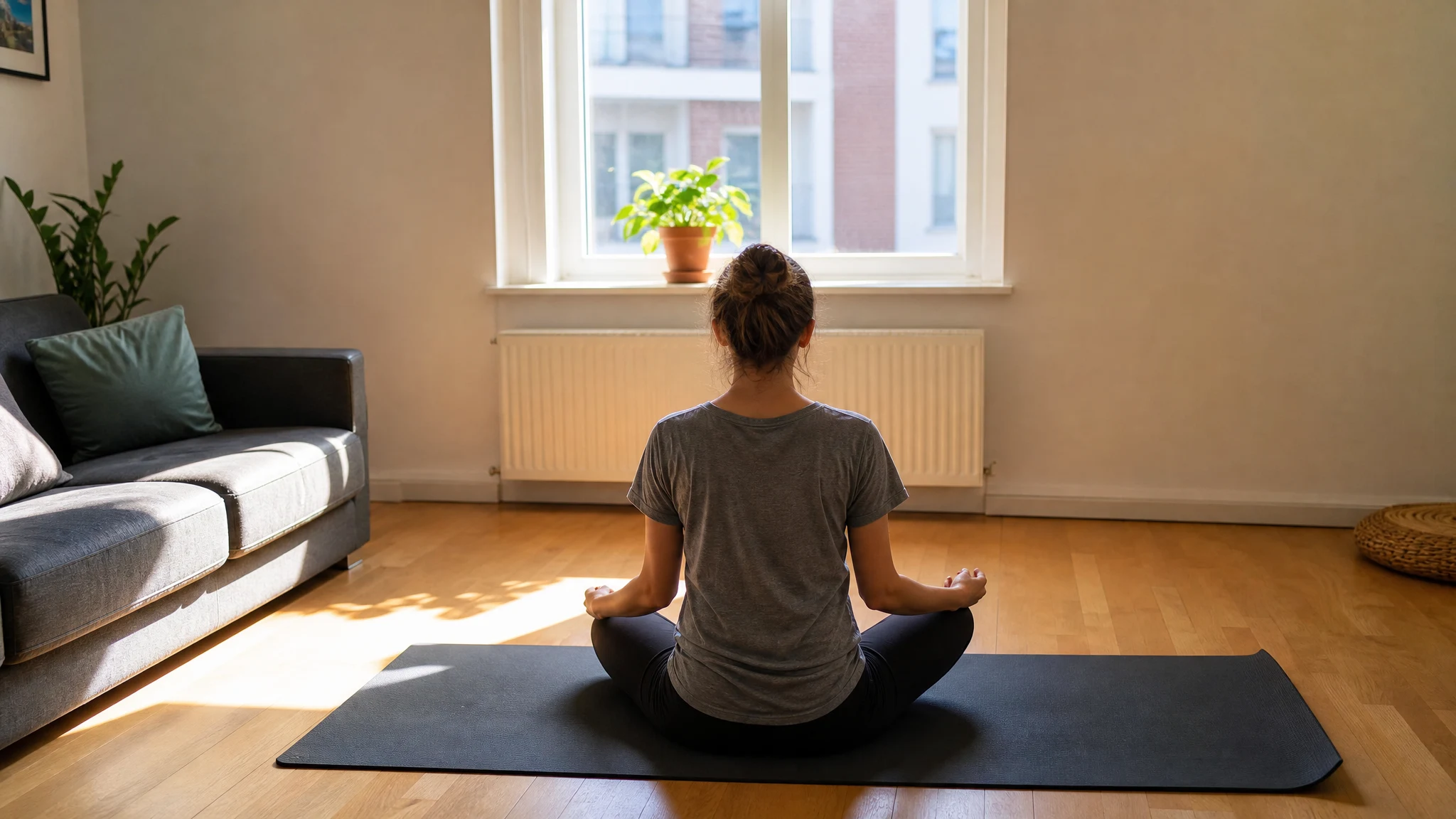
Valerian Oil for Yoga and Meditation: Keep It Home
Walk into a yoga studio and you expect a few things: quiet, a little incense maybe, a clean floor. What you do not expect is a deep, earthy, almost animal-musky root oil drifting across forty mats. Valerian is a magnificent base note, but it has opinions, and those opinions are loud. That makes it a lovely companion for a private corner of your own home and a poor choice for a shared room.
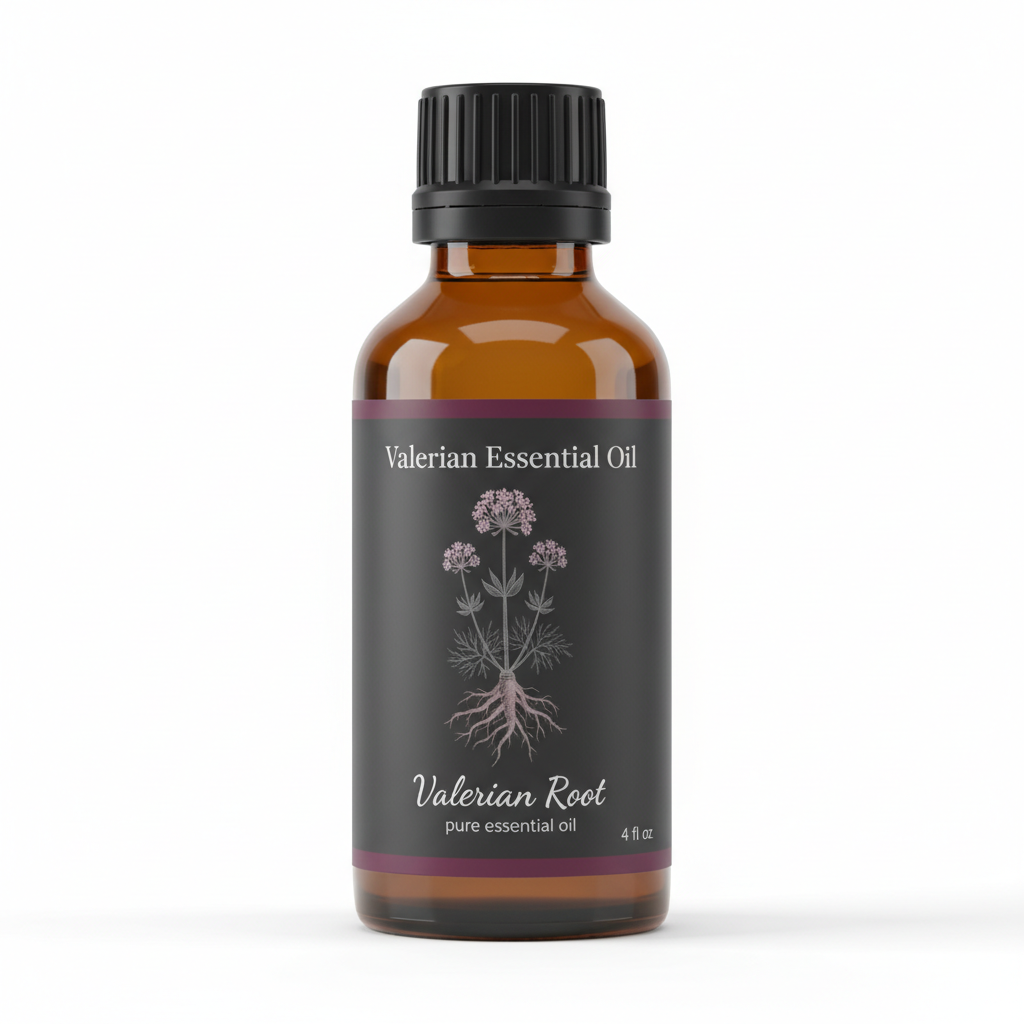
Valerian Root Essential Oil
Our own Valerian Root Essential Oil, in sizes from 0.5 oz to bulk.
From $31.99
Shop Now →The practice does the work
It helps to be clear about where the research sits. NCCIH’s review of meditation and mindfulness describes a large analysis of more than 12,000 participants in which mindfulness-based approaches were better than no treatment for anxiety and depression, and worked about as well as established therapies. It also reports a 2020 review in which about 8 percent of participants had a negative experience from meditation, most often anxiety or depression, a rate similar to that reported for psychological therapies. Those findings belong to the practice. None of them concerns a scent. On aromatherapy, NCCIH says that for insomnia, for example, we do not know whether it helps because little rigorous research has been done.
We think that is a refreshing place to start. A good session does not need an ingredient. If you enjoy a particular aroma while you practice, that is a pleasure of its own, and we are happy to describe how our oil smells without pretending it does more.
How we describe the scent
Valerian root oil smells earthy, musky and woodland-damp, with a balsamic sweetness at the finish. In perfumery it is a base note, which means it lingers on skin and in a room long after lighter notes have gone. Pair it in traces with patchouli, vetiver or cedarwood, which sit in the same deep register, and it adds a shadowy richness. Used by the drop, it will take over. That is exactly the quality that makes it hard to share.
Why a class is the wrong room
The Canadian Centre for Occupational Health and Safety explains that scent is broader than perfume: its list of scented products includes oils and candles, and it describes headaches, dizziness and upper respiratory symptoms among the reactions people report, from mild irritation to disabling. A studio is someone’s workplace, and a class has people with their faces close to the floor for an hour. So if a student or teacher asks whether to wear or diffuse valerian in class, our answer is a friendly no. At home, alone, is where it belongs.
If you practise at home
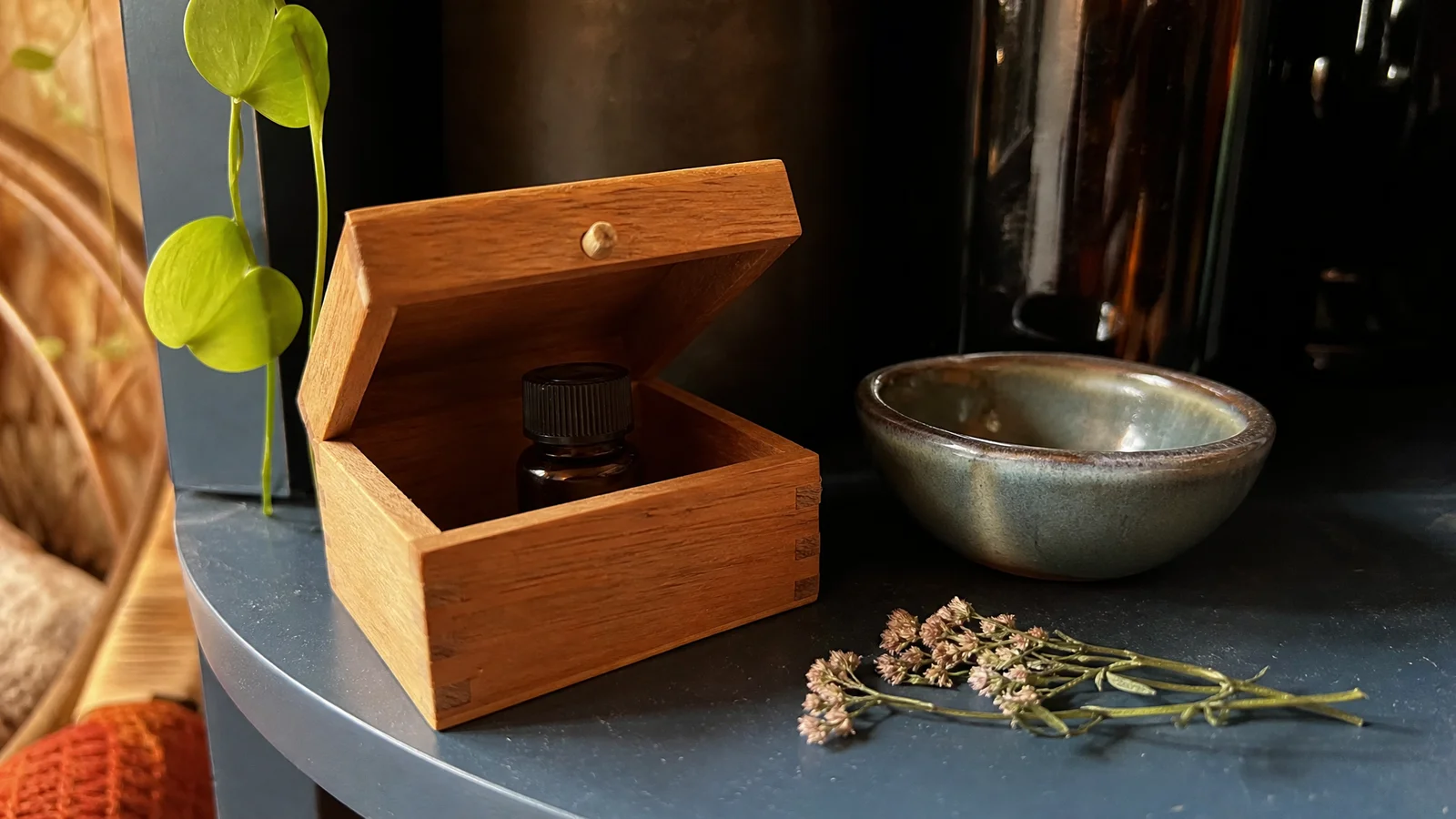
A home practice is the one setting where choosing a strong aroma is entirely your own call. Even so, we would not diffuse a root oil in a closed room. Crack a window, leave the door open, and make sure that a pet can walk out whenever it likes. A simpler way to enjoy the scent is to take a single slow sniff from the open bottle before you unroll the mat, close the cap, and put the bottle away. You will notice quickly whether the smell is something you want in the room, and if your first thought is that it is a lot, that is your answer.
Keeping it small at your own mat
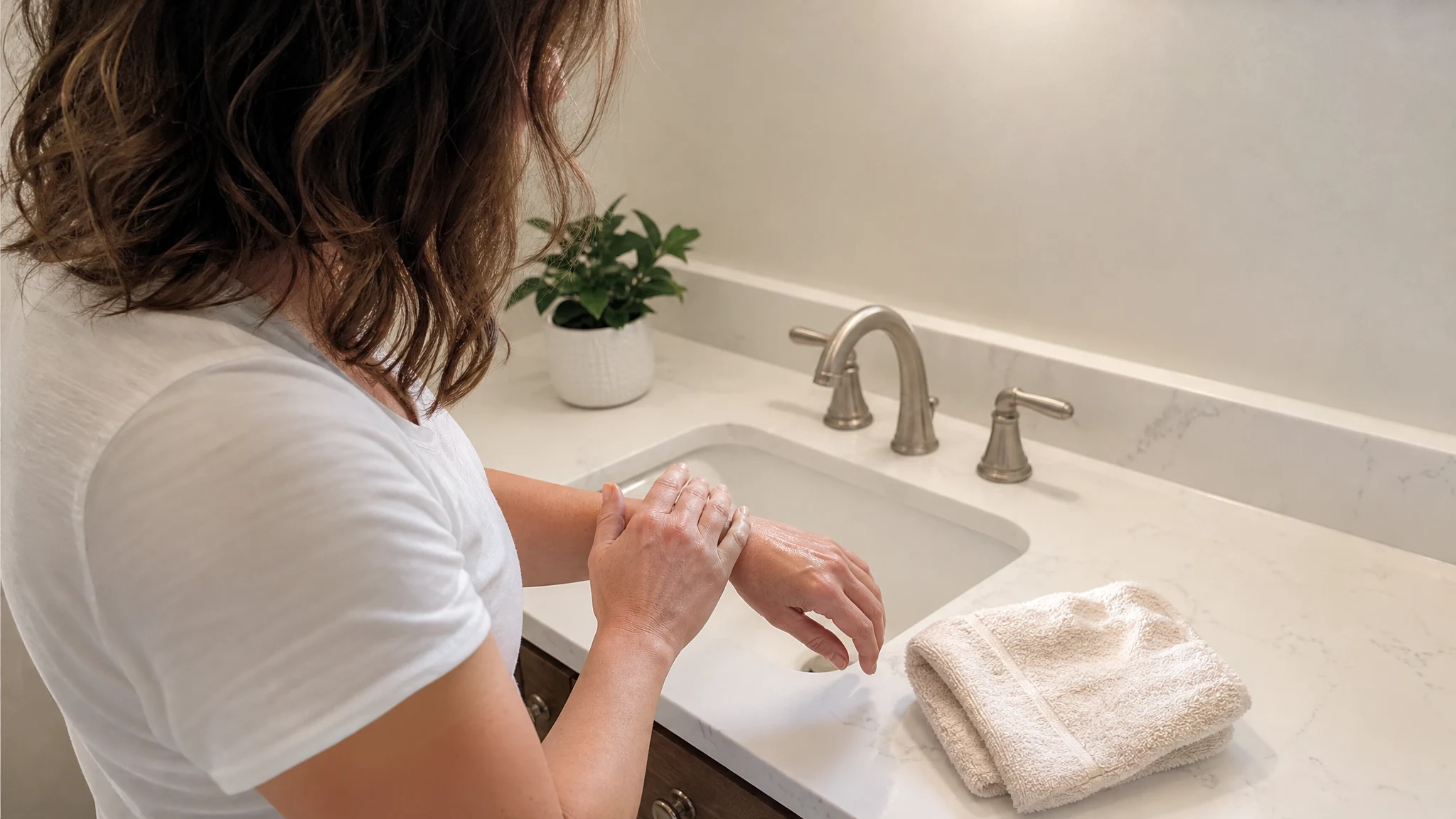
For a private practice, think of the oil as a perfumer would, in whispers. For skin, our guidance is 0.5% to 2% in a carrier oil with a patch test first, away from the eyes, and we suggest starting at the low end. As arithmetic, using the common convention of about 20 drops to the milliliter (a thick oil drops slowly, so weigh if you want precision): a 10 ml roller bottle at 0.5% holds 0.05 ml of oil, about one drop, and at 1% about two drops. Carrier oils and roller bottles come from a craft or supply shop, not from us. We sell the oil only, for external aromatic use, never for internal use.
Our guidance is also to avoid the oil in pregnancy as a precaution and not to combine it with sedative medication, and to keep it away from children and pets. Cats in particular are drawn to the scent, and the ASPCA says cats are especially sensitive to essential oils and would not recommend using any in areas where pets have access unless they are supervised or approved by your veterinarian. A mat on the floor is exactly where a curious cat ends up, so this one matters. Our post on valerian and cats explains why.
Think about the mat itself, too. Fabric and foam hold on to base notes, so a drop of oil that lands on a mat or a strap may still be there next week. Keep any blend well away from the surfaces your skin and face touch, and wash your hands after handling the bottle.
A word on studio vocabulary
Words like grounding, centering and balancing float around this world. The FDA explains that how an aromatherapy product is regulated depends mainly on its intended use, judged from labeling, websites and advertising. So we keep our descriptions to what we can stand behind: how the oil smells, where it sits in a blend, and how to handle it. We make no claim about what it does to your mind or mood.
If you do want it near your practice, the evening post on building a scent routine and our guide to pairing valerian in blends are good places to start. If a practice ever leaves you more anxious instead of less, that is worth mentioning to your doctor or a licensed therapist. Otherwise, take the oil in small amounts, in your own space, and leave it out of the class.
Valerian Root Essential Oil
Valerian Root Essential Oil from our own shop, in sizes from 0.5 oz to bulk.
From $31.99
Shop Now →