How Valerian Oil Is Distilled, From Root to Bottle
Valerian root smells like a damp forest floor, and the oil carries that smell concentrated. It is a fair question how a dried, knobbly root ends up as a few millilitres of dark aromatic liquid. The short version is steam and patience. The longer version has a few surprises, including the fact that part of the smell is made after the root leaves the ground.
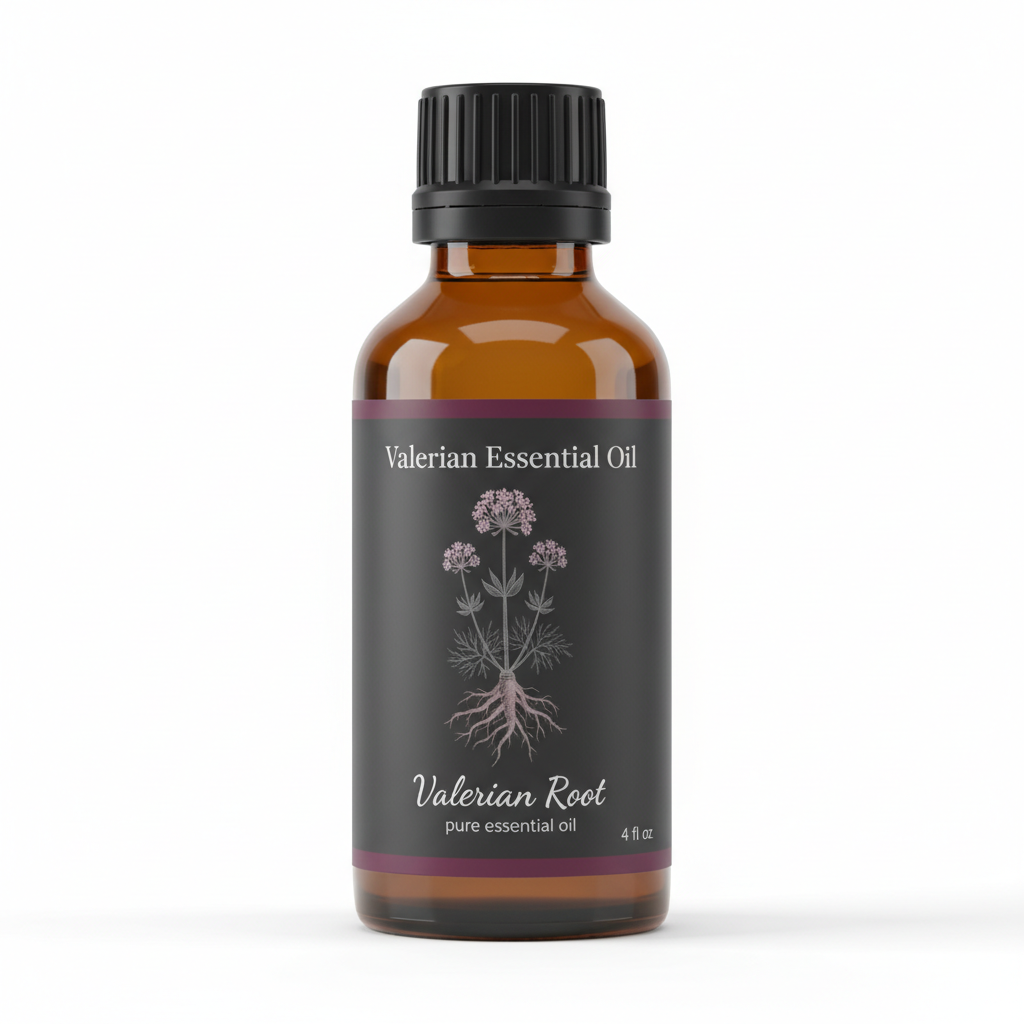
Valerian Root Essential Oil
Our own Valerian Root Essential Oil, in sizes from 0.5 oz to bulk.
From $31.99
Shop Now →The still, in plain terms
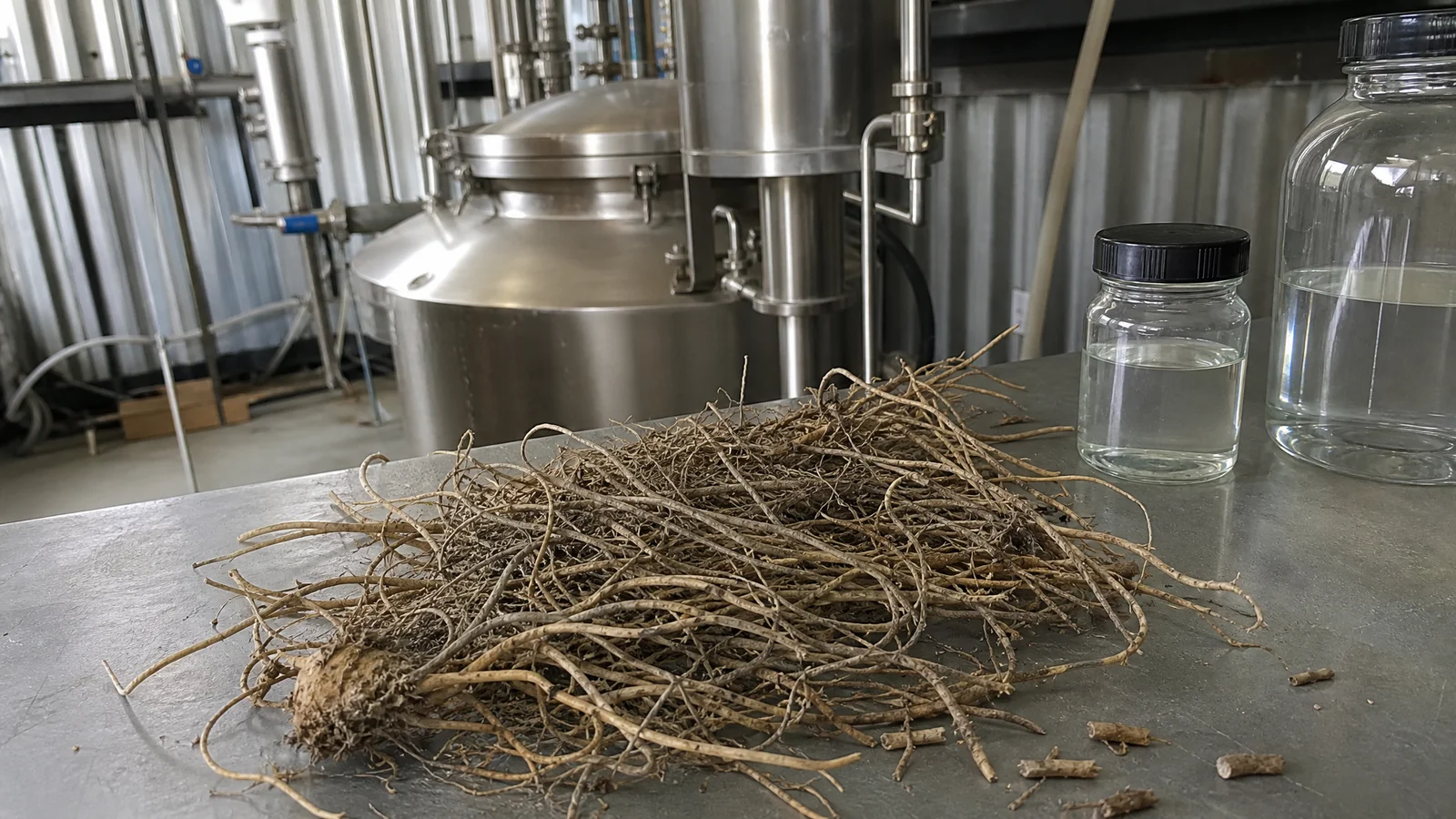
Steam distillation is the standard way to make most essential oils. Steam passes through the plant material and carries the volatile aroma molecules with it. The steam is cooled back into water, and the oil, which does not mix with water, separates and is collected. Our oil is steam-distilled from the dried root and rhizome of Valeriana officinalis, and the Certificate of Analysis we publish for one batch states the extraction method as steam distilled.
You can picture it with a kitchen kettle. Steam rises, meets a cool surface and drips back as water. A still does the same with a plant in the path of the steam, and because oil and water do not mix, the oil floats on the water that collects and can be skimmed off.
How little oil a root holds
Valerian root gives up its oil sparingly. In a laboratory study of five Estonian root samples, each distilled for four hours using 40 g of crushed dried root and the European Pharmacopoeia method, the yield was 0.28% to 1.16% of the root by weight. The pharmacopoeia sets the minimum for cut root at about 0.3%.
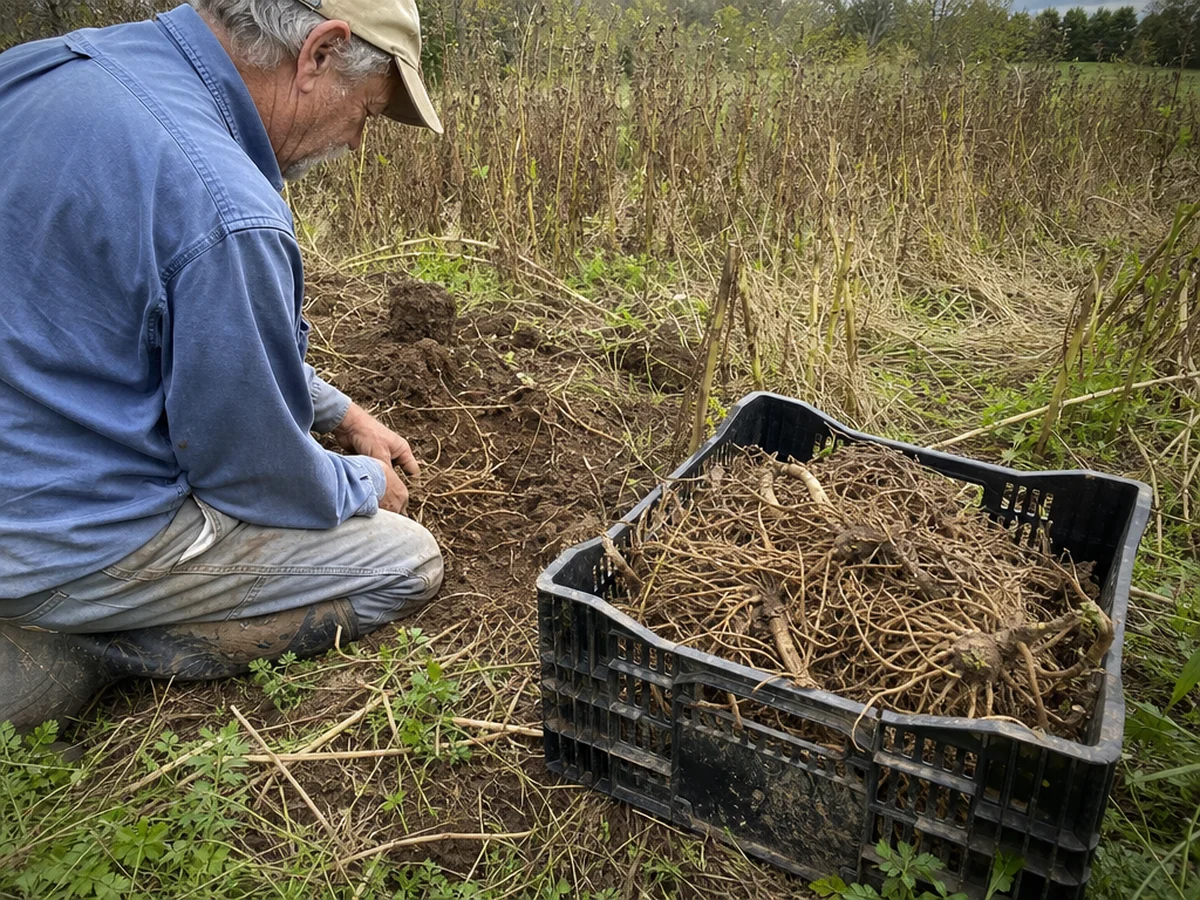
The arithmetic is humbling. A kilogram of dried root gives about 2.8 to 11.6 grams of oil. A one-ounce bottle holds roughly 28 grams at the density of the batch on our certificate (0.947 g/ml), so a single small bottle represents on the order of 2.4 to 10 kilograms of root. Commercial stills are bigger than a laboratory flask, so this is a scale check and not a production figure. It does explain why a root oil is used in traces.
The smell is partly made in the drying
Here is the surprise: part of what ends up in the oil depends on drying. Researchers distilled oil from fresh and dried Valeriana officinalis roots and compared them. The dried-root oil had 13.0% free isovaleric acid; the fresh-root oil had 0.2%. The authors suggest the cause is enzymes breaking down isovaleric esters as the root dries. A swing from 0.2% to 13.0% of one component is large enough that we would expect the smell to change too, though that is our reasoning and not something the study measured. The dried-root oil also had more borneol and more sesquiterpene hydrocarbons.
So the character of a valerian oil is shaped by what happens to the root before it reaches the still. That is a very different story from a flower that releases its perfume in the still.
When the still is stopped matters too
The same study collected the distillate from dried roots in three equal time fractions. The content of target compounds such as oxygenated sesquiterpenes was eight times higher in the last fraction than the first. A distiller who stops early and one who runs to exhaustion are making noticeably different oils from the same root. Which approach any lot used is not something a certificate shows, so it is a fair question for a supplier.
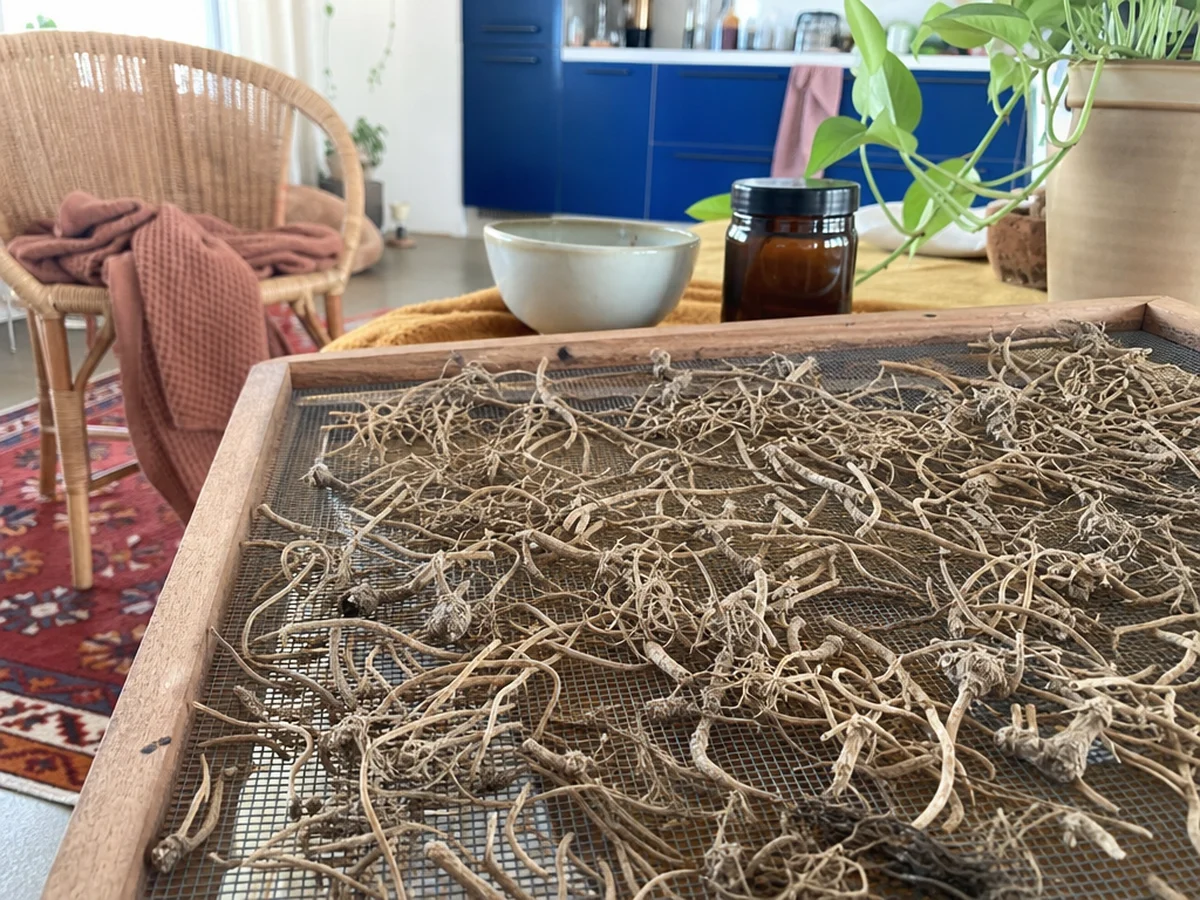
There is a patience built into the whole business. A four-hour run for 40 g of root, as in that study, is not something you hurry, and it is a good reminder of why a small bottle of root oil is a concentrated thing.
Why two bottles of valerian oil can differ
Put these together and the variation among bottles is easy to understand: the root differs, the drying differs, the distilling time differs. In the Estonian study, bornyl acetate ranged from 8.8% to 33.7% and valerenal from a trace to 14.7% in five samples. The European Medicines Agency's assessment likewise describes the oil's composition as variable, depending on origin. That is the reason we encourage buyers to ask for batch-level paperwork rather than assume. Our certificate gives density, refractive index and optical rotation for one batch, and our post on reading the certificate explains what that does and does not show.
What to ask about any bottle
Whoever you buy valerian oil from, a few plain questions are fair. Which part of the plant is it from? How was it distilled? Which batch will your order come from, and can you have a document for that batch in writing? We would ask the same of anyone, and a clear answer, or an honest "we do not have that", tells you a lot about whether to trust the rest.
What this means for how you use it
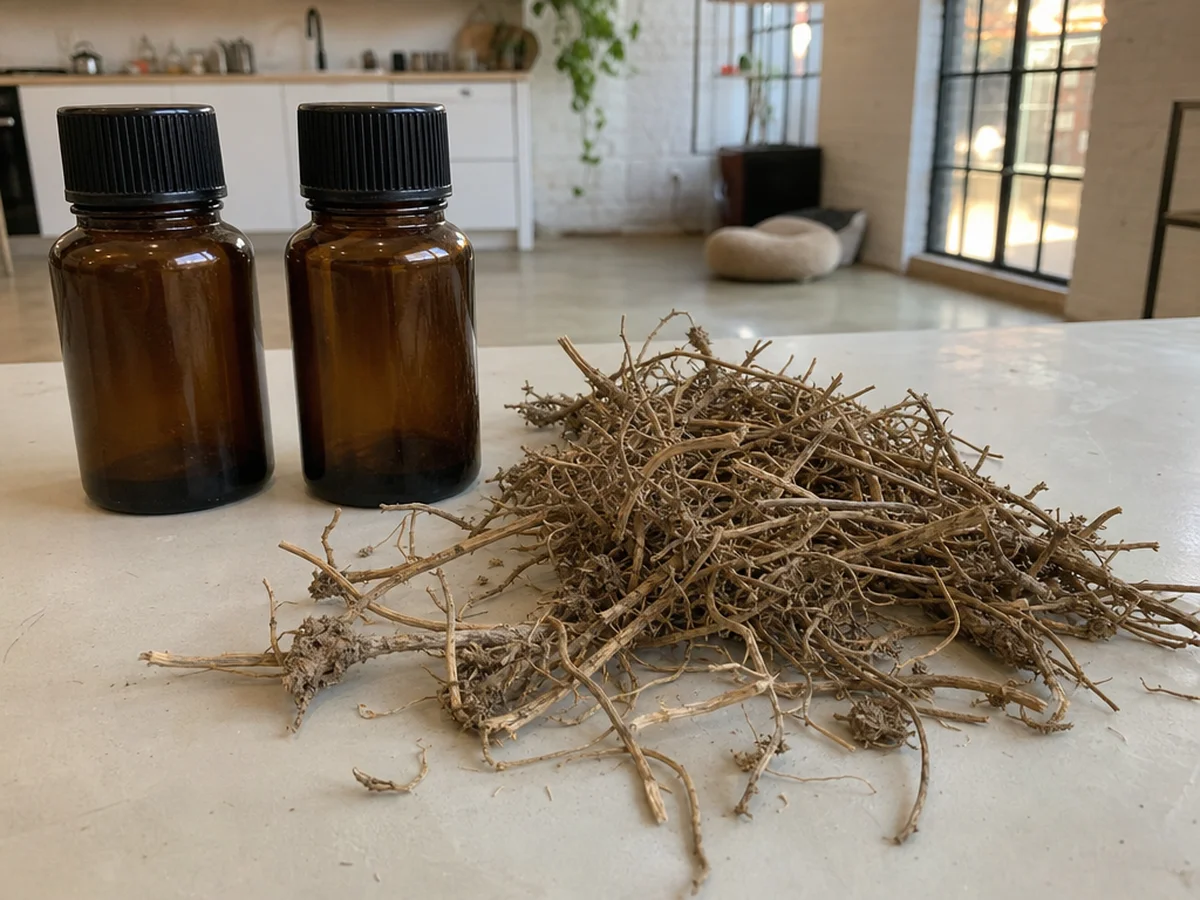
Because the smell is a product of its history, a formula built around one lot can shift slightly when the next arrives. If you make something you want to repeat, note the lot, keep a little of the original and smell the new one beside it before you commit to a big batch. If you need details about the drying or distillation of a lot you plan to buy, ask us in writing through the contact page and rely on the written answer.
The oil's strength is also why we talk about traces. Our notes on diluting valerian oil and storing it pick up from here. A root, some time in a drying space, a long steam and a very small bottle: that is the whole story, and the drying step is the part we find most interesting.
Valerian Root Essential Oil
Valerian Root Essential Oil from our own shop, in sizes from 0.5 oz to bulk.
From $31.99
Shop Now →Sources & Further Reading
- Raal A, et al., 2007. Variation in the composition of the essential oil of Valeriana officinalis L. roots from Estonia. Proc Estonian Acad Sci Chem.
- Lopes D, Strobl H, Kolodziejczyk P, 2005. Influence of Drying and Distilling Procedures on the Chemical Composition of Valerian Oil (Valeriana officinalis L.). J Essent Oil Bear Plants (abstract via OpenAlex).
- EMA/HMPC, 2016. Assessment report on Valeriana officinalis L., radix and Valeriana officinalis L., aetheroleum (EMA/HMPC/150846/2015).