Valerian Oil and Dogs: What Vets and Poison Lines Say
Valerian root has a smell you notice from across the room, so it is natural to wonder what it means to the animal who lives in that room with you. Most of the pet advice we read is about cats, and dogs get a single line. Dogs deserve a proper answer, and the honest one is that no authority we found calls any essential oil safe for them, so we plan around that.
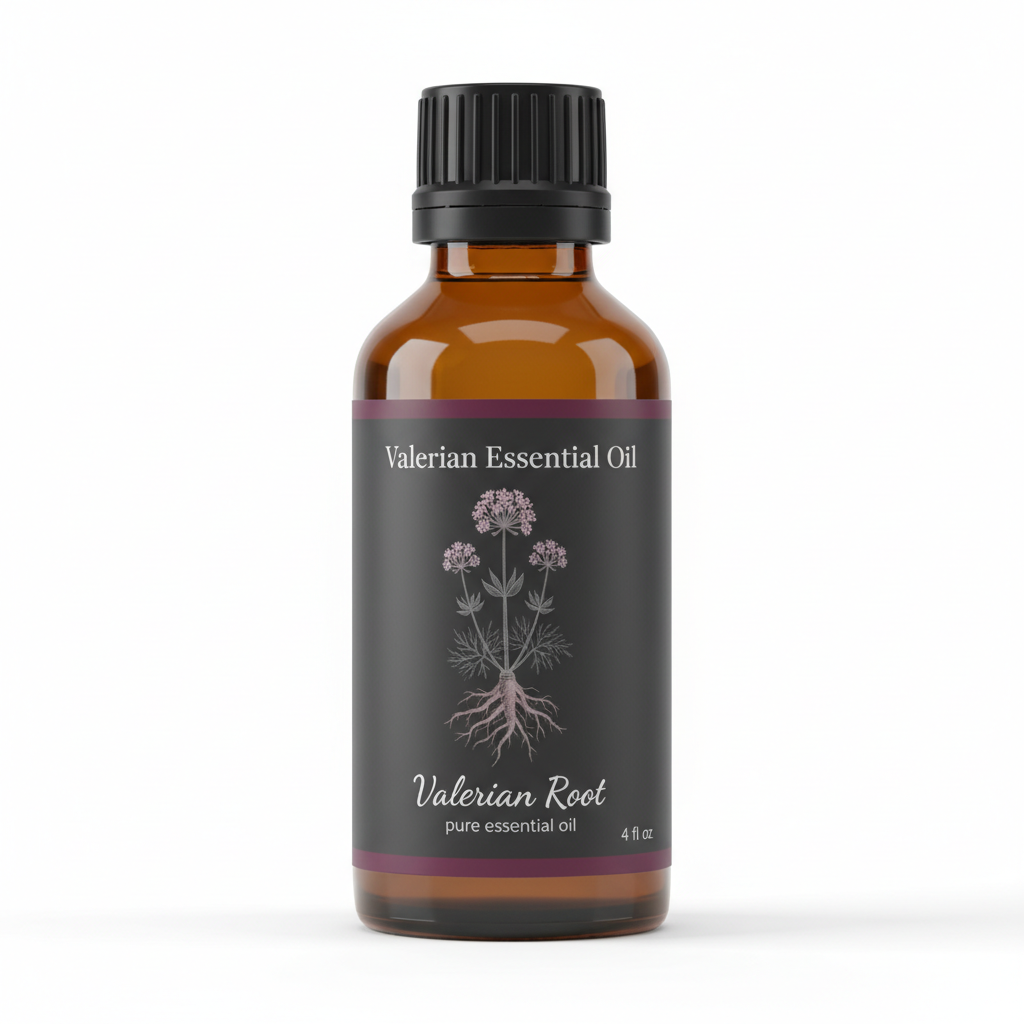
Valerian Root Essential Oil
Our own Valerian Root Essential Oil, in sizes from 0.5 oz to bulk.
From $31.99
Shop Now →Dogs are not cats, and that is only half the story
The Merck Veterinary Manual explains why cats get most of the headlines: they are deficient in an enzyme, glucuronyl transferase, that other animals use to clear certain compounds. Then it adds the sentence that matters to dog owners. Dogs lack that deficiency, but they are still at risk of toxicosis from essential oil exposure (Toxicoses From Essential Oils in Animals). Pet Poison Helpline's toxicology team says the same thing in plainer words: oils are absorbed readily through the stomach, skin and lungs, and the higher the concentration, the greater the risk to the animal (Updates on Essential Oils).
The signs they list for dogs and cats alike include drooling, vomiting, tremors, wobbliness, breathing trouble and, with some oils, liver or kidney failure. Which signs appear depends on the oil and the amount. Those pages name oils such as wintergreen, sweet birch, pine, cinnamon, pennyroyal, eucalyptus and tea tree for dogs. Valerian is not on the list, and we would not read that as clearance. A list of named oils is a record of what has been reported, not a catalogue of everything else that is fine.
Three ways the oil reaches a dog
It helps to think in routes, because each one has its own fix.
- The nose. Merck says inhaling essential oils is hazardous for animals with existing breathing problems, and Pet Poison Helpline lists watery eyes, a burning nose and throat, coughing and wheezing as reactions to strong fragrance. Dogs live by their noses, which is our reasoning for why a bold root scent deserves extra caution in a home with one.
- The coat. An active diffuser, the ultrasonic or nebulizing kind, releases microdroplets that can settle on fur. The dog then absorbs the oil through its skin or swallows it while licking and grooming (Pet Poison Helpline). A passive diffuser such as a reed diffuser gives off no droplets, but a tipped-over one puts liquid on the floor and the dog.
- The mouth. A dog that chews can reach a bottle, a cloth that was wiped with oil, or a spill. Merck's advice is to prevent ingestion and never put concentrated oils on a pet.
One more route is our own reasoning rather than a quoted finding. If you wear a diluted blend on your wrist or neck, a friendly dog may lick that spot. Keeping skin application to places a dog does not reach, or washing the area afterward, closes that gap.
A plan that does not depend on guessing
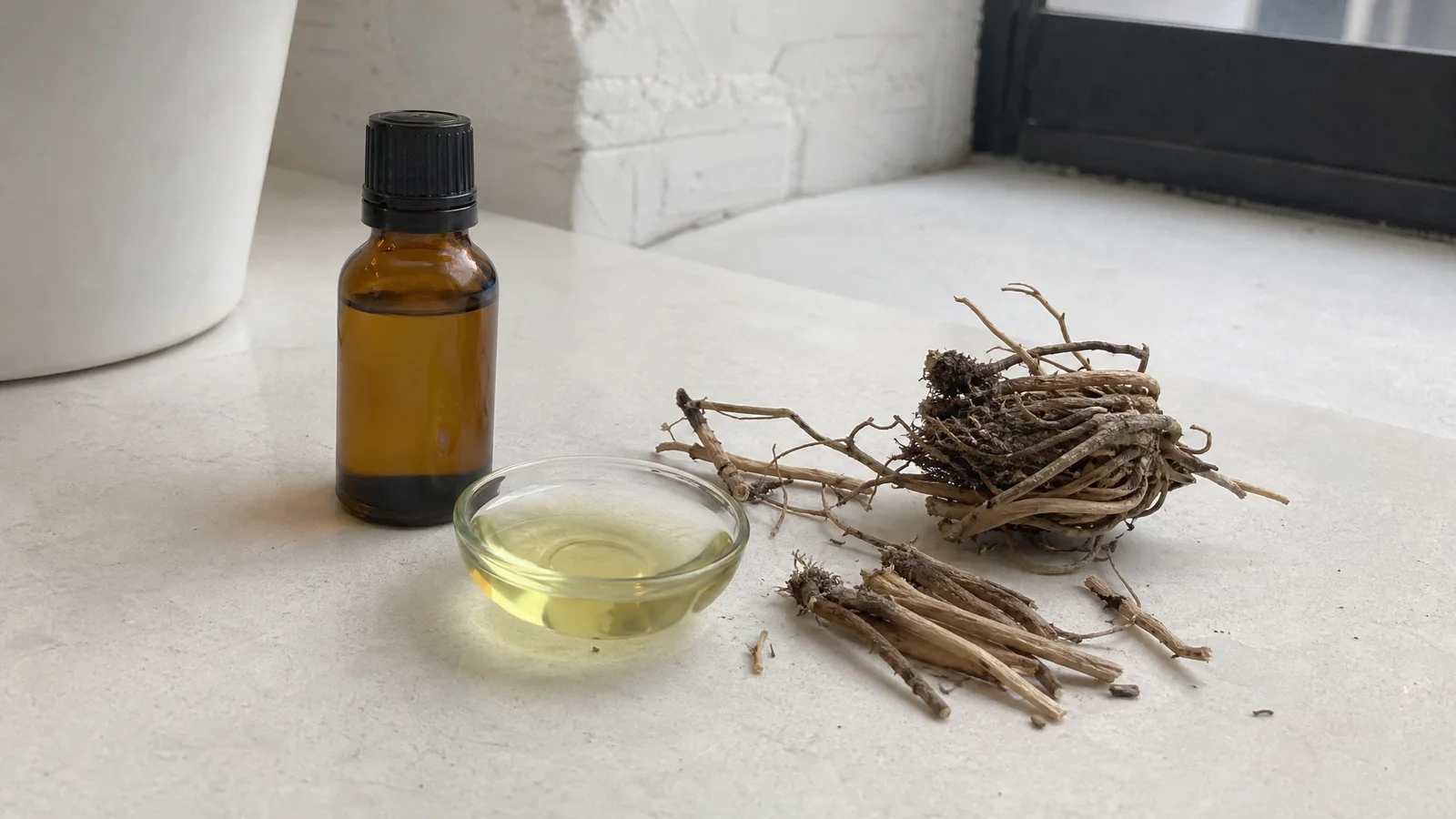
Our guidance is to keep the oil away from children and pets and to store the sealed bottle in a cool, dark spot, and that guidance applies to dogs as much as to cats. In practice we would do this:
- Keep the bottle in a closed cabinet or lidded box, upright, above dog height. Our piece on storing valerian oil covers decanting and labelling.
- If you diffuse it, do it in a room the dog does not use, with the door shut. Merck suggests keeping pets out of the room while a diffuser runs, running it only for short periods (under 30 minutes) and ventilating afterward. Our diffuser guide compares the machine types, and a nebulizer is the one to be most careful with around animals.
- Never put the oil, neat or diluted, on a dog's coat, paws or ears. Dilution works for human skin; Merck's wording about pets is "concentrated oils" and Pet Poison Helpline's is that risk rises with concentration, and neither gives a dilution that is fine for a dog.
- Wipe spills straight away and keep cloths and cotton pads that held the oil in a closed bin the dog cannot open.
- Watch the dog's behaviour. If it sneezes, coughs, drools or leaves the room, switch the diffuser off, open a window and let it have fresh air.
Cats are a separate case, with their own study and their own extra caution, which we cover in valerian and cats. A household with children needs the same locked-away habits, and valerian oil around kids has those.
If a dog has been exposed
Call a veterinarian straight away, or an animal poison line. The ASPCA Animal Poison Control Center lists (888) 426-4435 and asks you to call immediately if you suspect exposure (Pet Poisons: Be Mindful of these Household Products and Cleaning Agents), and Pet Poison Helpline's number is 800-213-6680. Have the bottle to hand so you can say what the oil is and roughly how much is missing. Treatment is a veterinary decision, so follow their instructions rather than a home remedy.
We sell valerian root oil as an aromatic, cosmetic oil for people, not as anything for animals, and we do not suggest any use for a dog. If a dog shares your home, a sealed bottle, a closed door and a call to your vet when something goes wrong are the habits that matter, and your veterinarian is the right person for questions about your particular dog.
Valerian Root Essential Oil
Valerian Root Essential Oil from our own shop, in sizes from 0.5 oz to bulk.
From $31.99
Shop Now →Sources & Further Reading
- Toxicoses From Essential Oils in Animals, Merck Veterinary Manual
- Updates on Essential Oils, Pet Poison Helpline (Kia Benson, DVM)
- Pet Poisons: Be Mindful of these Household Products and Cleaning Agents, ASPCA