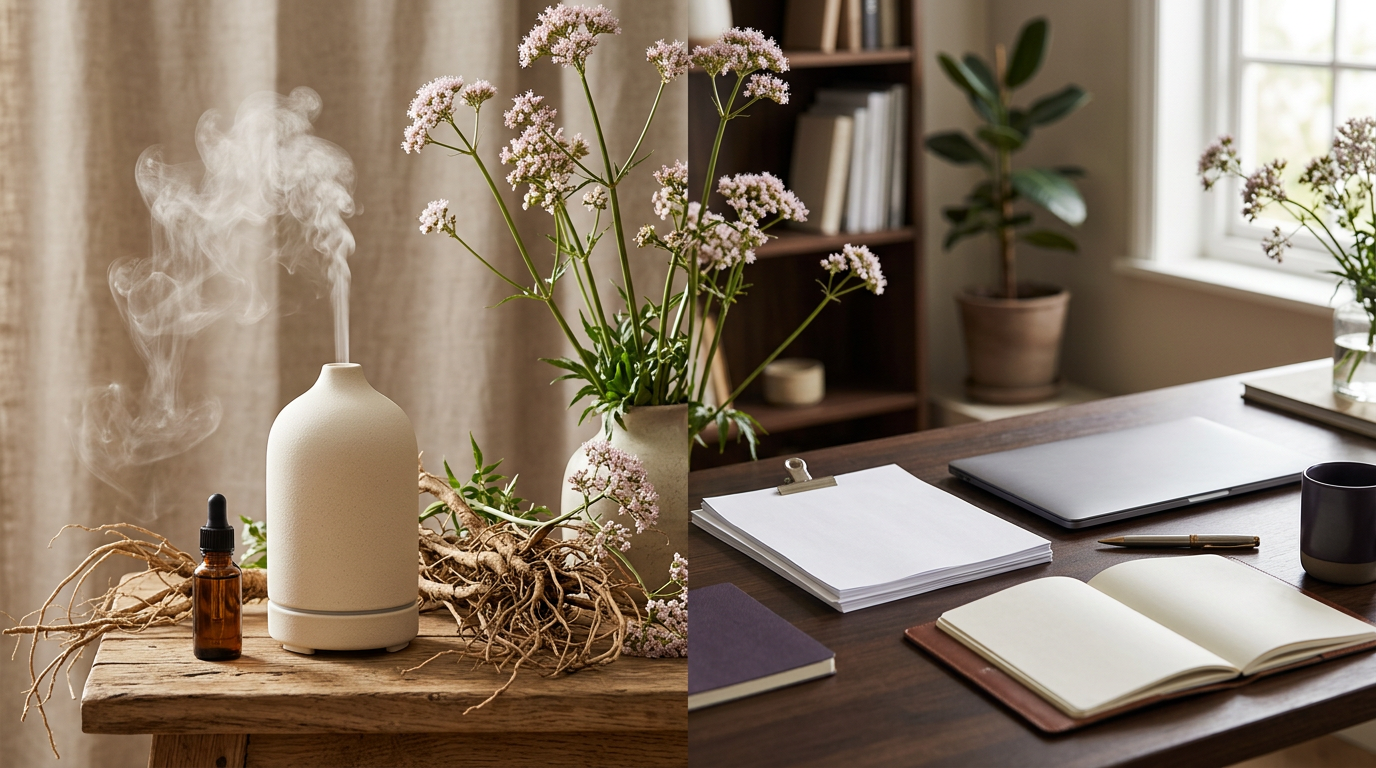
A Quiet-House Evening: One Reader's Valerian Diffuser Routine
Not every essential oil story begins with a dramatic before-and-after. Sometimes it starts with a Tuesday night, a house that finally goes quiet, and a bottle of valerian oil that smells nothing like what you expected.
This case study follows Mara, a 38-year-old reader and home fragrance enthusiast from Portland, Oregon, who shared her experience building a structured valerian diffuser routine over the course of three months. Her account is framed here as an educational exploration, not as medical testimony. What she observed, what surprised her, and what she changed along the way offers a useful window into how valerian oil actually behaves in a real home environment.
The Context: A House That Needed a Ritual
Mara works remotely. Her home is also her office, which means the psychological boundary between "work" and "not work" had quietly dissolved over a couple of years. Evenings blurred into more screen time, more emails half-read on the couch. She described it as a low-grade restlessness that settled in around 8 p.m. and made the transition toward a genuinely quiet evening feel effortful.
She had used lavender in a diffuser before, and while she liked the scent, she felt it had become almost too familiar. She was looking for something that felt more intentional, more distinct. A friend mentioned valerian root oil. She was skeptical.
"I smelled it straight from the bottle and my first thought was: absolutely not. It was earthy and heavy and a little funky. But I'd read that it mellows when diffused, so I kept going."
That willingness to push past the first impression turned out to be important. Valerian essential oil, distilled from the roots of Valeriana officinalis, carries a complex scent profile that can catch first-time users off guard. Understanding this upfront is genuinely useful for anyone curious about building calming home scents around this oil.
The Approach: Building the Routine in Phases
Mara didn't start with a finished blend. She built her valerian diffuser routine in three distinct phases over roughly twelve weeks, keeping informal notes on her phone about what she noticed each week.
Phase One: Valerian Alone (Weeks 1 and 2)
She began with pure valerian oil in her ultrasonic diffuser, using a conservative amount: three drops in 100 ml of water. The goal was simply to understand the oil on its own terms before adding anything else.
Her notes from week one describe the scent as "damp wood, something almost animalic, with a faint sweetness underneath." By week two, she had started to find it grounding rather than off-putting. That shift in perception is worth noting. Valerian's primary aromatic compounds, including isovaleric acid and various sesquiterpenes, don't perform the way a floral oil does. The scent doesn't lift and sparkle. It settles.
She ran the diffuser for 30 minutes starting at 8:30 p.m., with no other scents layered in. She kept the room softly lit and put her phone in another room during that window.
Phase Two: Blending Experiments (Weeks 3 through 8)
This is where things got more interesting. Mara began experimenting with companion oils, guided in part by our guide to 8 valerian diffuser blends that actually smell good. She was specifically looking for oils that could soften valerian's earthiness without drowning it out entirely.
Her most successful blend, which she landed on around week five, was:
- 2 drops valerian
- 2 drops cedarwood (Virginian)
- 1 drop bergamot (bergapten-free)
She described this combination as "a forest cabin on a cold evening." The cedarwood added warmth and woodsy depth that complemented valerian's earthiness rather than clashing with it. The bergamot contributed a quiet citrus lift that kept the blend from feeling too heavy for a small room.
A blend she tried and abandoned paired valerian with ylang ylang. The result was, in her words, "too much." Both oils are intense and low-pitched. Together they felt cloying rather than grounding. This kind of trial-and-error experimentation is part of developing a personal fragrance vocabulary, and Mara's willingness to discard what didn't work kept her moving forward productively.
Phase Three: Ritual Refinement (Weeks 9 through 12)
By week nine, Mara had settled on a consistent approach. She wasn't experimenting any more. She was practicing. The routine became:
- Finish all work-related tasks by 8:00 p.m. and close her laptop physically.
- Fill the diffuser with 100 ml of water and her cedarwood-bergamot-valerian blend.
- Dim the overhead lights in her living room, switching to a lamp on the side table.
- Make a cup of chamomile tea.
- Spend 20 to 30 minutes reading a physical book before doing anything else.
The scent became a cue. She described how, after a few weeks of consistency, the moment she smelled the blend beginning to diffuse, something in her posture would change. She'd find herself sitting back instead of leaning forward. Whether this is the oil itself, the ritual around it, or some combination of the two is genuinely impossible to disentangle. That ambiguity is worth sitting with, rather than overstating the role of any one element.
For a deeper look at how scent, light, and timing can work together in an evening practice, our article on an evening wind-down ritual with valerian: diffuse, dim covers each element in detail.
Observations and Outcomes
Mara was careful in how she described what she noticed. She wasn't making claims. She was reporting observations from her own experience, which is the appropriate frame for this kind of personal case study.
Several things stood out across her twelve weeks:
The Scent Adapts Over Time
Her perception of valerian's raw aroma shifted considerably. By week four, she no longer found the straight oil off-putting when she opened the bottle to measure drops. Olfactory habituation is a real phenomenon, and it seems to have played a role here. People who commit to valerian long enough to get past the initial strangeness often report a similar adjustment.
Consistency Seemed to Matter More Than Quantity
She experimented with using more drops early on, thinking a stronger scent would produce a stronger effect. It didn't work that way. Overloading the blend made the room feel oppressive rather than calm. She settled on 5 drops total in 100 ml as her personal ceiling. Using less, more consistently, worked better for her than occasional heavy use.
The Ritual Context Was Inseparable from the Scent
Mara was clear about this. On the two or three evenings where she diffused the blend but kept working at her laptop, she noticed almost nothing. The scent alone, without the accompanying shift in behavior, didn't seem to do much on its own. This aligns with what researchers and aromatherapy educators often note: scent works most reliably when it's paired with intentional context. The oil supports the ritual. The ritual isn't the oil alone.
Diffuser Choice Made a Noticeable Difference
She had started with an older heat-based diffuser and switched to an ultrasonic model around week three. She noticed that the scent was more true to the oil's actual character when diffused cool. Heat-based diffusers can alter volatile compounds in ways that shift a scent noticeably, and with something as nuanced as valerian, that matters.
Key Learnings for Anyone Starting a Valerian Diffuser Routine
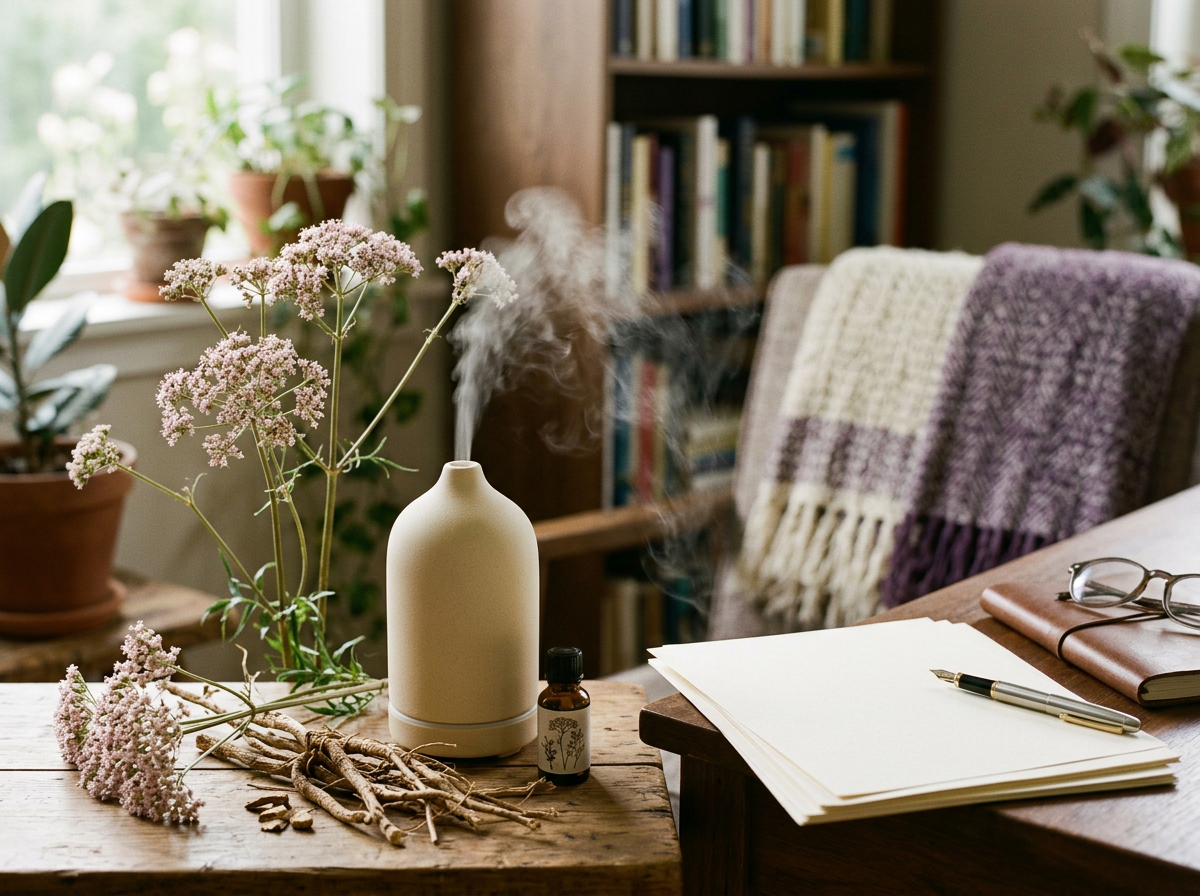
Mara's experience surfaces a handful of practical takeaways that are worth passing along directly.
Start with Less Oil Than You Think You Need
Valerian is a strong-smelling oil. Two to three drops in 100 ml is a reasonable starting point for a smaller room. You can always add more in your next session once you know how the scent behaves in your space.
Give Yourself Two Weeks Before Judging the Scent
First impressions of valerian are almost universally mixed. The oil rewards patience. If you dismiss it after one or two uses, you're evaluating it at its most unfamiliar.
Choose a Companion Oil That Bridges, Not Competes
Woody oils like cedarwood, sandalwood, and vetiver tend to sit well beside valerian because they share a grounding, low-pitched quality. Bright florals and spice-forward oils often clash. Start with the woody family and adjust from there.
Anchor the Scent to a Consistent Set of Behaviors
The scent becomes more meaningful over time when it reliably signals the same set of actions: lights dimmed, devices put away, something slow and physical to do with your hands or eyes. The quiet evening ritual is the frame. The oil is one element inside it.
Use an Ultrasonic or Nebulizing Diffuser
Both preserve the aromatic integrity of valerian better than heat-based options. Nebulizers deliver more concentrated scent without water, which some users prefer. Ultrasonic diffusers are gentler and work well for most living room applications.
For a broader look at how valerian oil fits into different kinds of evening practices, the complete guide to valerian oil uses and evening rituals covers more ground, including topical applications and blend structures across different seasons.
Most of the questions Mara hit along the way are answered in the valerian essential oil FAQ.
A Note on Quality and Sourcing
Mara mentioned that she tried two different brands before settling on one she felt confident about. Her criteria were practical: the supplier provided batch-specific GC/MS testing results, the oil was steam-distilled from the root (not leaves or aerial parts), and the country of origin was clearly listed.
This matters more with valerian than with many other oils because the root produces a relatively small yield of essential oil, and quality varies considerably between suppliers. Oils that seem unusually cheap or that lack documentation about distillation method and plant part are worth approaching with caution.
Scent can be a guide but isn't a sufficient one on its own. Some adulterated or diluted oils may smell acceptable while containing fillers or synthetic additions. Requesting third-party testing documentation from your supplier is a reasonable and straightforward step.
Closing Thoughts from Mara
Three months in, she still uses her blend three or four evenings a week. She no longer thinks of it as an experiment. It's simply part of how her evenings go now.
"I wouldn't have believed valerian would be the thing that stuck. It's not a pretty scent. But it feels like mine now. And the evenings feel more like evenings."
That last sentence is probably the best summary of what a well-built valerian diffuser routine can offer: not a dramatic shift, but a reliable one. A quiet house made a little more intentional, one evening at a time.
As with any essential oil practice, individual responses to scent vary. If you have known sensitivities, are pregnant, or are nursing, please consult a qualified healthcare provider before introducing new aromatic compounds into your environment. Valerian essential oil is for aromatic and cosmetic use only and is not a substitute for professional healthcare guidance.