DIY Valerian Bath Oil: A Grounding Soak for Slow Evenings
Some evenings call for something slower. The kind of evening where you draw a bath, dim the lights, and let the water do most of the work. A well-made bath oil can anchor that ritual beautifully, and valerian essential oil brings something to the formula that lavender and chamomile simply cannot replicate: a deep, rooty, almost mossy presence that feels genuinely grounding rather than just pleasant.
This recipe builds a valerian bath oil designed for those slow-evening rituals. It uses a small amount of valerian essential oil blended with hops CO2 extract and a handful of complementary botanicals, all suspended in a skin-softening carrier base. The result is an oil that disperses into your bathwater, leaves your skin feeling nourished, and fills the bathroom with a scent that leans earthy, warm, and quietly complex.
If you are newer to working with valerian, it is worth reading our complete guide to valerian oil uses and evening rituals before you start. Valerian essential oil has a bold aromatic profile that surprises first-timers, and understanding its character will help you proportion this blend with confidence.

Before You Begin: A Note on Valerian's Scent
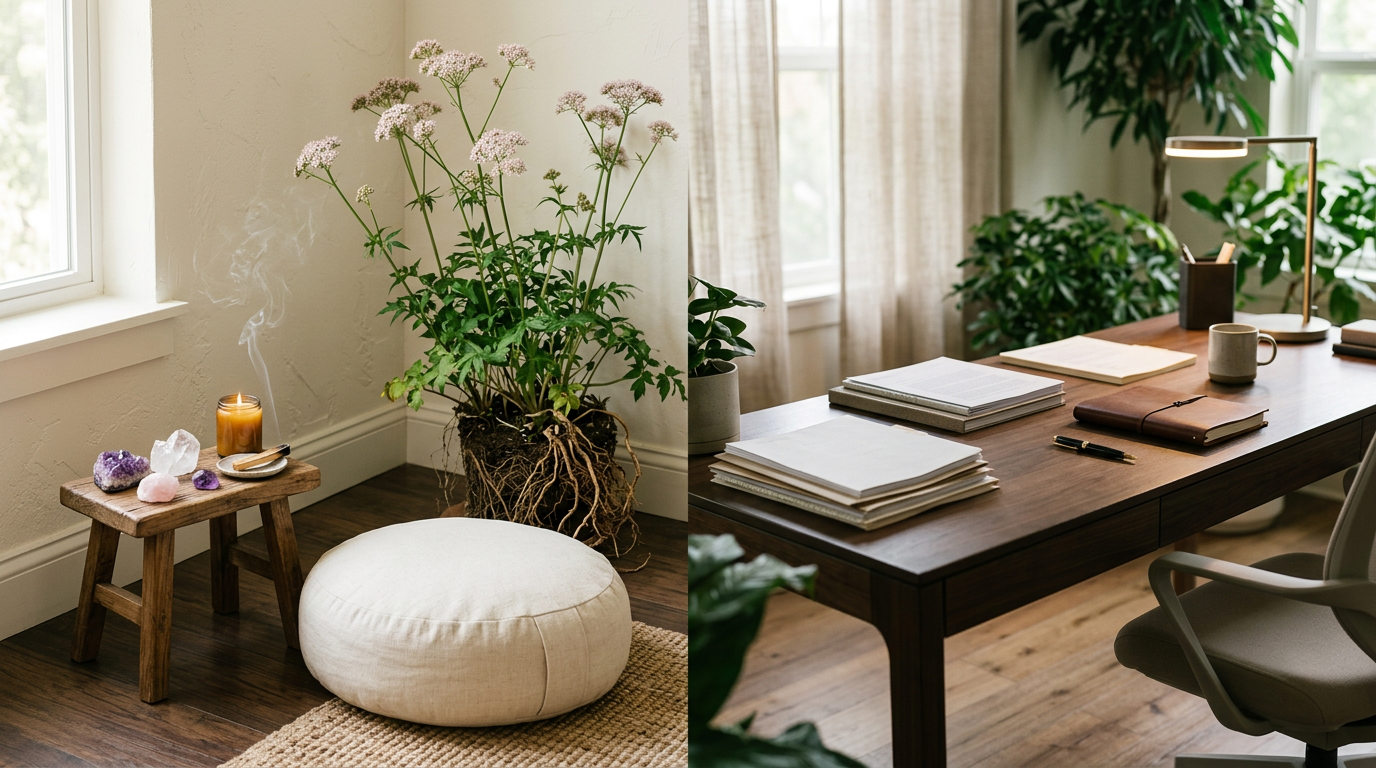
Valerian essential oil is not a subtle ingredient. Extracted from the root of Valeriana officinalis, it carries a heavy, damp-earth quality with undertones of aged wood and something faintly animal. Perfumers describe it as a base note with real staying power. In a bath oil, that intensity softens considerably once it hits warm water, and the hops CO2 in this formula helps round out the sharper edges of the raw valerian.
The blend here is intentionally low in valerian percentage. A little goes a long way. Resist the instinct to add more if the undiluted oil smells stronger than you expected. Once dispersed in your bath, the ratio lands in exactly the right register.
Recipe Overview
- Difficulty: Beginner-friendly
- Prep time: 10 to 15 minutes
- Yield: Approximately 4 ounces (enough for 4 to 6 baths, depending on your preferred amount per use)
- Shelf life: 3 to 4 months (see storage notes below)
- Skin dilution rate: Approximately 1.5% total essential oil in the finished formula, within standard cosmetic guidelines for bath products
Ingredients
Carrier Base (makes up the bulk of the formula)
- 2.5 oz (75 ml) sweet almond oil
- 0.75 oz (22 ml) jojoba oil
- 0.25 oz (7 ml) vitamin E oil (tocopherol, used as an antioxidant to extend shelf life)
Essential Oils and Extracts
- 8 drops valerian essential oil (Valeriana officinalis)
- 6 drops hops CO2 extract (Humulus lupulus)
- 5 drops cedarwood essential oil, Atlas or Virginia (Cedrus atlantica or Juniperus virginiana)
- 4 drops vetiver essential oil (Vetiveria zizanoides)
- 3 drops clary sage essential oil (Salvia sclarea)
Total essential oil count: 26 drops in approximately 4 oz of carrier. This places the formula at roughly 1.5% dilution, appropriate for a rinse-off bath product used by adults.
Equipment You Will Need
- A clean glass mixing bowl or beaker
- A small glass stirring rod or metal spoon
- A 4-ounce dark glass bottle with a tight-fitting cap or dropper insert
- A fine funnel (optional but helpful)
- Measuring spoons or a digital scale accurate to 0.1 g
- Labels and a permanent marker for dating your batch
Step-by-Step Instructions
- Prepare your workspace. Wipe down your surface with a clean cloth. Ensure all equipment is dry. Water contamination in oil-based products accelerates spoilage.
- Measure your carriers. Pour the sweet almond oil into your mixing bowl first, followed by the jojoba oil. Add the vitamin E oil last. Stir gently to combine.
- Add your essential oils and extracts. Drop in the valerian essential oil, counting carefully. Follow with the hops CO2, cedarwood, vetiver, and clary sage. Stir the blend slowly for about 30 seconds. Do not rush this step; you want the aromatic compounds evenly distributed throughout the carrier base.
- Evaluate the scent. Hold the bowl near your face and breathe in gently. The valerian will be forward at this stage. That is expected. On skin and in water, the blend softens and the cedarwood and vetiver come forward more clearly. If you want a slightly drier profile, add one or two additional drops of vetiver. If you prefer more warmth, one extra drop of clary sage works well.
- Bottle your blend. Using a funnel if needed, carefully pour the finished oil into your dark glass bottle. Cap it tightly.
- Label and date. Write the date of preparation and the ingredient list on your label. This step matters more than it seems when you have multiple DIY oils on a shelf.
- Rest the blend. Allow the bottled oil to sit in a cool, dark place for 24 to 48 hours before first use. This resting period lets the aromatic molecules fully integrate with the carrier oils, and the scent rounds out noticeably.
If the ratio here feels strong for your nose, how to dilute valerian oil explains how to scale it down.
How to Use Your Valerian Bath Oil
Fill your bath with warm water (not scalding: very hot water can cause oils to evaporate more quickly and may be harsh on skin). Once the tub is filled, add 1 to 2 teaspoons of your bath oil directly to the water and swirl gently with your hand to disperse it. Step in, settle, and give yourself at least 15 to 20 minutes.
Do not add the oil while the tap is running. The turbulence and heat will cause the lighter aromatic molecules to evaporate before you even get into the bath.
Pat your skin dry after bathing rather than rubbing. This preserves the light film of oil on the skin and keeps the grounding bath soak experience going a little longer.
Safety Warnings and Contraindications
Please read this section in full before using this product.
Patch Testing
Before your first full bath, perform a patch test. Apply a small amount of the finished oil (about the size of a pea) to the inside of your forearm. Cover loosely and wait 24 hours. If you experience redness, itching, or irritation, discontinue use and consult a healthcare provider.
Dilution Ratios
This formula is crafted at approximately 1.5% total essential oil dilution, which falls within the general cosmetic safety guidelines for bath and rinse-off products. Do not increase the essential oil count beyond what is listed here without recalculating your dilution rate carefully. Essential oils in bath products spread across your entire body surface area.
Clary Sage
Clary sage essential oil is not recommended for use during pregnancy. If you are pregnant or nursing, omit the clary sage entirely and substitute with an equal number of drops of sandalwood or frankincense essential oil. Consult your midwife or physician before using any essential oil-based product during pregnancy.
Slippery Surfaces
Oil in a bath makes surfaces slippery. Use a non-slip bath mat inside and outside your tub. This is a straightforward safety measure that is easy to overlook.
Sensitive Skin
If you have sensitized or reactive skin, consider reducing the total essential oil drops to 18 to 20 (approximately 1% dilution) and adjusting proportions accordingly. Always consult a qualified healthcare provider or dermatologist if you have any skin concerns.
Children
This formula is intended for adults only. Do not use it in baths for children without specific guidance from a healthcare professional.
Storage Instructions and Shelf Life
Store your valerian bath oil in a dark glass bottle away from direct sunlight and heat. A cool cabinet or drawer works well. Avoid the bathroom shelf directly above the bath: the steam and temperature fluctuation shorten the life of your blend considerably.
Properly stored, this formula should remain stable for 3 to 4 months. The sweet almond oil is the limiting factor here, as it is more susceptible to oxidation than jojoba. The vitamin E oil helps slow that process, but it cannot prevent it indefinitely.
Signs that your oil has turned: a rancid or crayon-like smell, a noticeably darker color than when fresh, or a thicker, stickier texture. If you notice any of these, discard the batch and start fresh.
To extend shelf life, you can substitute fractionated coconut oil for the sweet almond oil. Fractionated coconut oil is essentially oxidation-resistant and will push your shelf life closer to 12 months, though the skin-feel of the finished product is slightly lighter and less silky.
A small bottle usually outlasts a recipe like this one, and best valerian oil sizes explains why small wins with this root.
Variations and Substitutions
The Forest Floor Variation
Swap the clary sage for Douglas fir or black spruce essential oil. This pulls the blend in a more resinous, coniferous direction, amplifying the woodsy character of the cedarwood and vetiver. This pairing works beautifully with the cedar-forward profile explored in our Deep Forest blend featuring valerian and cedar.
The Warmer, Spicier Variation
Add 2 drops of cardamom essential oil and replace the cedarwood with sandalwood (Australian or amyris if you prefer a more sustainable option). This version is rounder and warmer, with less of an earthy edge. Well suited to cooler months.
Carrier Oil Substitutions
If you do not have sweet almond oil, apricot kernel oil is an excellent substitute with nearly identical skin feel. Meadowfoam seed oil is another strong option: it is very stable, absorbs well, and does not compete with the aromatic profile of the blend.
Reducing Valerian Intensity
If you find the valerian note too assertive even in this dilution, reduce it to 4 drops and add 4 drops of ho wood essential oil (Cinnamomum camphora ct. linalool). Ho wood has a clean, lightly woody quality that softens the overall profile without erasing the valerian's character. This is a useful approach for anyone still finding their footing with this particular root oil.
For those drawn to valerian as a fragrance ingredient more broadly, our piece on using valerian in natural perfumery covers how this oil behaves alongside other base notes and gives useful context for working with it in personal blending projects.
A Few Final Thoughts on the Ritual
A good bath oil is more than the sum of its ingredients. The physical warmth of the water, the low light, the scent rising with the steam: all of it works together. Valerian in particular has a quality that seems to deepen with warmth, unfolding slowly over the course of a long soak rather than announcing itself all at once.
This valerian and hops bath oil was designed to support the kind of evening that ends with you feeling genuinely settled. Make a batch, let it rest for a day or two, and then take your time with it.