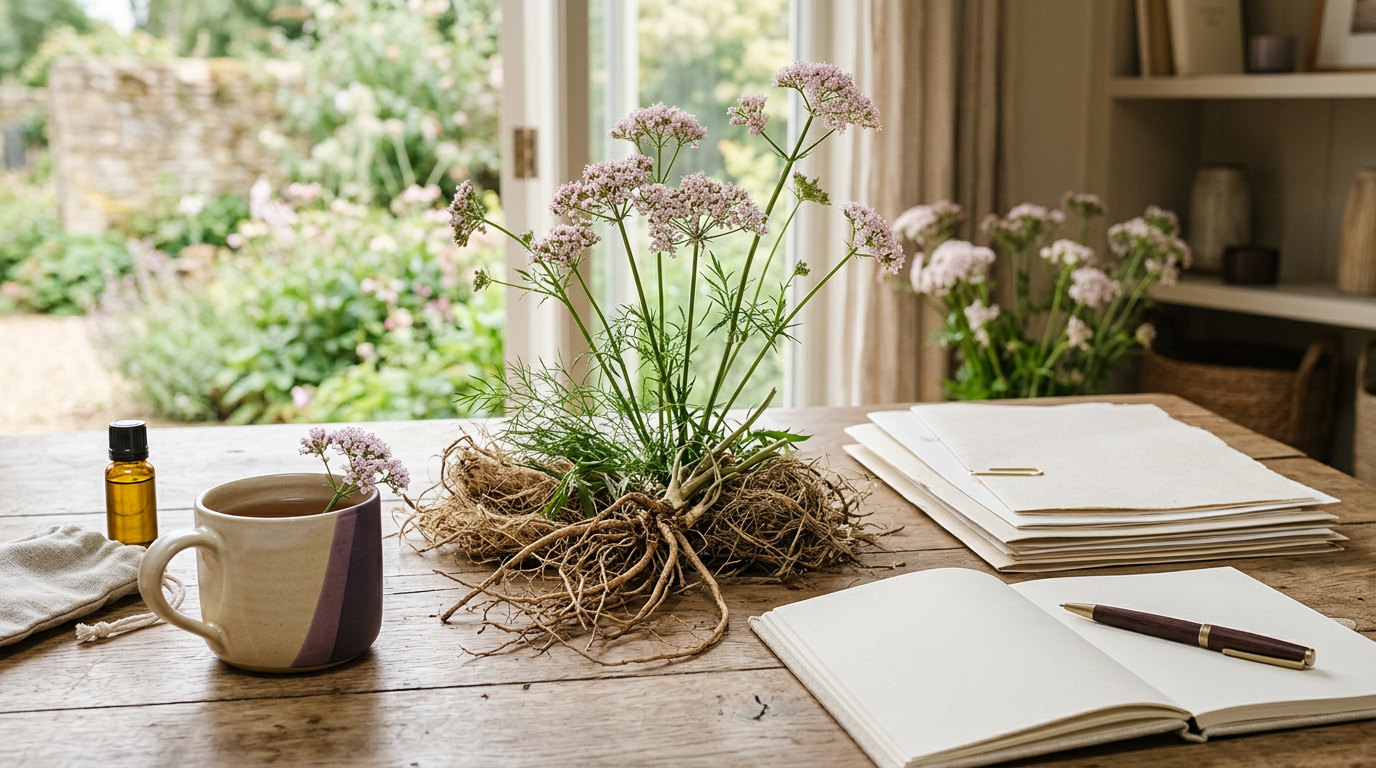
Valerian Gift Guide: Bold Bottles for Adventurous Noses
Most essential oil gift guides smell the same. Lavender. Peppermint. Maybe a citrus blend if the curator is feeling daring. This one is different. This guide is for the person on your list who leans into the strange, who reaches for the bottle labeled "earthy" or "rooty" or "wait, what is that?" and smells it twice.
Valerian essential oil is not for everyone. That is, honestly, part of its appeal. Distilled from the roots of Valeriana officinalis, it carries a deep, damp, almost funky richness that serious scent lovers find completely compelling. If you know someone who keeps a vetiver candle burning through winter, who seeks out oud-heavy perfumes, or who describes their favorite incense as "forest floor after rain," a valerian oil gift might be exactly the thing they never knew to ask for.
This guide walks you through what to look for in a quality bottle, which features actually matter, picks at several price points, and the red flags that should send you clicking elsewhere.

What Makes a Valerian Oil Worth Giving
Gifting an essential oil is a small act of trust. You are saying: I chose this carefully. That means understanding what separates a genuinely good bottle from a cheap one dressed up in nice packaging.
Botanical Source and Latin Name
Every quality listing should display the full Latin name: Valeriana officinalis. Some suppliers substitute or blend with related species without disclosure. If the label just says "valerian oil" with no botanical name, that is a gap worth questioning. For a deeper look at how to read sourcing information before you buy, the complete quality guide to buying valerian essential oil covers every label detail worth checking.
Extraction Method
Genuine valerian essential oil is steam-distilled from dried root material. CO2 extraction is also used and produces a richer, more resinous result that some collectors strongly prefer. If a listing describes the oil as cold-pressed or solvent-extracted, that is a mismatch: valerian root is not cold-pressed, and solvent extraction is a different category of product entirely.
Color and Viscosity
Steam-distilled valerian oil typically ranges from pale yellow to olive-green or brownish, depending on the root batch and distillation time. It is slightly viscous, not watery. An oil that pours like water and smells faintly of nothing much is probably diluted or old stock. CO2 extracts tend toward deeper amber tones and a thicker pour.
GC/MS Testing
Gas chromatography and mass spectrometry testing confirms what is actually in the bottle. Reputable suppliers publish these results, often called a Certificate of Analysis (COA), either on the product page or by request. This is not just industry jargon. It is the clearest signal that a company stands behind its sourcing. If you cannot find a COA for any product you are considering, keep looking.
Packaging
Dark glass is non-negotiable. Amber or violet glass protects the oil from light degradation. Any oil sold in clear glass or plastic is already compromised before it ships. For a gift, the bottle itself matters aesthetically, but the glass color matters chemically. Both can coexist in a well-made product.

Key Features to Compare
Once you have confirmed the basics, the comparison gets more nuanced. Here is a quick-reference breakdown of the features that vary most between brands.
| Feature | What to Look For | What to Avoid |
|---|---|---|
| Botanical name | Valeriana officinalis stated clearly | Generic "valerian" with no species name |
| Origin country | Named region (France, Bulgaria, India, China) | No origin listed |
| Extraction | Steam-distilled or CO2 extraction noted | Vague or contradictory method claims |
| Testing | GC/MS COA available | "Tested" with no documentation offered |
| Bottle | Dark amber or violet glass, tamper seal | Clear glass, plastic, no seal |
| Dilution | 100% pure, or clearly labeled as diluted with carrier noted | "Blend" with no carrier or ratio disclosed |
| Size options | Multiple sizes available (5ml, 10ml, 15ml) | Only large sizes for a potent oil |
On that last point: size matters more with valerian than with most oils. Because the scent is so concentrated and so distinctive, smaller bottles are often the smarter choice, especially as a first introduction. The case for starting small is laid out well in this piece on why small bottles win with valerian root.
Top Picks at Different Price Points
The valerian oil market is smaller than the lavender or frankincense market, which means fewer options but also fewer mediocre ones. The brands that bother to stock it tend to be serious about what they sell. Here is how the landscape breaks down by budget.
Entry-Level Gift (Under $20)
At this price, you are looking for a 5ml to 10ml bottle of steam-distilled valerian from a supplier that publishes basic sourcing information. Plant Therapy and Edens Garden both carry valerian oil at accessible prices and provide COA documentation. Neither brand is flashy, but both are honest about what is in the bottle. For someone new to valerian, this range is ideal. It is enough oil to explore without the commitment of a larger purchase.
Look for a 5ml bottle paired with a small card explaining the scent profile. Valerian surprises people. A little context turns that surprise into a discovery rather than a confusion.
Mid-Range Gift ($20 to $45)
This is where the more interesting sourcing stories live. Suppliers like Floracopeia and Mountain Rose Herbs source with more specificity: named farms, named regions, sometimes direct relationships with distillers. A 10ml or 15ml bottle from this tier makes a genuinely considered gift. The price reflects sourcing transparency and often a richer scent profile, since better root material and careful distillation produce a more complex oil.
CO2 extracts, when available, often fall in this range. They are worth seeking out for scent lovers who want the deepest, most resinous version of valerian. The aroma is rounder, less sharp, and more lasting on a diffuser blend or a scent strip.
Premium Gift ($45 and Up)
At the top end, you are looking at specialty suppliers with certified organic sourcing, single-origin distillations, and bottles that look as good as they smell. Oshadhi and Stillpoint Aromatics both operate at this level. These are not mass-market brands. They source in small quantities and provide detailed origin documentation.
A premium valerian oil gift pairs well with a small notebook for scent journaling, a packet of quality diffuser blend suggestions, or a sampler of complementary deep, earthy oils (patchouli, vetiver, spikenard). For the serious nose, this kind of curated pairing signals real thought.
Red Flags to Avoid

The unusual essential oil gifts category attracts two kinds of sellers: specialists who genuinely know their material, and opportunists who list anything with a margin. Valerian's niche status means the second group sometimes sells product that would not survive scrutiny. Here is what to watch for.
- Suspiciously low prices on large bottles. A 30ml bottle of genuine valerian essential oil for $8 is not a deal. It is a signal. Either the oil is heavily diluted, it is old, or it is mislabeled. Quality root material and careful distillation cost money.
- No botanical name on the listing. This is basic information that any reputable supplier includes automatically. Its absence suggests either ignorance of industry standards or something to hide.
- Scent described as "light" or "floral." Genuine valerian essential oil is earthy, rooty, and pungent. It is not light. If a listing describes it as delicate or floral without qualification, the oil in the bottle is probably not what the label claims.
- No GC/MS testing mentioned anywhere. This is now a baseline expectation for reputable suppliers. If the company's entire website makes no mention of testing, look elsewhere.
- Unverified marketplace listings from unknown sellers. Large marketplaces host legitimate brands alongside fly-by-night resellers. Always click through to the actual brand page and verify the seller's identity before purchasing.
Where to Buy Valerian Oil Gifts
The best options cluster in a few places.
Direct from specialty suppliers. Buying directly from established aromatics companies (Mountain Rose Herbs, Floracopeia, Stillpoint Aromatics, Oshadhi) gives you the most sourcing transparency and, usually, the freshest stock. These companies turn over their valerian inventory more carefully because their reputation depends on it.
Verified marketplace storefronts. Brands like Plant Therapy and Edens Garden sell through major online marketplaces with their own verified storefronts. This is a reliable option when buying as a gift and you want fast shipping. Just confirm you are buying from the brand's official store, not a third-party reseller.
Local aromatics shops. Independent natural goods stores and co-ops sometimes carry small-batch valerian oil from regional suppliers. This is worth exploring if you have one nearby. You can smell the oil before committing, which is particularly valuable with valerian.
For a broader framework on evaluating suppliers before you click checkout, the complete quality buying guide covers vetting criteria in detail.
A Note on Scent Expectations
Part of what makes valerian such a compelling unusual essential oil gift is that it challenges expectations. New recipients often open the bottle, take a sniff, and look uncertain. That is not failure. That is exactly the reaction that serious scent exploration produces.
Valerian deepens with time in a diffuser. It grounds heavier blends and adds a rooty backbone that synthetic fragrances cannot replicate. In the darker months of the year, it fits the atmosphere in a way that lighter oils simply do not. The seasonal case for valerian's deep aroma makes this argument in full, and it is worth sharing with anyone who receives a bottle and wants to know where to start.
The adventurous nose is not looking for safe. Give them the root.